
Dental Suction PU Tubing: Double-Layer Latex-Free Guide for HVE and Saliva Ejectors
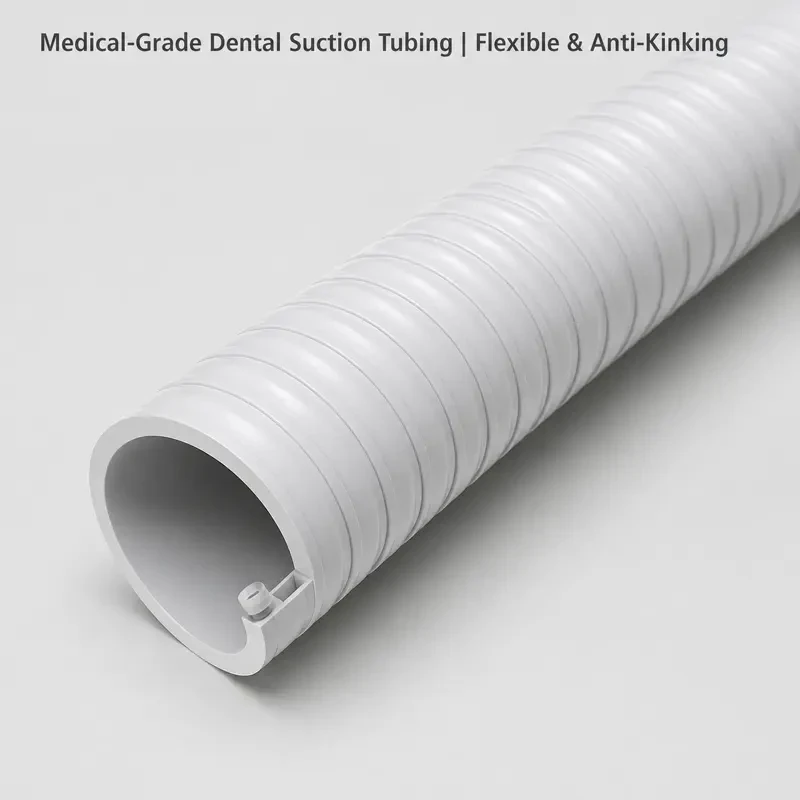
Guide to the ECOOSI biological-grade double-layer PU dental suction tubing: latex-free and phthalate-free wall, smooth bore and cover, -40 to +90 °C, 10 m coils, for dental chair HVE and saliva ejector lines, oral surgery and medical aesthetic equipment.
The ECOOSI dental suction tubing is a double-layer polyurethane tube with a smooth bore and a smooth outer cover, made without latex or phthalates. The double-wall profile keeps the tube light and resistant to vacuum collapse, the corrugated outside allows a very small bend radius at the chair, and the working range is -40 °C to +90 °C. It is supplied in 10 m coils for high-volume evacuation and low-volume saliva ejector lines on dental delivery units.
This guide covers what dental tubing has to survive, how the double-layer profile behaves, the material and cleaning considerations, the difference between HVE and saliva ejector sizing, and where the tube is used beyond the chair.
What Dental Suction Tubing Has to Do
Chair-side tubing is replaced far more often than the chair itself, and it fails for predictable reasons:
- Hardening and discolouration. PVC tubing plasticised with phthalates stiffens and yellows as the softener migrates out, and it can develop an odour.
- Biofilm in the bore. Saliva, blood and irrigation fluid leave a film on a rough wall, which is difficult to disinfect and gradually narrows the line.
- Kinking at the arm. The tube bends tightly around the delivery unit arm dozens of times a day.
- Collapse under suction. A soft wall pinches closed and the assistant loses suction mid-procedure.
The material choice addresses the first and second; the double-layer profile addresses the third and fourth.
Double-Layer Construction
| Element | Material | Function |
|---|---|---|
| Outer cover | Smooth polyurethane | Wipe-clean surface, resists routine disinfectants |
| Wall core | Double-layer PU profile | Light weight, resists vacuum collapse, bends without kinking |
| Bore | Smooth PU | Low friction, less residue retention, easier flushing |
| Material | Polyurethane, latex-free, phthalate-free | No plasticiser migration or rubber odour |
The corrugation is on the outside only; the bore stays smooth. That combination is what gives a chair-side tube its handling: it follows the arm through a tight loop, then straightens without taking a set. It also keeps the wall light, which matters for an assistant holding a tube for a long procedure.
Material: Polyurethane, Not Plasticised PVC
Most chair tubing is plasticised PVC. It is cheap and flexible, but the softener is what eventually leaves the material, and that is the source of the stiffening, the yellowing and the smell that technicians notice on older tubing.
The PU formulation used here is latex-free and phthalate-free, odourless, and does not rely on a migrating softener for flexibility. It is described as biological grade and is intended for contact with oral fluids in evacuation lines rather than for implantation or prolonged tissue contact.
Regulatory position matters. The material is supplied against medical-device material requirements, but the applicable declaration depends on the market and on the device the tubing is fitted to. Confirm the specific documentation you need, such as a material declaration or biocompatibility report, with us before your regulatory submission rather than assuming a general claim covers it.
HVE and Saliva Ejector Sizing
Two vacuum circuits run on a dental unit, and they need different tubing:
| Circuit | Duty | Tubing consideration |
|---|---|---|
| High-volume evacuation (HVE) | Large volumes of saliva, blood, irrigation and debris during surgery and scaling | Larger bore, higher vacuum, wall must resist collapse |
| Saliva ejector | Continuous low-volume fluid removal | Smaller bore, more flexible, tighter bend radius at the tip |
Match the bore to the handpiece and the valve, not to the outer diameter. A tube that is too small throttles suction at the tip; one that is too large is stiff at the arm and uncomfortable for the assistant to handle.
Cleaning and Disinfection
The smooth bore and smooth cover are there to make cleaning practical. Between patients, lines are flushed and disinfected according to the practice infection-control protocol, and the outside is wiped down.
The tube resists routine surface disinfectants and does not absorb water the way a porous material would. It is not a sterilisation container and should not be autoclaved as a wrapped instrument; if your protocol requires steam sterilisation of a component, confirm compatibility with us first rather than assuming the temperature rating covers it.
At the Chair
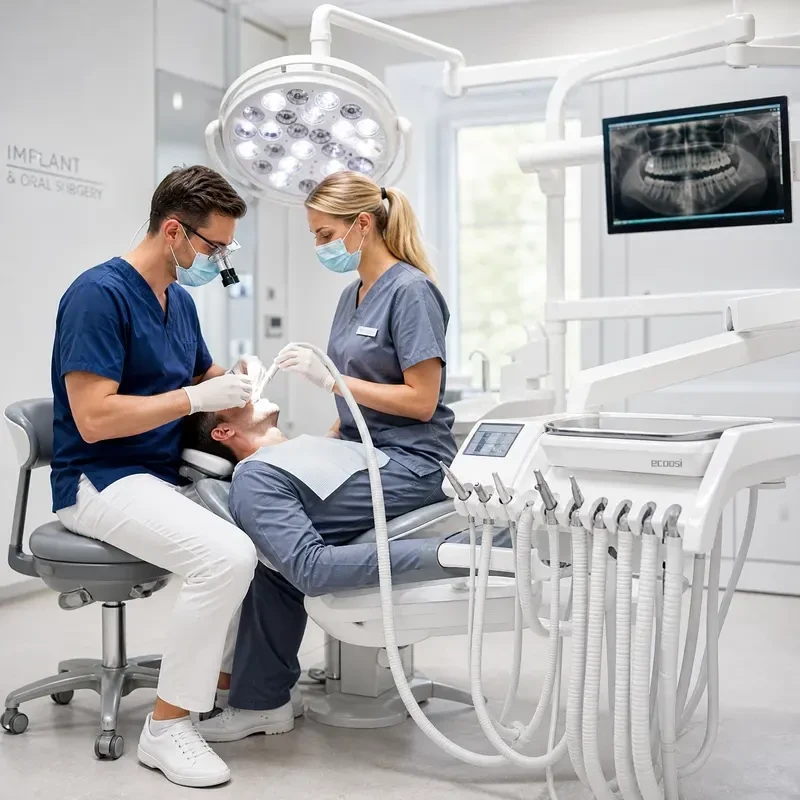
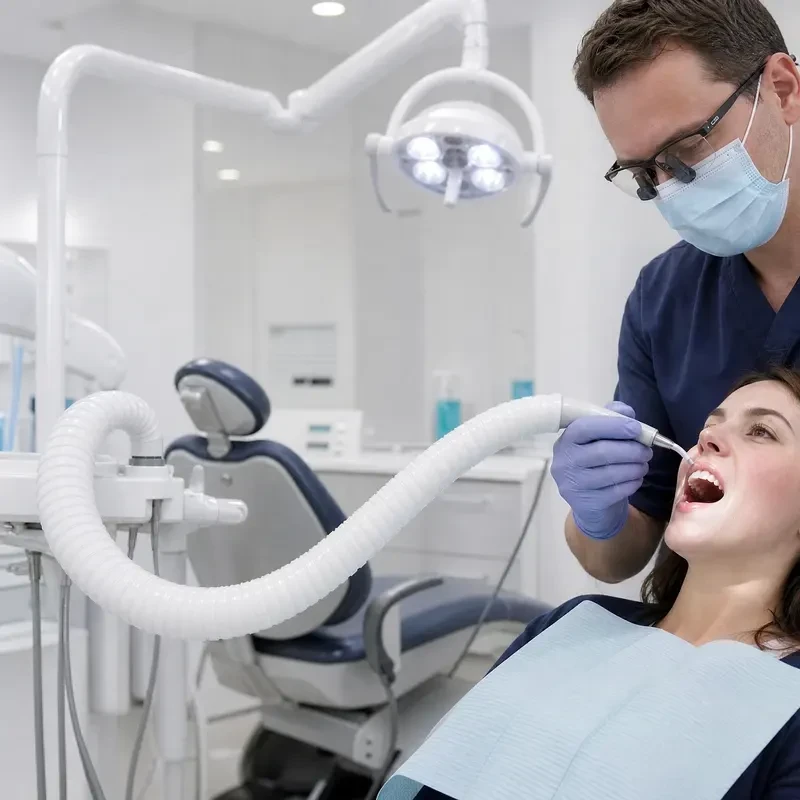
In use, the tube runs from the delivery unit arm to the HVE valve and the saliva ejector, looping as the assistant moves around the patient. The photo below shows a unit with both circuits connected, and the second shows the tube in the assistant hand during treatment.
Applications
Dental delivery units
Integrated HVE and saliva ejector lines on treatment chairs, for restorative dentistry, ultrasonic scaling, crown preparation and root canal work.
Oral and maxillofacial surgery
High-capacity evacuation of blood, irrigation saline, bone fragments and surgical debris, where the wall has to stay open under strong vacuum.
Medical aesthetic equipment
Suction and fluid delivery conduits on skin peeling, microdermabrasion and hydro-facial machines, where a hygienic, wipe-clean tube is wanted.
Cable and sensor conduit
Light abrasion-resistant sleeving for articulation arms, sensor leads and diagnostic wiring on medical equipment.
Technical Specifications
| Parameter | Specification |
|---|---|
| Material | Polyurethane, latex-free, phthalate-free, odourless |
| Profile | Double-layer hollow profile, smooth bore and smooth cover |
| Vacuum circuits | HVE and saliva ejector sizes |
| Temperature | -40 °C to +90 °C |
| Standard coil | 10 m, custom pre-cut lengths available |
| Colours | Light grey, medical white, dental blue, custom Pantone |
| Resistance | Oral secretions, blood, routine disinfectants, UV, ozone |
Coiling, Dispensing and Inspection
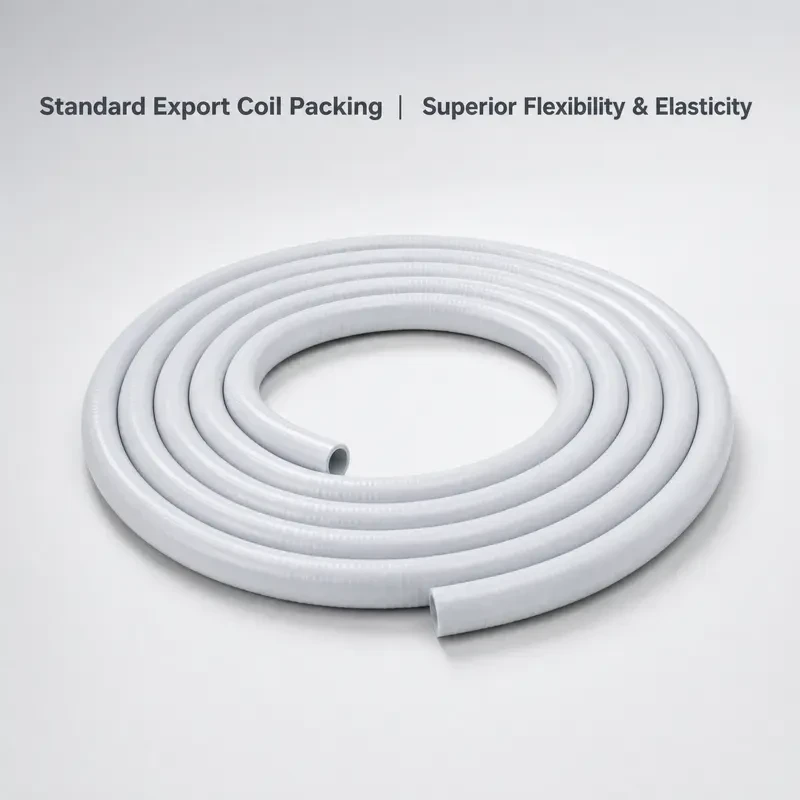
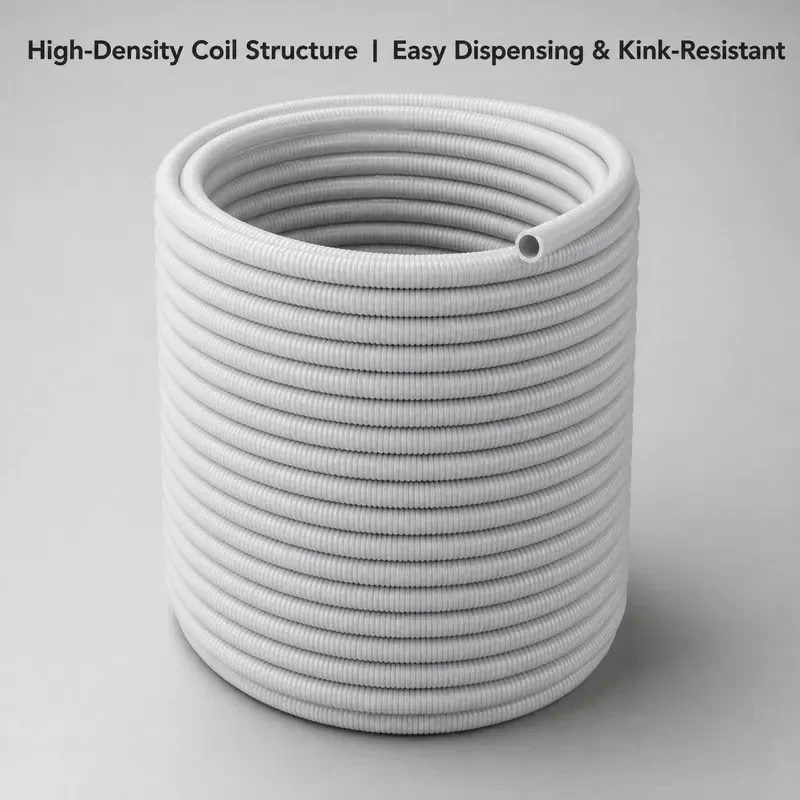
Tubing is supplied in export coils that hold their shape in transit and dispense without twisting. A high-density coil keeps the wall from taking a permanent oval set, which is what causes a new tube to kink on the first day at the chair.
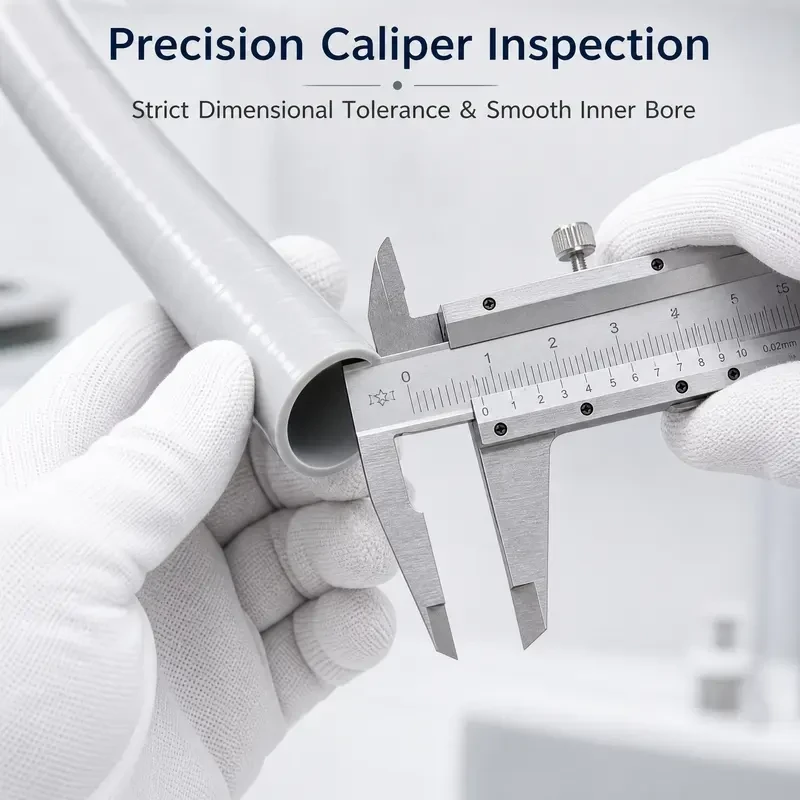
Bore and wall are checked with a caliper during production, because a chair-side tube that is a fraction undersize at the fitting leaks air and loses suction.
Installation and Care
- Cut square and deburr. A ragged cut at the valve is a common cause of a poor seal, and a burr collects debris.
- Match the bore to the fitting rather than stretching a smaller tube over a larger spigot.
- Leave a service loop at the arm so the tube is not pulled straight when the assistant reaches across the patient.
- Follow the practice protocol for flushing and disinfection between patients.
- Replace on schedule, not on failure — discolouration and a soft feel at the valve end are the usual signs the tube is due.
- Store coils closed and out of direct sun so the wall does not take a set before use.
Frequently Asked Questions
Is the tubing latex-free?
Yes. The material is polyurethane and contains no latex and no phthalates.
What is the difference between HVE and saliva ejector tubing?
HVE lines need a larger bore and a wall that resists collapse under strong vacuum; saliva ejector lines are smaller and more flexible for a tight bend at the tip.
What temperature range does it cover?
-40 °C to +90 °C, which covers chair-side use, flushing and routine wipe-down disinfection.
Can it be autoclaved?
It is not intended as a wrapped instrument for steam sterilisation. Confirm compatibility with us if your protocol requires it.
Why does PU last longer than PVC tubing?
PU does not depend on a migrating plasticiser, so it does not harden, yellow or develop a softener odour the way plasticised PVC does.
What coil length is supplied?
10 m coils as standard, with custom pre-cut lengths and colours for OEM orders.
Can it be used on medical aesthetic machines?
Yes. Suction and fluid lines on peeling, microdermabrasion and hydro-facial equipment are common uses.
Do you provide material documentation?
Material declarations and the applicable compliance documents can be requested for your regulatory file. Confirm the requirement for your market with us before submission.
Choosing the Right Tubing
For chair-side evacuation this tube is the starting point. The PU ducting range lists the wider bore options, the food-grade ether PU hose guide covers hygienic powder conveying with a stainless helix, and the anti-static PU hose guide covers bulk material handling. For bore sizing, samples or OEM coils, contact the ECOOSI technical team.
Related Articles
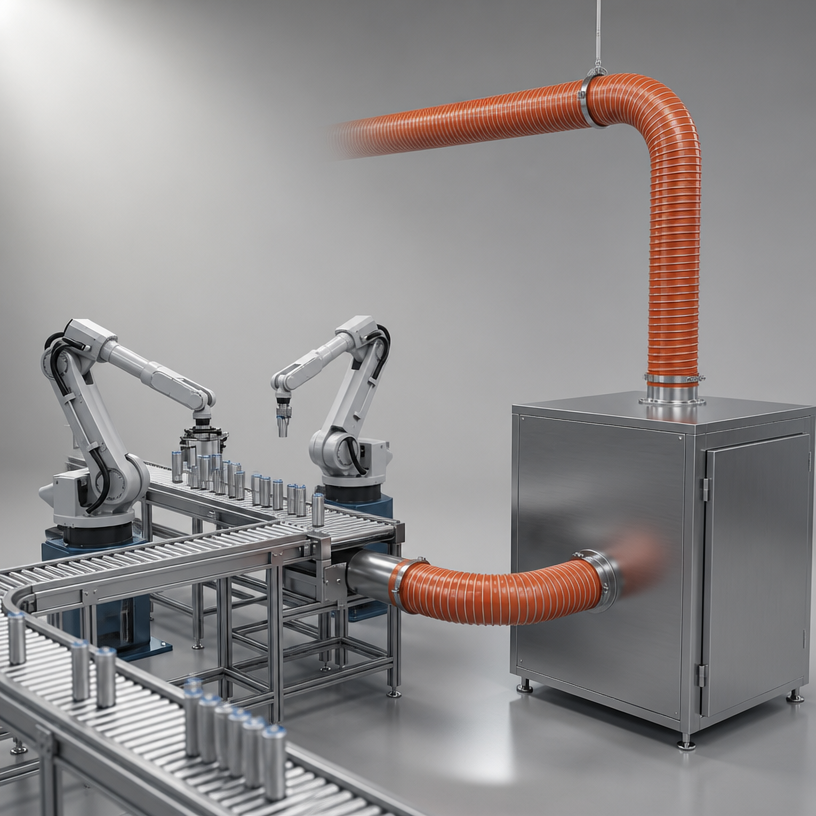
ECOOSI High-Temperature Silicone Hoses for Lithium Battery Factories: Withstanding Heat and Corrosion
Discover how ECOOSI high-temperature silicone duct hoses solve the dual challenges of extreme heat and chemical corrosion in lithium battery manufacturing. Learn about key features, applications, and cost benefits.

How to Select the Right Flexible Duct for HVAC Systems
A comprehensive guide to choosing the right flexible ductwork for HVAC systems, covering material selection, sizing, insulation, wire reinforcement, certifications, and installation best practices.
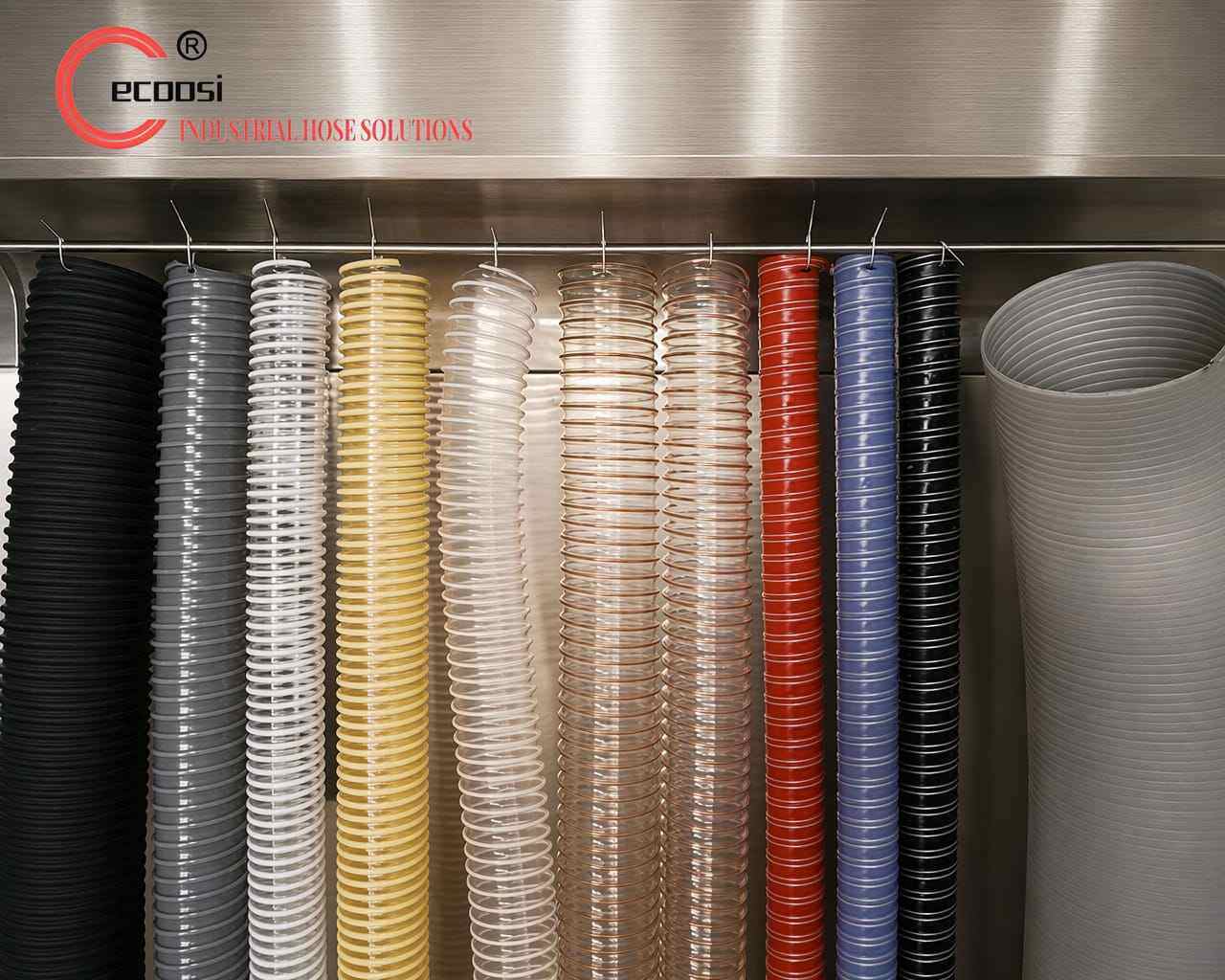
PVC vs PU vs Silicone Ducting: How to Choose the Right Flexible Hose for Your Application
Comprehensive comparison of PVC, PU, and Silicone flexible ducting materials. Learn key differences in temperature resistance, chemical compatibility, applications, and cost to select the optimal hose for your HVAC or industrial ventilation system.