
Single Layer Silicone Duct Hose: High-Temperature Flexible Ducting Guide
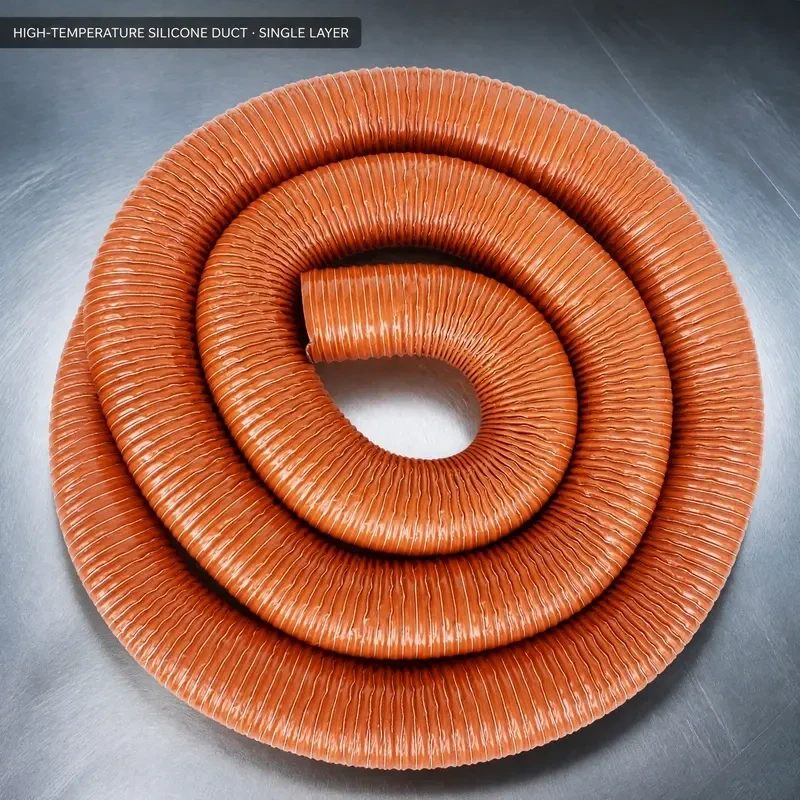
A practical guide to single layer silicone duct hoses: silicone coated glass fiber construction, -70 °C to 260 °C working range, 16-254 mm diameters, standard 4 m lengths or custom lengths with cuffs, installation checks and application notes.
A single layer silicone duct hose is a flexible high-temperature air duct made from one layer of silicone coated glass fiber fabric, reinforced with a spring steel wire helix. It works continuously from about -70 °C to 260 °C, comes in diameters from 16 mm to 254 mm, and ships in standard 4 m lengths or in custom lengths with smooth cuffs on one or both ends. The combination of heat resistance, flame retardancy, chemical resistance, low weight and high flexibility makes it a practical choice for industrial, commercial and residential air handling.
This guide explains how the hose is built, how the two length options differ, where each one fits, and what to check before installation.
What Is a Single Layer Silicone Duct Hose?
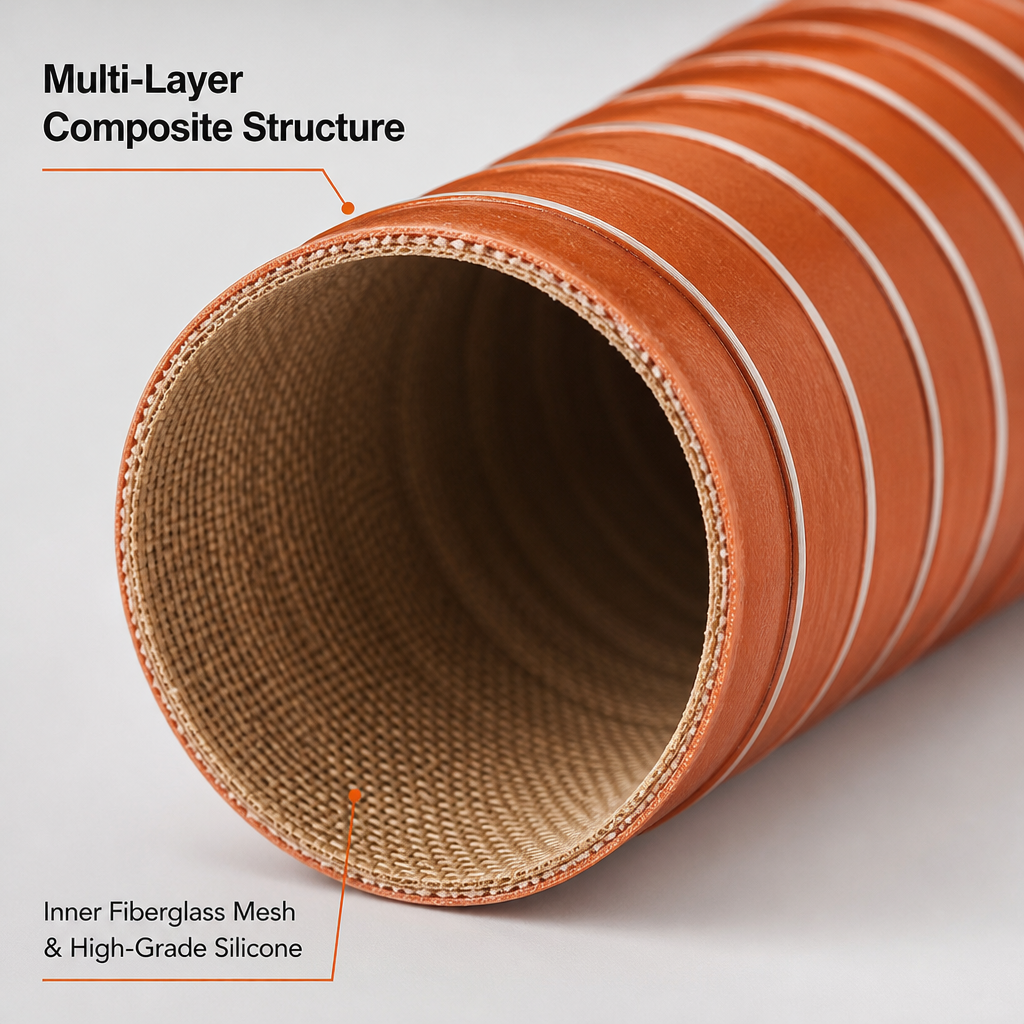
The wall is a single ply of silicone coated glass fiber fabric. The glass fiber carries the tensile strength and the heat resistance, while the silicone coating keeps the fabric flexible, water repellent and resistant to a wide range of chemicals. A spring steel wire is wound into the wall to hold the circular profile and to keep the duct open when the air stream runs under negative pressure.
With only one ply, the hose stays light and very flexible. That makes it easier to route through tight spaces, around equipment and over short offsets than heavier multi-layer ducting, and it reduces the load on clamps and supports.
Construction and Material Build
| Element | Specification |
|---|---|
| Wall | One layer of silicone coated glass fiber fabric with spiral tape |
| Reinforcement | Spring steel wire helix, visible under the fabric |
| Outer surface | Glass cord reinforcement on the outside of the wall |
| Inner surface | Smooth silicone coating for low-friction airflow |
| Diameter range | 16 mm to 254 mm |
| Standard length | 4 m per piece |
| Custom length | Any length less than 4.3 m, with cuffs on one or both ends |
Every diameter uses the same wall build, so the choice usually comes down to diameter, length and end treatment rather than material grade.
Standard 4 m Length vs Custom Length with Cuffs
Both variants use the same single layer fabric. The difference is how the ends are finished and how the length is cut.
Regular 4 m length
Cut to 4 m per piece and supplied with open ends. This is the most economical format for long runs, site cutting and stock keeping, and it is the version most distributors order in bulk.
Custom length with cuffs
The cuffed version has a smooth sleeve without steel wire at one or both ends. The soft sleeve has good elasticity, so it slides over a spigot, pipe stub or fan collar and is then secured with a clamp. That improves air tightness at the joint and keeps the wire helix away from the connection point.
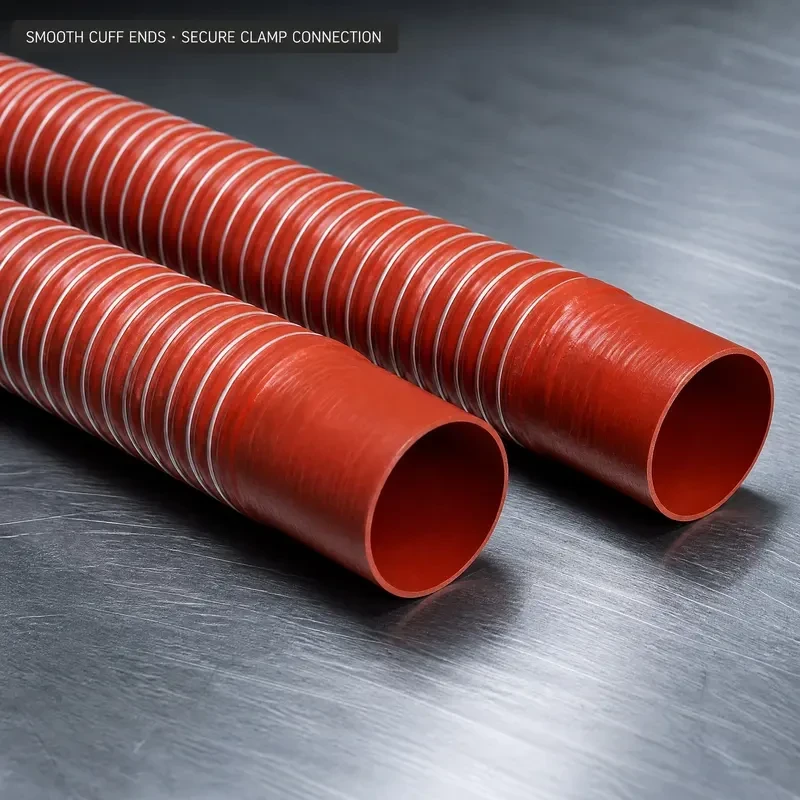
- Better air tightness at the connection, which matters for balanced ventilation and for fume extraction.
- Faster installation, because the elastic cuff absorbs small diameter differences between hose and spigot.
- Exact lengths below 4.3 m, cut to the measured run to reduce offcuts on site.
Performance Properties
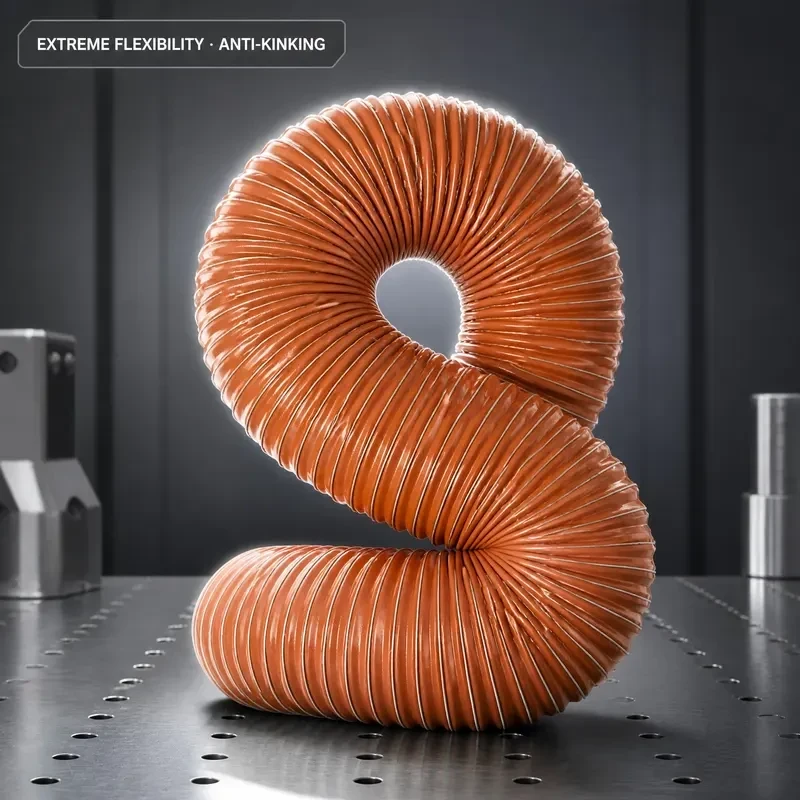
- Light and flexible — the single ply construction bends to tight radii and follows equipment contours with minimal support.
- Heat resistance — continuous service in hot air, oven exhaust and engine bay ducting without hardening of the coating.
- Kink and leak resistance — the steel helix holds the bore open, and the silicone wall limits air loss along the run and at the joints.
- Smooth interior — low friction keeps pressure drop down, limits dust build-up and simplifies cleaning.
- Flame retardancy — the silicone coated glass fiber fabric is flame retardant, which suits ventilation in occupied buildings.
- Chemical resistance — the coating resists many industrial chemicals, oils and cleaning agents. It is not intended for strong corrosive media.
- Service life — typically 5 to 10 years under normal working conditions with correct installation and routing.
Temperature Range and What It Means in Practice
| Condition | Temperature | Typical duty |
|---|---|---|
| Continuous working range | -70 °C to 260 °C | Oven exhaust, engine bay air intake, machine cooling, HVAC connections |
| Short term peak | Up to about 310 °C | Start-up surges and brief heat spikes |
The 260 °C continuous limit covers most hot air exhaust, oven ducting, engine bay intake and machine cooling duties. Where peaks sit above roughly 310 °C, or where the air stream carries sparks or heavy particulate, a dedicated high temperature ducting build is the safer choice.
Typical Applications
The hose was developed for industrial, commercial and residential ventilation systems. Its most common jobs are to connect, to route and to isolate:
- Vibration isolation — short flexible sections between air handling units, fans and rigid ductwork to absorb vibration and reduce structure-borne noise.
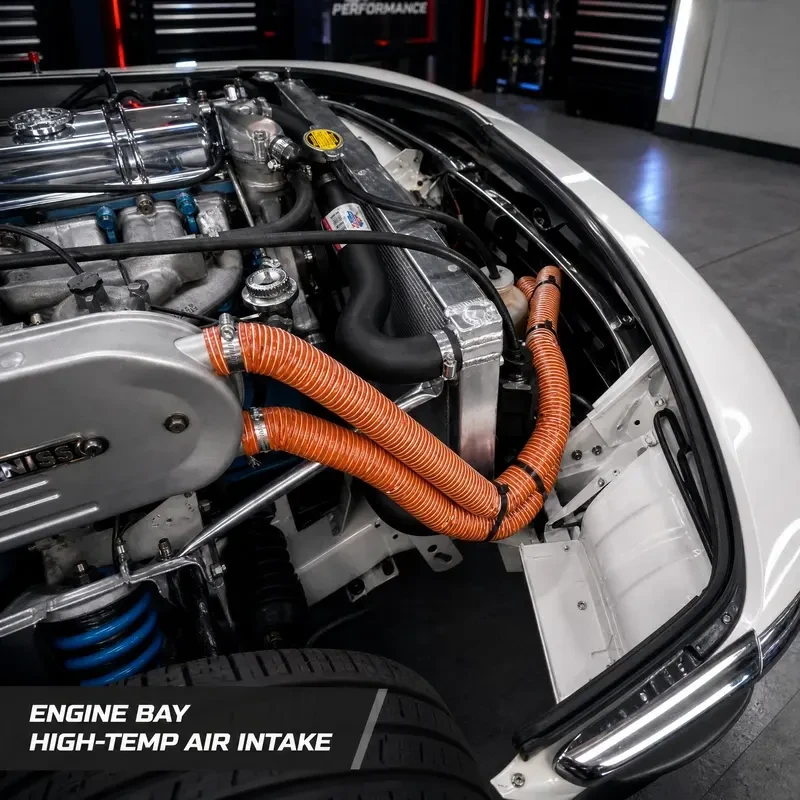
- Engine bay high temperature air intake — routing hot-zone intake air around exhaust manifolds and radiators.
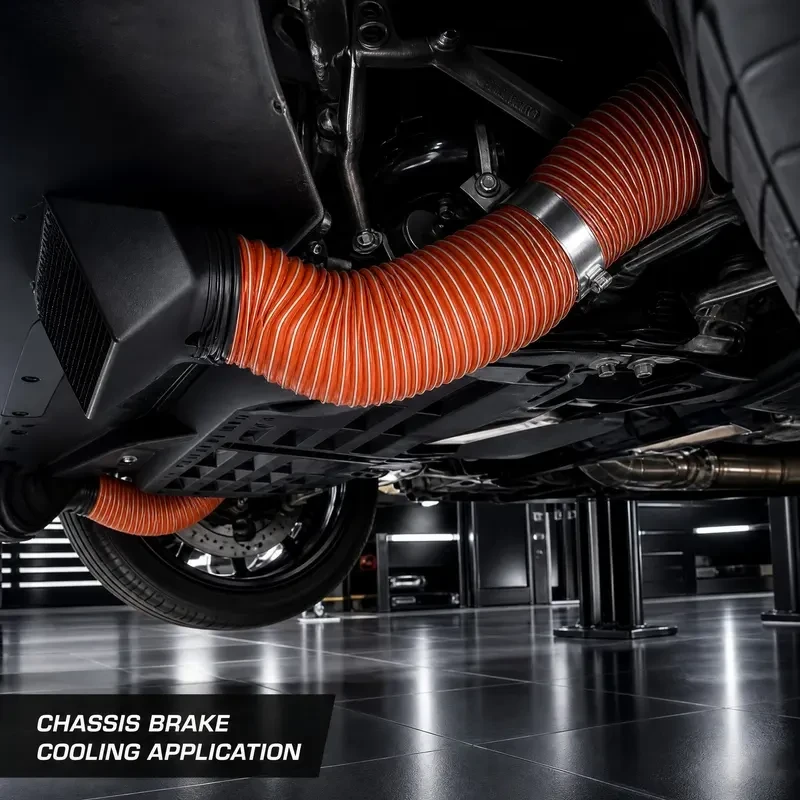
- Brake cooling — ducting cooling air from a front intake to the brake disc on track and performance vehicles.
- Oven, furnace and dryer exhaust — moving hot air and moisture away from heating equipment.
- Welding fume and dust extraction — flexible connection between extraction hoods, arms and fixed ductwork.
- Machinery and cabinet cooling — feeding or extracting air from enclosures, generators and control cabinets.
For material selection across PVC, PU and silicone builds, see the PVC vs PU vs silicone ducting comparison. For fixed-point fume capture, see the articulated fume extraction arm guide.
Installation Requirements
- Protect the outside of the hose from abrasion. Siliconised fabric wears through where it rubs against sharp edges, steel frames or rough floors. Use protective sleeves or guide brackets on long runs.
- Keep clearance. Leave space between the hose and walls, ground or machines so the wall can move with the air stream and so heat can dissipate.
- Avoid strong chemical corrosion. Silicone resists many chemicals but not concentrated acids, alkalis or solvents. Check the medium before specifying the hose for chemical exhaust.
- Do not exceed the working temperature. Stay inside the published range of -70 °C to 260 °C continuous, with short term peaks up to about 310 °C.
- Support long horizontal runs. Add hangers at regular intervals so the hose carries no more than its own weight between supports.
- Clamp every cuff. Use a worm drive or band clamp on cuffed ends to hold air tightness and to stop the hose slipping off the spigot.
Sizing, Lengths and Packaging
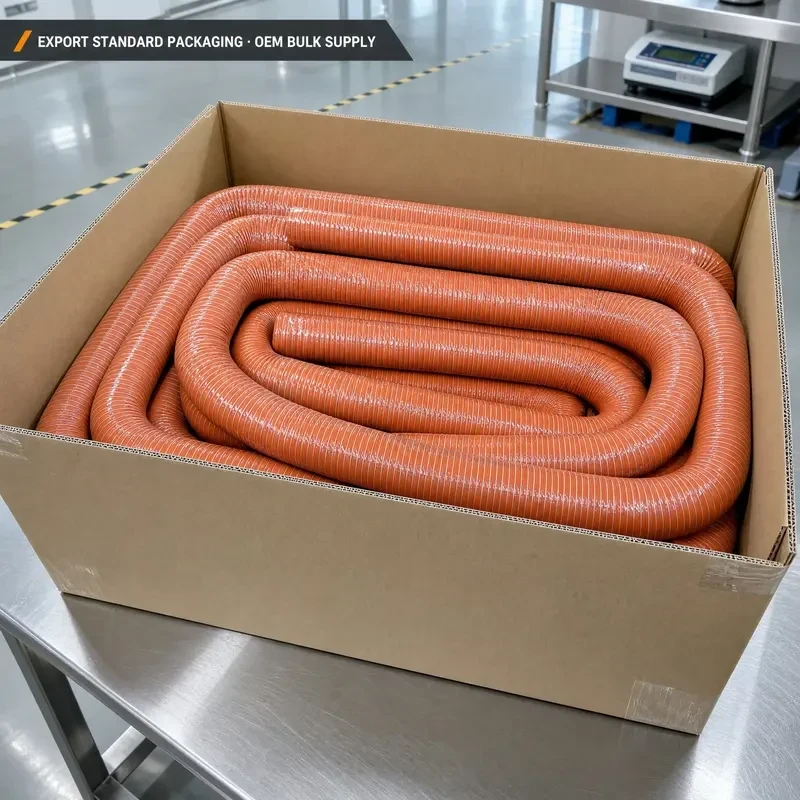
Standard stock covers 16 mm to 254 mm internal diameter in 4 m pieces. Cuffed hoses are made to order in any length below 4.3 m, with a cuff on one end or on both ends as required. Coils are packed in export cartons for bulk and OEM supply, with labels and carton printing to customer specification.
Frequently Asked Questions
What temperature can a single layer silicone duct hose handle?
Continuous service from about -70 °C to 260 °C, with short term peaks up to roughly 310 °C. Above that range, specify a high temperature build.
What is the difference between the 4 m hose and the cuffed version?
The 4 m hose has open cut ends and is the economical format for long runs and stock. The cuffed version is cut to a measured length below 4.3 m and has a smooth, wire-free sleeve at one or both ends for a tighter clamp connection.
Which diameters and lengths are available?
Diameters from 16 mm to 254 mm. Standard length is 4 m per piece; cuffed hoses can be made in any length below 4.3 m.
Is it suitable for HVAC vibration isolation?
Yes. Short sections between fans, air handling units and rigid ductwork absorb vibration and reduce noise transmission, and the smooth bore keeps pressure drop low.
Can it be used outdoors or in wet areas?
The silicone coating is water repellent and the hose tolerates damp conditions, but prolonged direct sunlight and continuous abrasion shorten its life. Route it under cover and keep it clear of rough surfaces where possible.
How long does the hose last?
Typically 5 to 10 years under normal working conditions. Actual life depends on temperature, air velocity, abrasion and how well the run is supported.
Choosing the Right Silicone Duct Hose
A single layer silicone duct hose covers most hot air, engine bay and general ventilation duties at a low weight and a competitive cost. Choose the cuffed version when air tightness at the joint matters, and move to a heavier high temperature build when the process regularly runs above 310 °C. The full range of diameters and end options is listed in the silicone ducting range, and the ECOOSI team can advise on sizing, custom lengths and samples through the contact form.
Related Articles
Ecoosi EISD Silicone Ducting: High-Temperature Hose Guide
Ecoosi EISD silicone ducting is a high-temperature, flame-retardant flexible hose built from dual fiberglass layers, high-grade silicone coating and a steel wire helix, rated from -60 °C to +310 °C for hot air, fume and dust extraction.

PTFE-Coated Fiberglass Fabric Ventilation Hoses for Food, Pharmaceutical & Chemical Industries
ECOOSI PTFE-coated fiberglass fabric ventilation hoses deliver chemical resistance, high-temperature performance, and durability for food processing, pharmaceutical manufacturing, and chemical plant ventilation systems.

How to Select the Right Flexible Duct for HVAC Systems
A comprehensive guide to choosing the right flexible ductwork for HVAC systems, covering material selection, sizing, insulation, wire reinforcement, certifications, and installation best practices.