
Double-Layer Aluminum Foil Flexible Duct with Galvanized Helix: High-Temperature Fume Extraction Guide
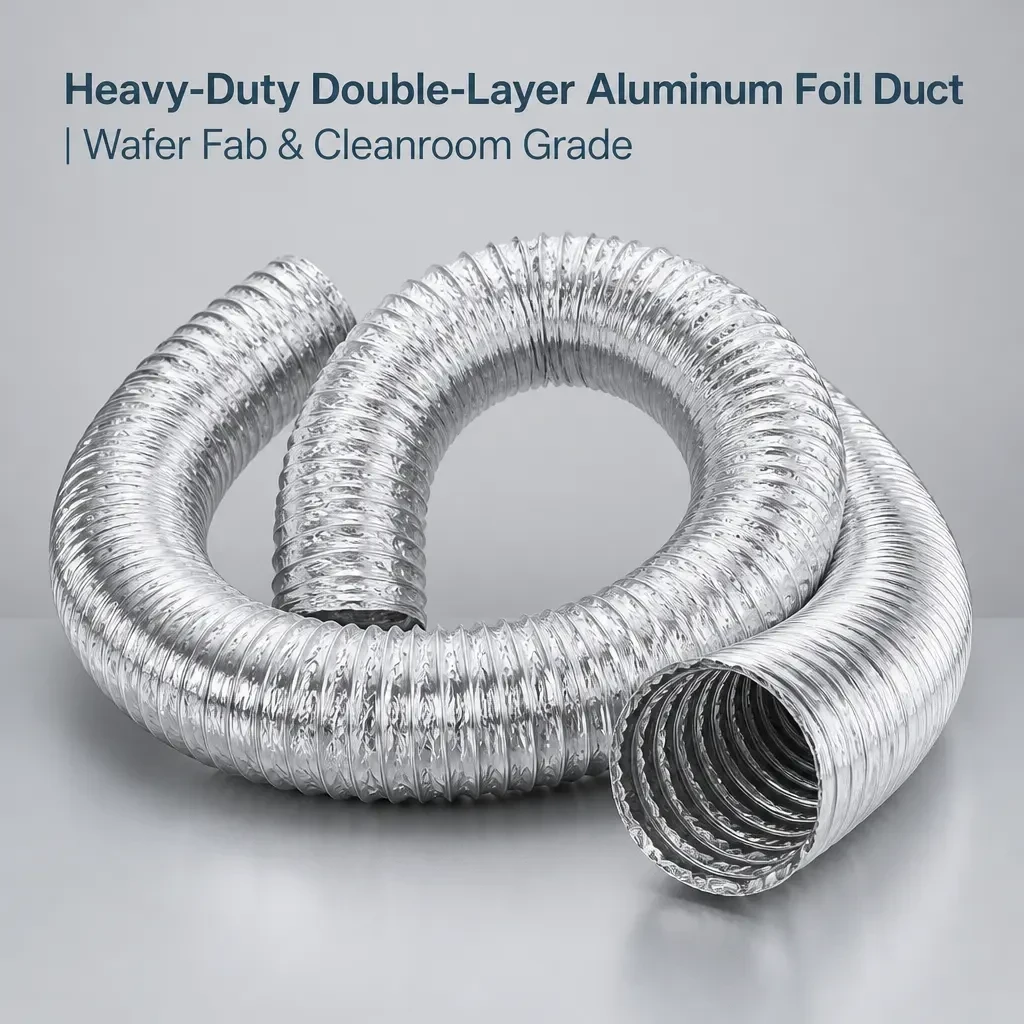
Technical guide to the double-layer aluminum foil flexible duct with galvanized steel helix: -30 to +200 °C, about 3000 Pa negative pressure, 50-300 mm diameters, 5 m lengths, and use in semiconductor, UV curing, laser and precision fume extraction.
The ECOOSI double-layer aluminum foil flexible duct pairs two layers of composite aluminum foil with a galvanized steel wire helix, giving a light duct that holds its bore under strong suction and works from -30 °C to +200 °C. It is built for clean fume extraction where heat, fine particulates and continuous vacuum are present at the same time: semiconductor and chip processing, UV printing and curing, laser cutting and marking, and precision fume extraction in electronics plants. Standard inner diameters run from 50 mm to 300 mm, in 5 m lengths.
This guide covers the construction, the pressure and temperature data, the applications it suits and the checks that matter at installation.
What Is a Double-Layer Aluminum Foil Flexible Duct?
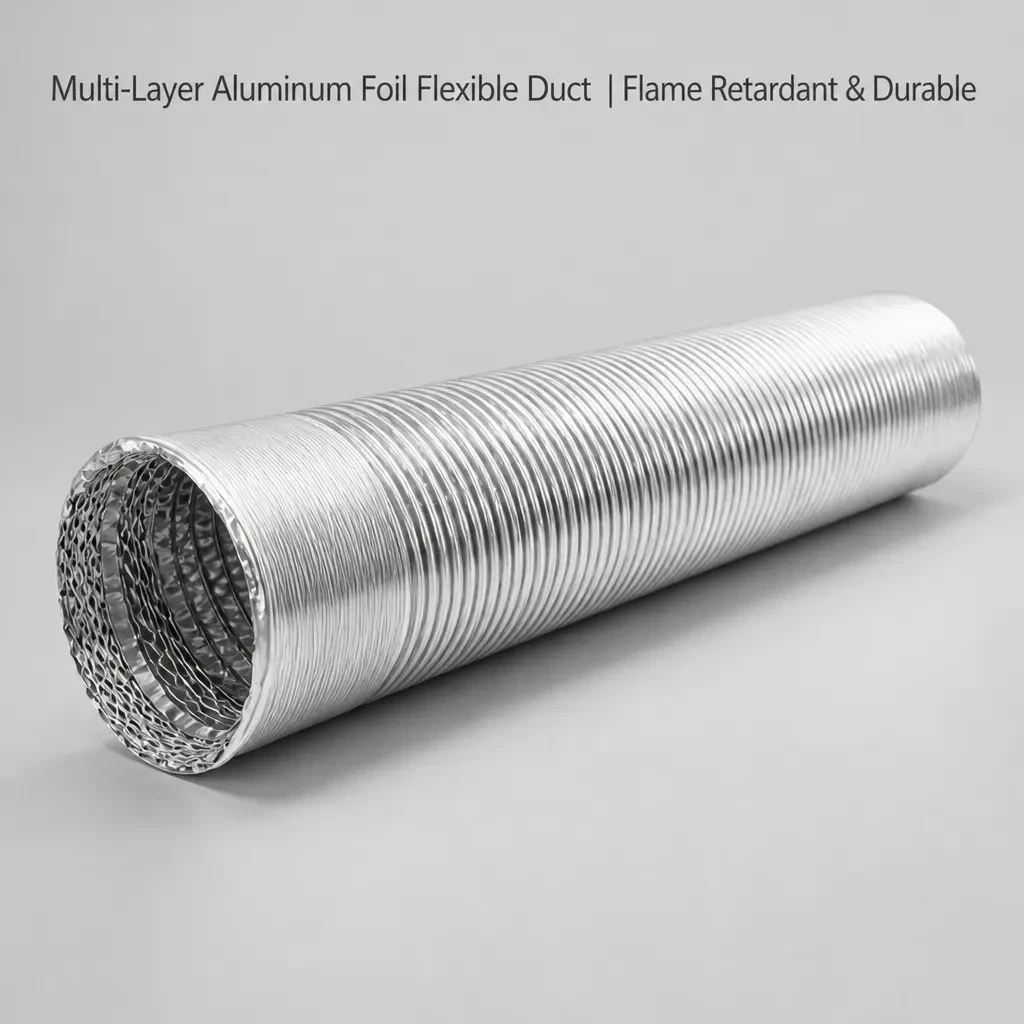
It is a flexible duct formed from two layers of composite aluminum foil with a galvanized steel wire helix wound between them. Each part has a job:
- The foil layers form the wall. Two layers instead of one give better airtightness, a stronger wall against tearing and a smoother bore for the airstream.
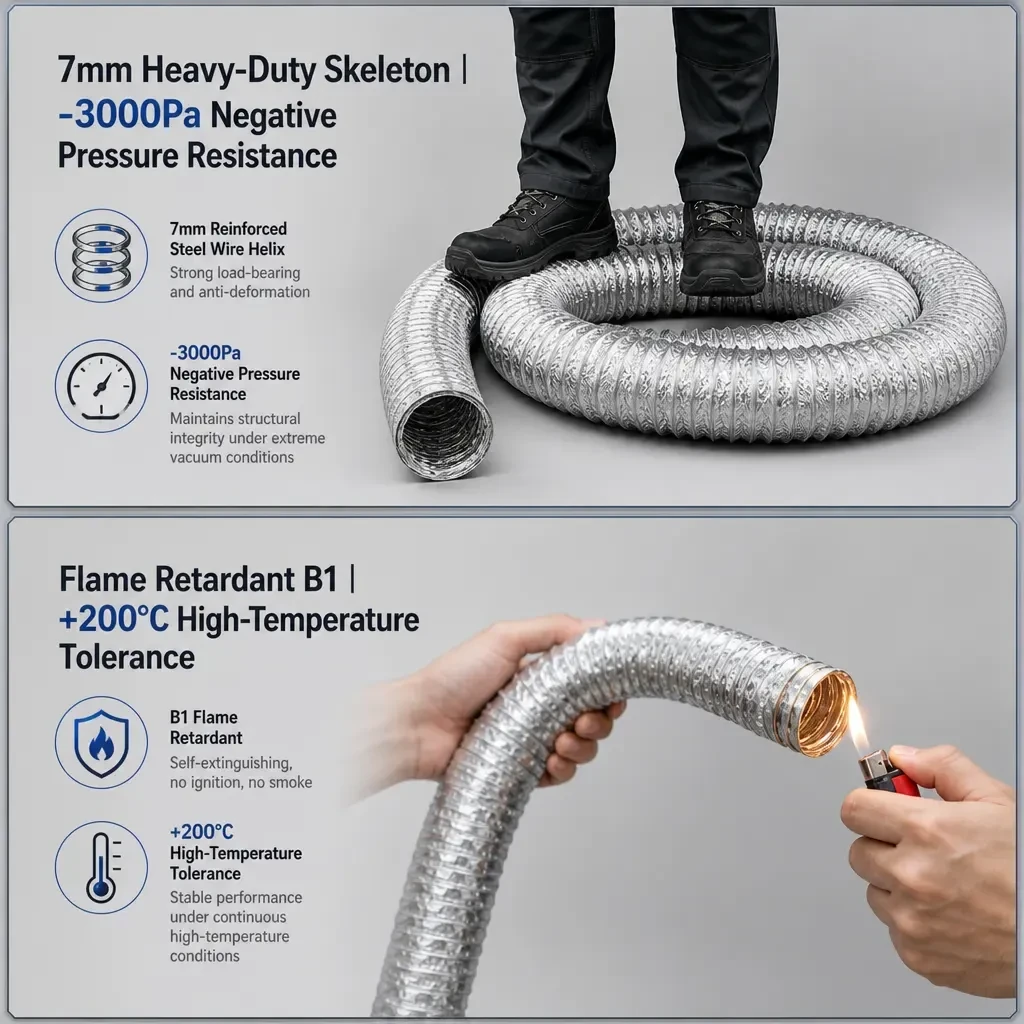
- The galvanized helix carries the shape. A 7 mm steel wire spiral holds the circular profile under vacuum and lets the duct compress for transport.
- The lamination bonds the wall. Heat and pressure bond the foil to the helix pocket so the duct does not delaminate when it is bent or pulled.
The result is a duct that behaves like a light semi-rigid section: it keeps a circular bore, tolerates handling on site, cuts with a knife and compresses to a fraction of its working length for storage.
Construction and Helix Design
| Element | Specification |
|---|---|
| Wall | Double-layer composite aluminum foil, about 0.1 mm per layer or reinforced grades |
| Helix | Galvanized steel wire spiral, 7 mm heavy-duty build |
| Helix spacing | 19 mm to 24 mm, adjustable |
| Surface | Smooth silver foil, low particle shedding |
| Fire performance | B1 flame-retardant build |
| Temperature range | -30 °C to +200 °C |
Technical Specifications
| Parameter | Value |
|---|---|
| Material | Double-layer aluminum foil with galvanized steel helix |
| Inner diameter | 50 mm to 300 mm (2 in to 12 in), custom sizes on request |
| Temperature range | -30 °C to +200 °C; higher foil grades available on request |
| Negative pressure | Up to about -3000 Pa in the heavy-duty build |
| Positive pressure | Up to about +3000 Pa |
| Minimum bend radius | About 1.25 times the duct diameter |
| Tensile strength | Typically 12 kgf per 25 mm for the reinforced foil |
| Standard length | 5 m per piece; 10 m and custom lengths available |
| Connection | Clamp, flange or quick coupling at the duct end |
Two numbers decide most jobs: the vacuum the extractor can pull and the temperature of the air it moves. Compare the fan or extractor curve with the pressure figures above, and check the peak temperature at the extraction point rather than the average room temperature.
Flexibility, Bend Radius and Vacuum Performance
The 19 mm to 24 mm helix spacing is a compromise: close enough to stop the wall flattening on a tight bend, open enough to keep the duct light and compressible. A minimum bend radius of about 1.25 times the diameter means a 100 mm duct turns in a 125 mm radius, which is what makes routing through machine frames and ceiling voids practical without extra elbows.
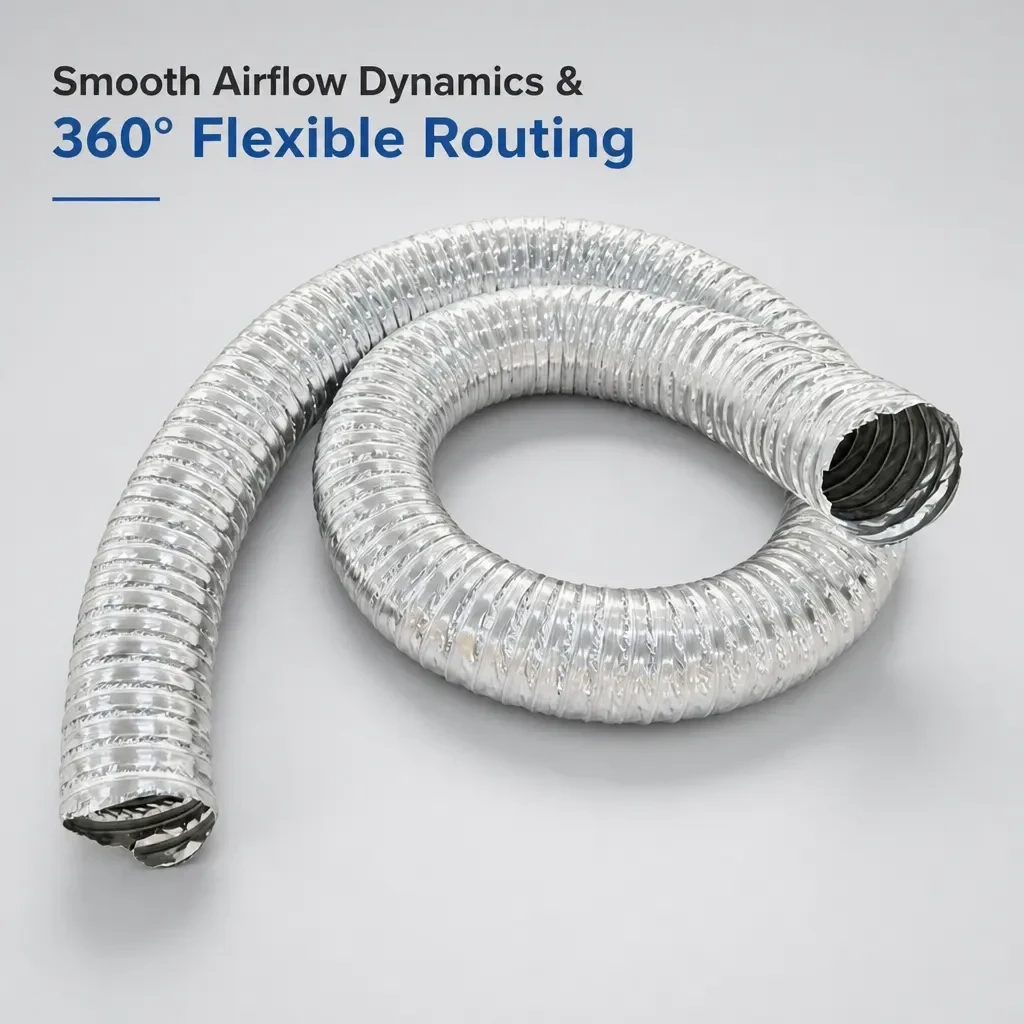
Under vacuum the failure mode of a cheap foil duct is collapse between wire turns: the wall flattens, the bore narrows and the extractor loses flow exactly when the load is highest. The galvanized helix and the double-layer wall resist that, which is why the duct is specified for laser fume extractors, UV curing hoods and process tool exhaust rather than only for light supply air.
Typical Applications
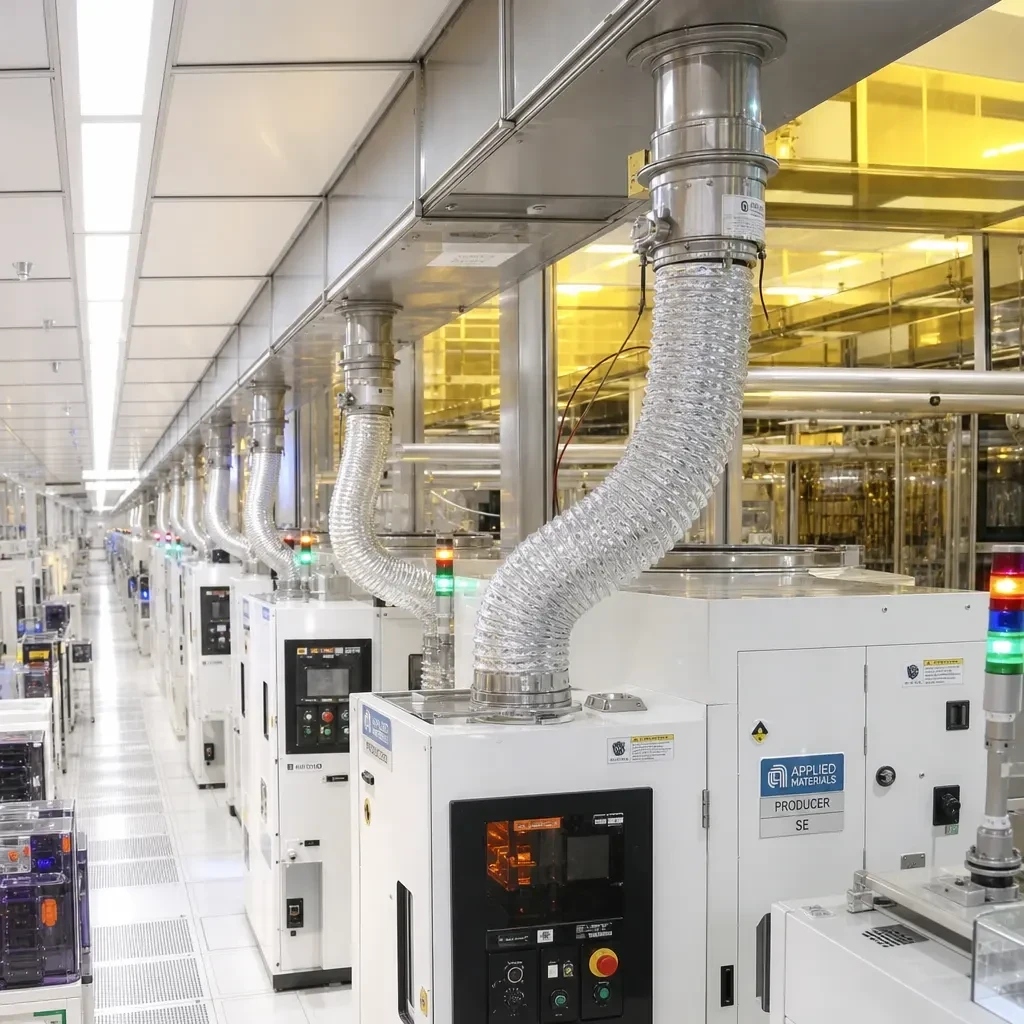
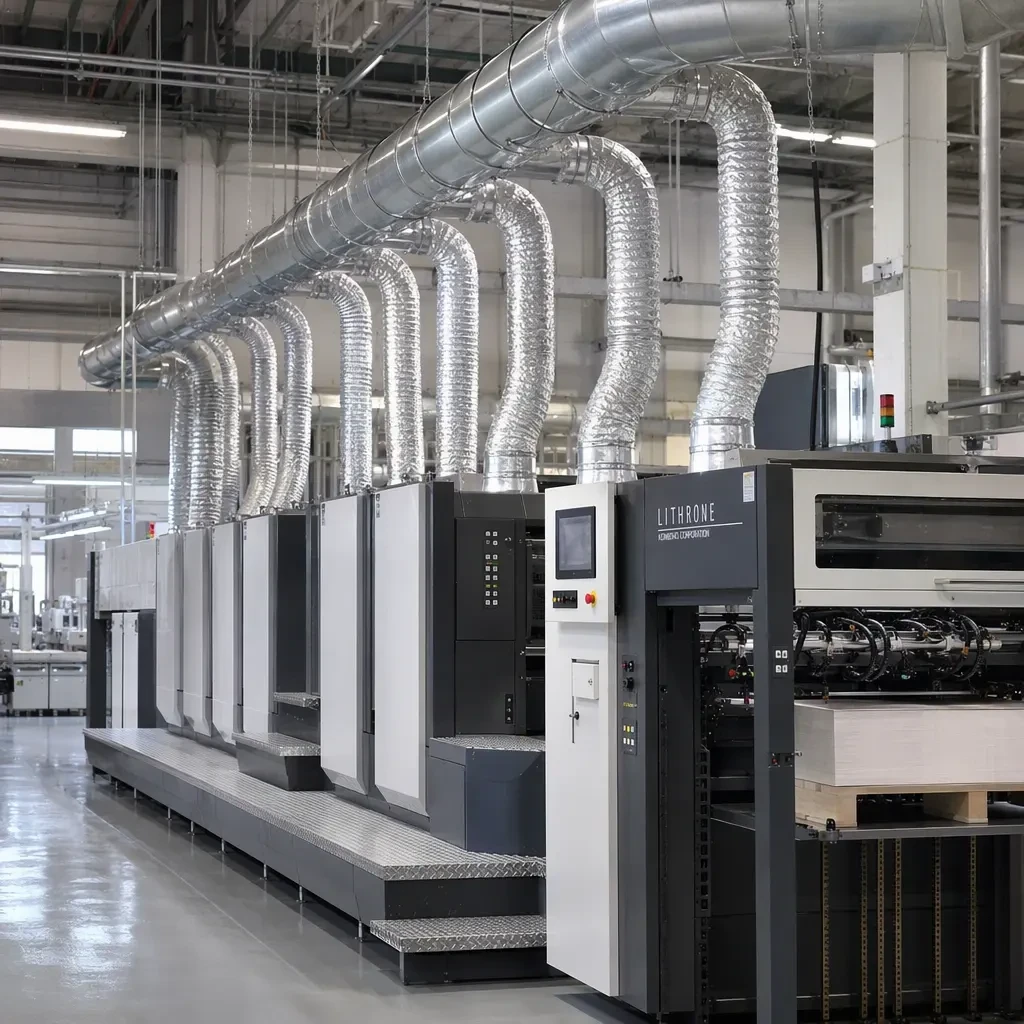
The duct is used wherever hot fumes, smoke or fine particulate has to be pulled from a machine and carried to a filter or an exhaust header:
- Semiconductor and chip manufacturing — wafer processing, etching, CVD and PVD tool exhaust, load port extraction.
- UV printing and curing — ink mist, solvent vapour and ozone from UV lamps and curing tunnels.
- Laser cutting, engraving and marking — smoke, fine particulate and odour from plastics, metals and PCBs.
- Precision fume extraction — soldering, dispensing, cleaning benches and electronics assembly lines.
- General fume hoods and pollution control in electronics and high-tech facilities.
Installation Notes
- Support at regular intervals. Hangers every 1.5 m to 2 m keep the duct from sagging and stop the helix taking the full weight.
- Respect the minimum bend radius. Bends tighter than 1.25 times the diameter narrow the bore and cost airflow.
- Leave a straight run after the extraction point. A short straight section before the first bend keeps flow stable at the hood.
- Clamp properly, not hard. A worm-drive clamp on a spigot is enough; over-tightening cuts into the foil.
- Keep the wall away from sharp edges. Cut brackets and unfinished frames will wear through foil that rubs against them.
- Plan filter access. Laser and UV systems load their filters quickly; leave enough duct slack to disconnect a section for cleaning.
Packing, Customisation and OEM
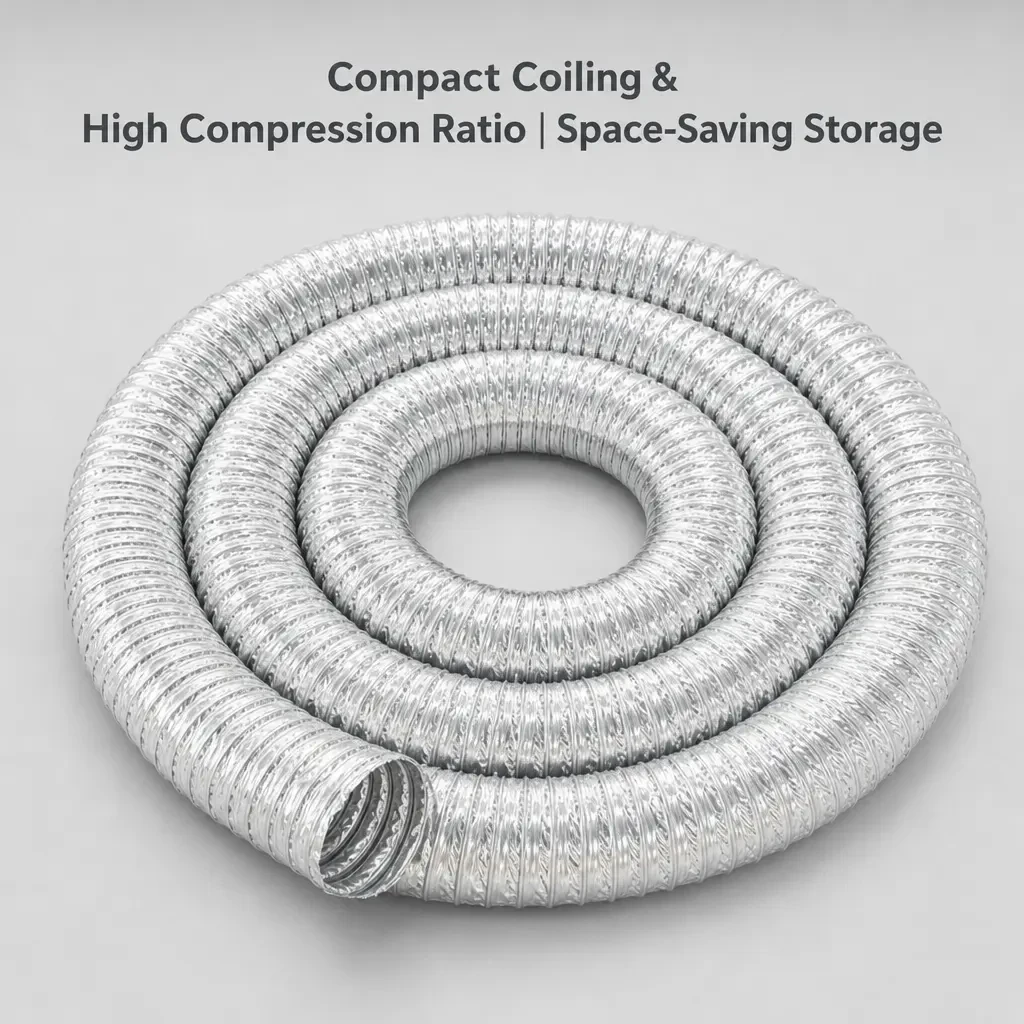
The duct compresses to a fraction of its working length and coils flat, which cuts freight volume and shelf space for distributors. Diameter, length, foil thickness, helix grade, temperature rating and end fittings can all be specified, and OEM orders can carry custom branding, packaging and documentation.
Frequently Asked Questions
What is the difference between a single-layer and a double-layer foil duct?
A single-layer duct is lighter and cheaper for low-pressure supply runs. The double-layer build adds a second foil wall, which improves airtightness and tear strength, reduces particle shedding and holds up better under continuous vacuum.
How much negative pressure can it take?
The heavy-duty build is rated to about -3000 Pa, with positive pressure up to about +3000 Pa. The limit that matters in service is the pressure at the extraction point, so check the extractor curve rather than the rated figure alone.
What is the temperature range?
-30 °C to +200 °C. Higher foil grades are available for hotter duties; above the foil limit, a fiberglass or silicone high temperature duct is the correct choice.
Which diameters and lengths are available?
50 mm to 300 mm inner diameter as standard, in 5 m pieces. 10 m lengths, custom cuts and non-standard diameters can be made to order.
Is it suitable for semiconductor cleanrooms?
The smooth foil bore keeps particle shedding low, which suits cleanroom-adjacent extraction and process tool exhaust. Confirm the requirement for the specific cleanroom class and tool with your facility team.
What bend radius should I allow?
About 1.25 times the duct diameter. Tighter bends can be forced, but the bore narrows and the extractor loses flow.
Can it be used for laser fume extraction?
Yes. Laser smoke and fine particulate are a standard duty; pair the duct with a suitable filtration unit and keep the run short to protect the extractor.
Choosing the Right Duct
For clean fume extraction under vacuum and heat, the deciding factors are wall strength, helix spacing and the temperature at the extraction point. This double-layer duct covers 50 mm to 300 mm, -30 °C to +200 °C and about 3000 Pa of vacuum; the aluminum ducting range covers heavier high-pressure runs such as the four-layer aluminum foil duct, and the high temperature ducting range covers duties above the foil limit. For diameters, end fittings or samples, contact the ECOOSI technical team.
Related Articles
Four-Layer Aluminum Foil Flexible Duct Hose: Heavy-Duty HVAC and Industrial Exhaust Guide
Technical guide to the four-layer aluminum foil flexible duct hose: 4.5s laminated foil wall, 1.5 cm pitch steel helix, 2000 Pa negative pressure, B1 flame retardant, -30 to +150 °C, 50-600 mm diameters, plus HVAC, SMT and exhaust applications.
Explosion-Proof Anti-Static Flexible Ventilation Duct: PVC Ducting Guide for Flammable Areas
How anti-static PVC flexible ducting controls static charge in flammable and explosive areas: conductive wall around 2 x 10^5 ohm, spiral steel wire helix, 150-1000 mm diameters, 10 m lengths, -20 to +100 °C, plus grounding and installation checks.
Single Layer Silicone Duct Hose: High-Temperature Flexible Ducting Guide
A practical guide to single layer silicone duct hoses: silicone coated glass fiber construction, -70 °C to 260 °C working range, 16-254 mm diameters, standard 4 m lengths or custom lengths with cuffs, installation checks and application notes.