
Four-Layer Aluminum Foil Flexible Duct Hose: Heavy-Duty HVAC and Industrial Exhaust Guide
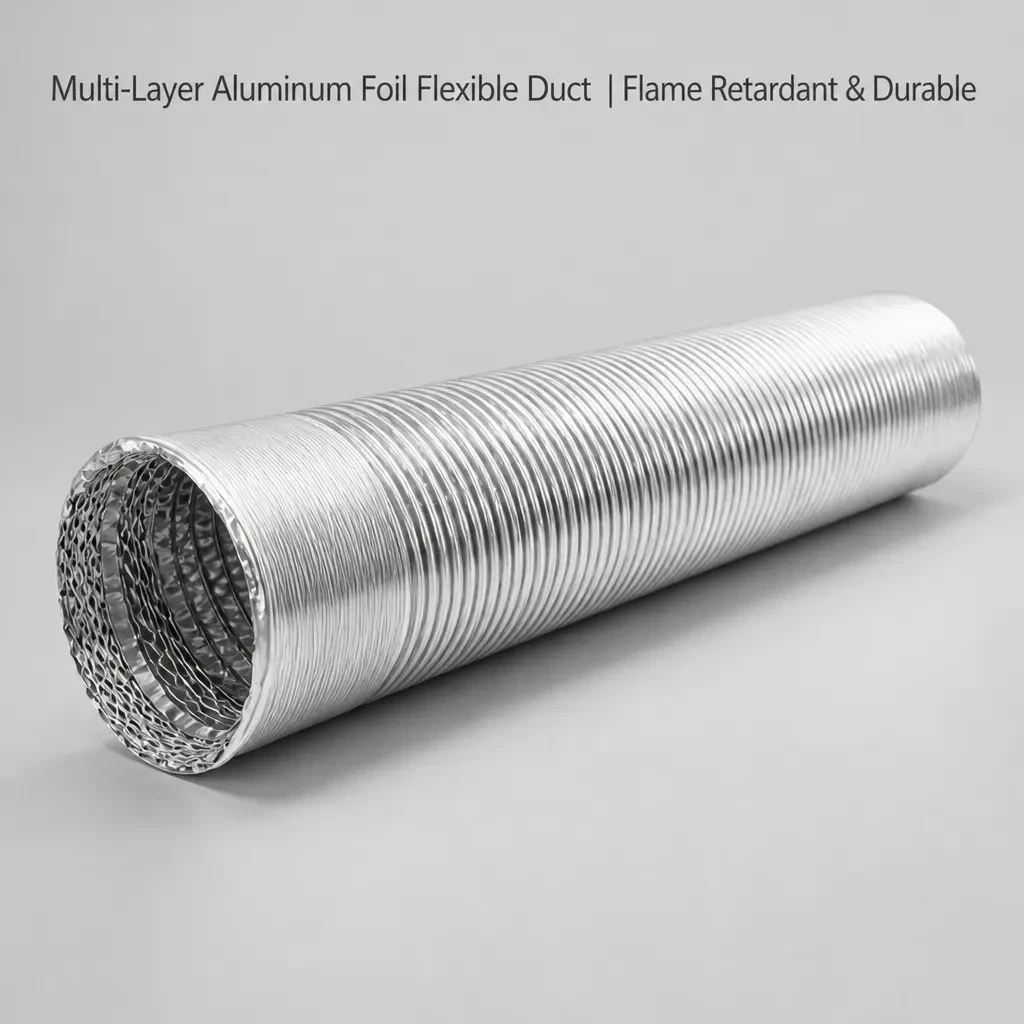
Technical guide to the four-layer aluminum foil flexible duct hose: 4.5s laminated foil wall, 1.5 cm pitch steel helix, 2000 Pa negative pressure, B1 flame retardant, -30 to +150 °C, 50-600 mm diameters, plus HVAC, SMT and exhaust applications.
The ECOOSI four-layer aluminum foil flexible duct hose is a heavy-duty, flame-retardant flexible duct built for high-pressure HVAC systems and industrial exhaust. Laminated aluminum foil, polymer film and a reinforcement layer form the wall around a 1.5 cm pitch high-tensile steel wire helix. The result holds its shape under 2000 Pa of negative pressure, bends through tight plenums without kinking, and works from -30 °C to +150 °C. Standard diameters run from 50 mm to 600 mm, in 5 m and 10 m lengths.
This guide covers the construction, the pressure and temperature limits, the applications it suits and the checks that matter at installation.
What Is a Four-Layer Aluminum Foil Flexible Duct Hose?
It is a semi-rigid flexible duct made from laminated aluminum foil wrapped around a steel wire helix. Each layer has a job:
- Double-sided aluminum foil reflects radiant heat, resists moisture and gives the bore a smooth, low-friction surface.
- Polymer laminate bonds the foil layers together, adds tear strength and makes the wall airtight.
- Reinforcement layer at 4.5s thickness carries the mechanical load when the duct runs under vacuum.
- Steel wire helix at 1.5 cm pitch holds the round profile and lets the duct compress for transport.
The result behaves more like a short rigid section than a soft fabric sleeve. The duct keeps a circular bore, tolerates handling on site and can be cut to length with a knife.
Construction at a Glance
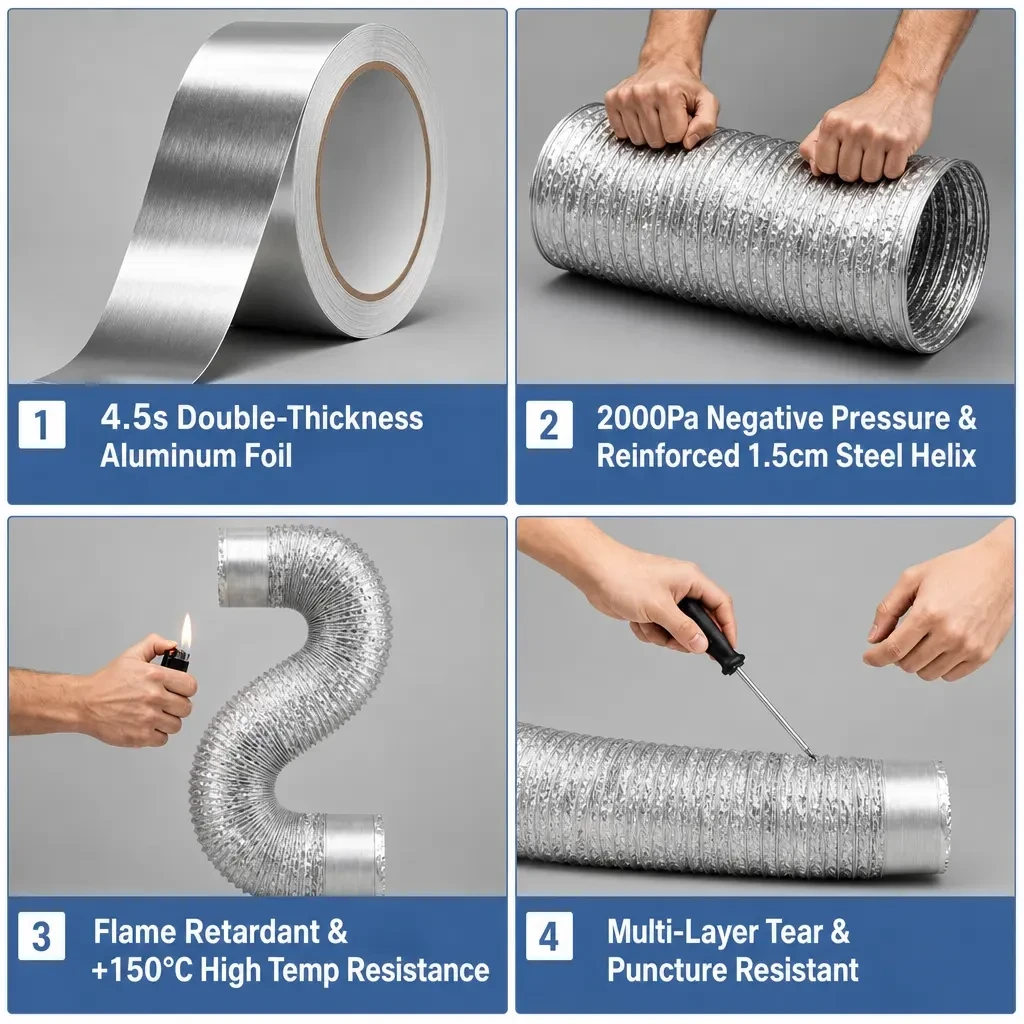
| Element | Specification |
|---|---|
| Foil | 4.5s double-thickness aluminum foil, double sided |
| Laminate | Polymer film bonding with a reinforcement layer |
| Helix | High-tensile spring steel wire, 1.5 cm pitch |
| Bore | Smooth aluminum inner surface |
| Fire performance | B1 flame-retardant build |
| Temperature range | -30 °C to +150 °C |
Technical Specifications
| Parameter | Value |
|---|---|
| Material composition | Double-sided aluminum foil, polymer laminate, high-tensile steel wire |
| Foil thickness | 4.5s reinforced heavy-duty layer |
| Steel wire pitch | 1.5 cm |
| Inner diameter | 50 mm to 600 mm (2 in to 24 in) |
| Standard length | 5 m and 10 m per piece, custom lengths on request |
| Operating temperature | -30 °C to +150 °C (-22 °F to +302 °F) |
| Maximum positive pressure | Up to +2500 Pa |
| Maximum negative pressure | -2000 Pa |
| Maximum air velocity | Up to 30 m/s |
| Fire safety rating | B1 class flame retardant |
| Connection | Stainless steel worm-drive clamps or quick flange couplings |
Two figures decide most jobs: the static pressure the fan produces and the air velocity inside the duct. Keep velocity under 30 m/s to limit noise and wear at the bends, and compare the fan curve with the pressure limits above before ordering.
Bending Behaviour and Airflow
A helix pitch of 1.5 cm is what allows a tight bend without the wall collapsing. A bend radius close to one duct diameter is achievable, and the duct can turn through 180 degrees to 360 degrees inside a ceiling plenum without forming a flat spot that strangles the airflow.
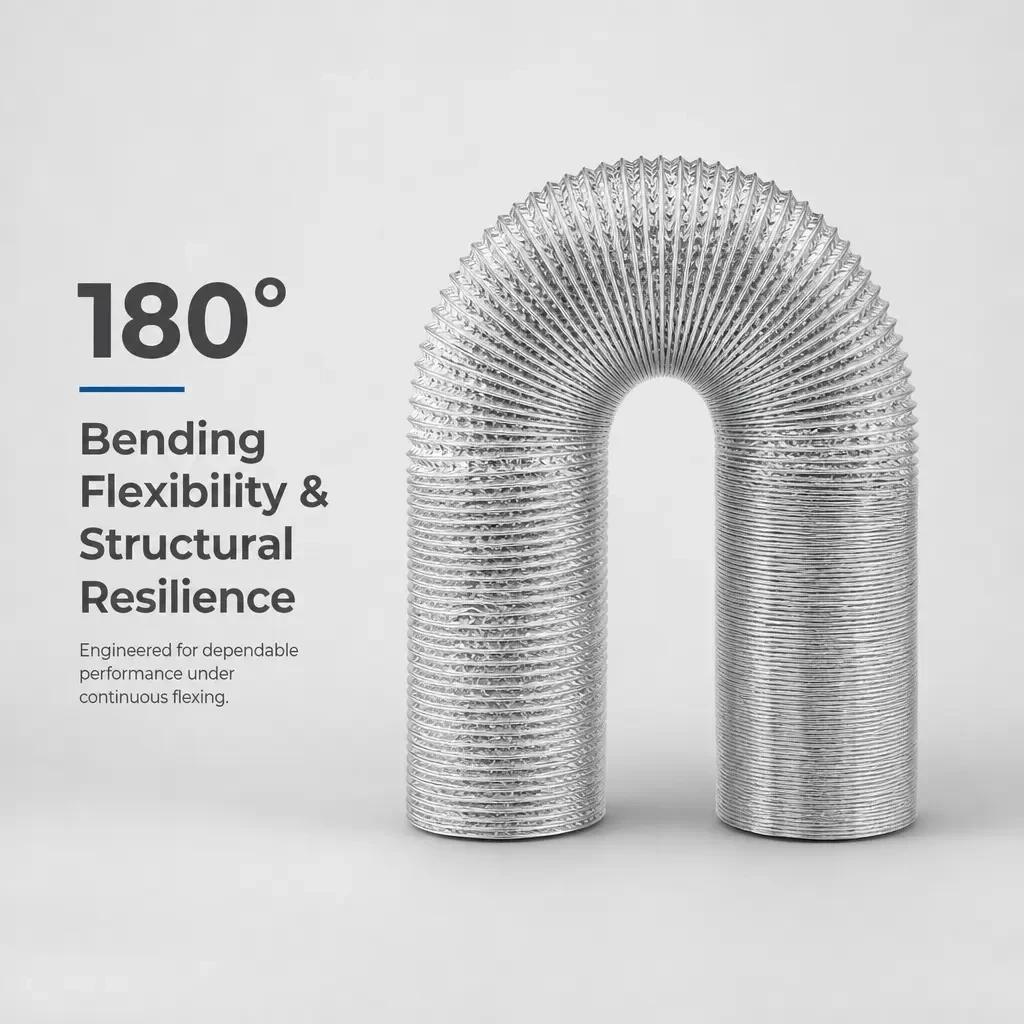
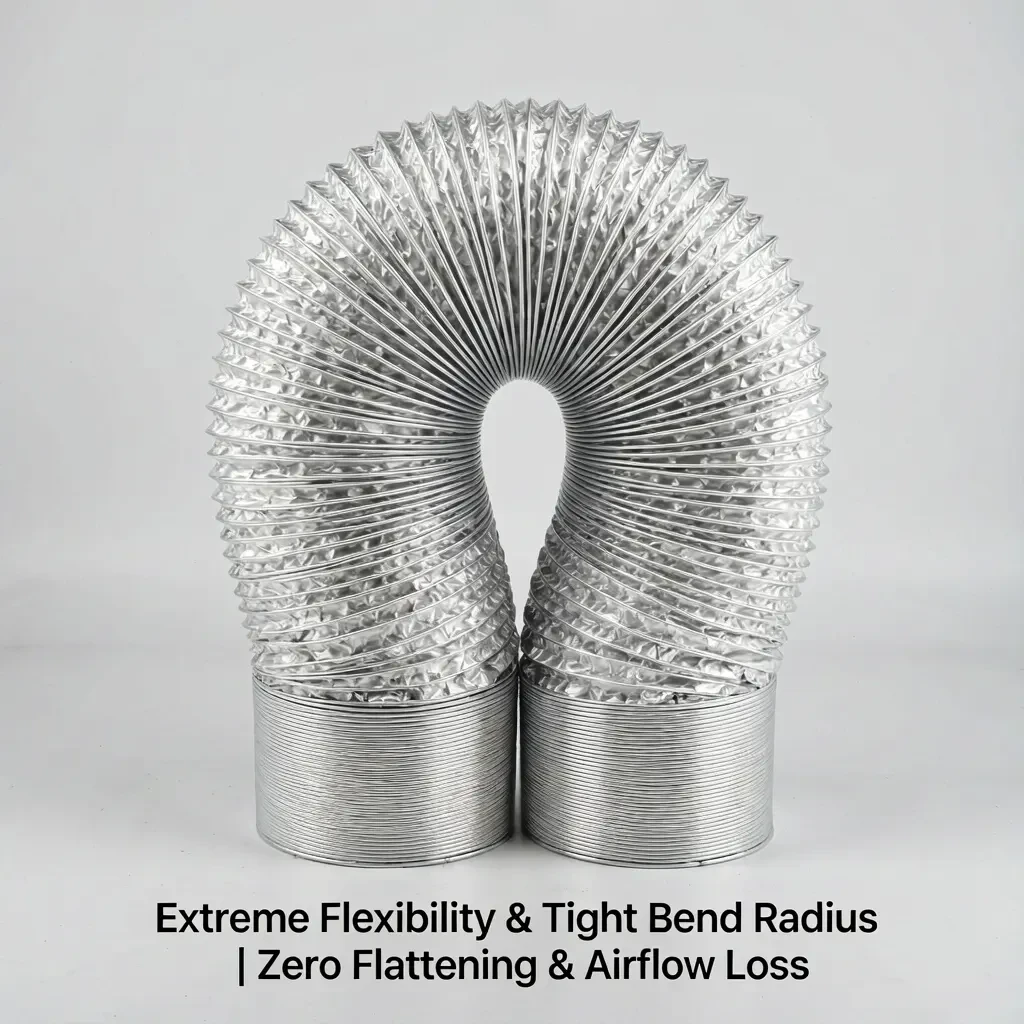
In practice this matters in three places: the branch connection at the air handling unit, the last metre before a ceiling diffuser, and offsets around structural beams. A duct that keeps its bore through those bends lets the fan work against the design pressure instead of against a crushed elbow.
Typical Applications
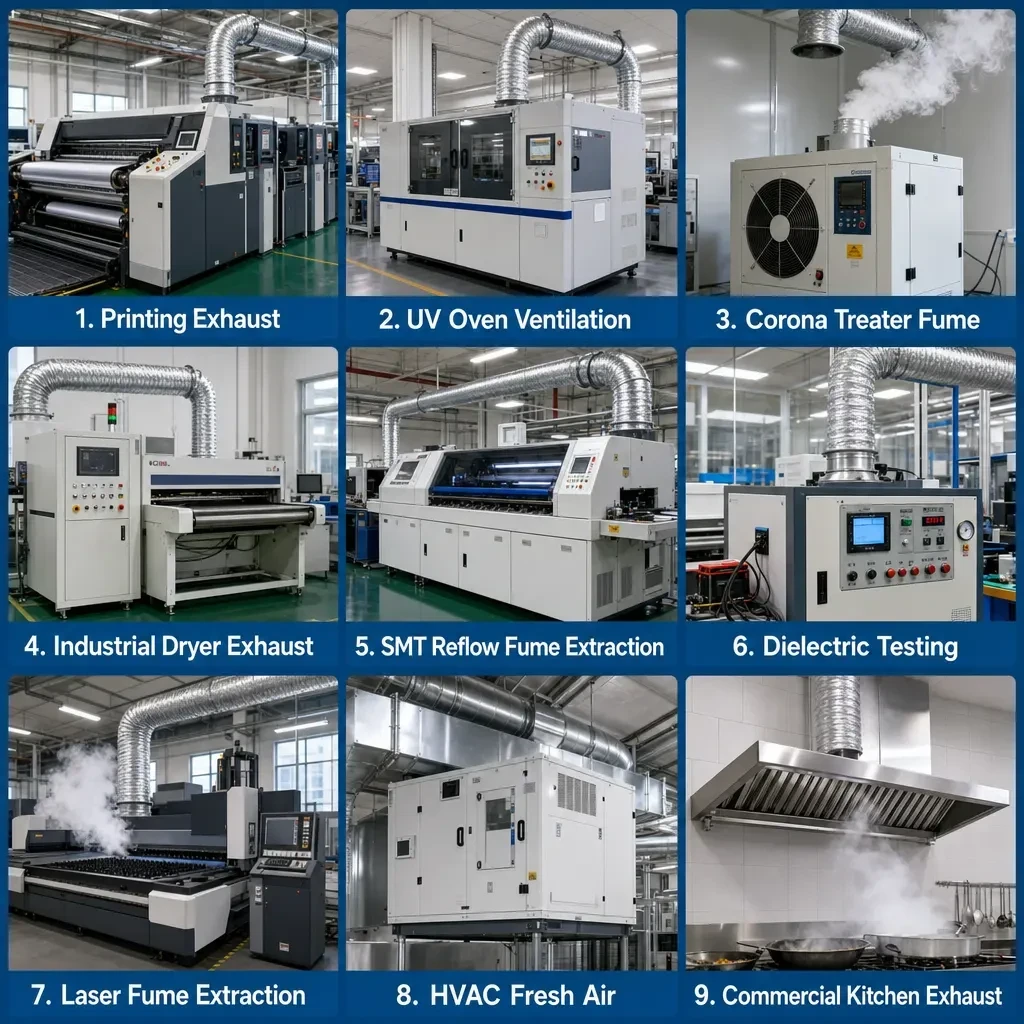
The duct suits any run that needs a flexible connection between a fan, an air handling unit or a process machine and fixed ductwork:
- Electronics and SMT cleanrooms — fume extraction from reflow ovens, wave soldering lines and laser marking stations.
- Commercial HVAC and fresh air — branch connections between air handling units, VAV boxes and ceiling diffusers.
- Printing and packaging plants — solvent fume venting, UV drying oven exhaust and corona treatment discharge.
- Commercial kitchens — range hood exhaust and heat dissipation from commercial appliances.
- Industrial drying and laboratories — hot air exhaust for dehumidifiers, drying hoppers, test benches and test chambers.
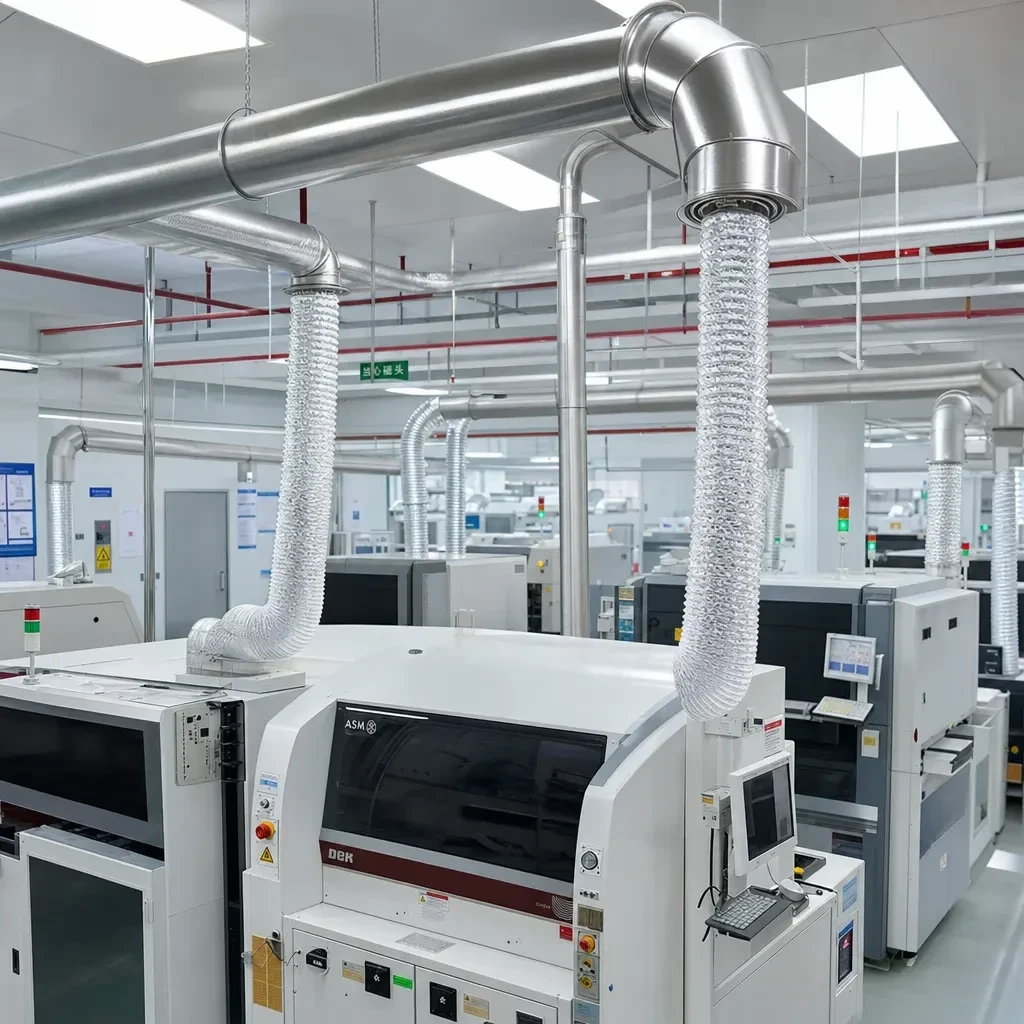
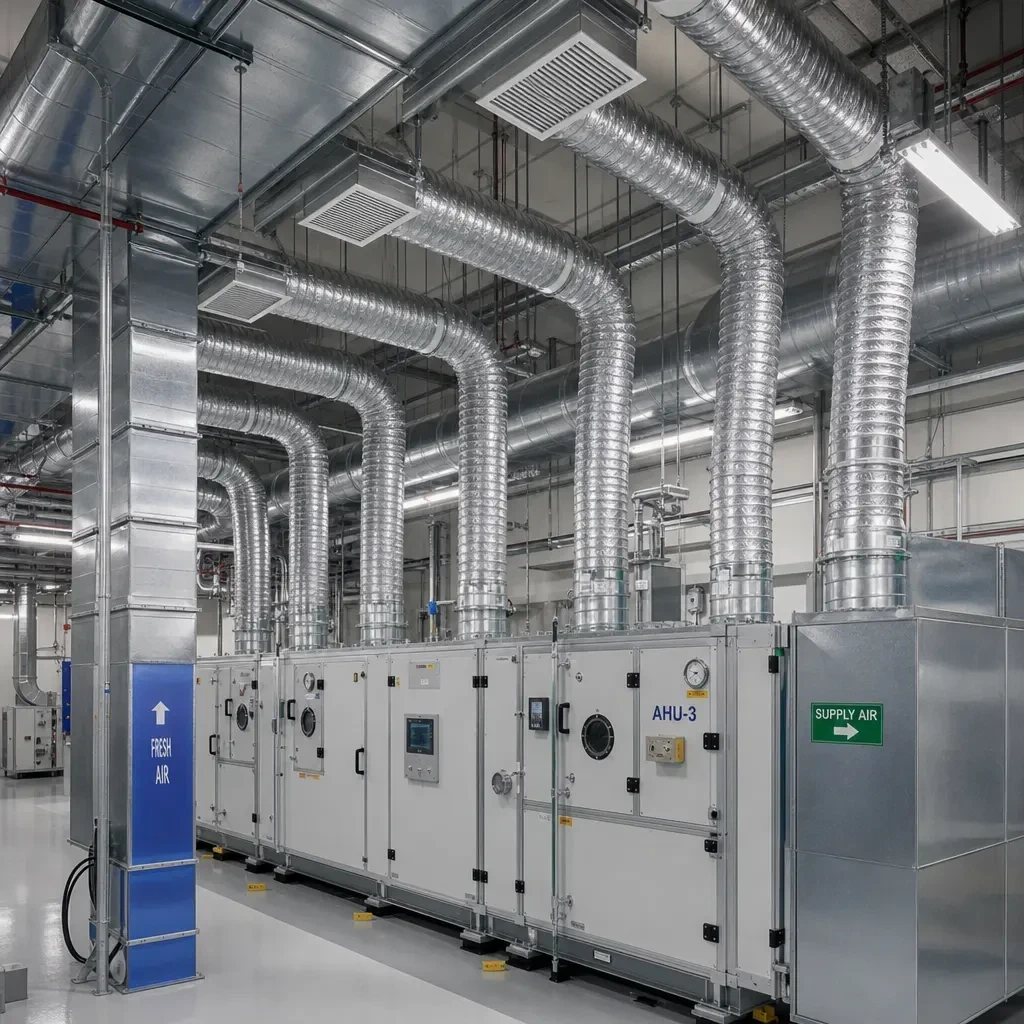
Installation Notes
- Support the run. Hangers every 1.5 m to 2 m keep the duct from sagging and stop the helix carrying the whole weight.
- Keep bends to the minimum the layout allows. Each 90 degree turn adds pressure drop, even when the bore stays open.
- Do not over-tighten clamps. A stainless worm-drive clamp seated on the spigot is enough; over-tightening cuts the foil wall.
- Leave a straight section at the fan outlet. Connect to the fan collar with a short straight length before the first bend to reduce turbulence.
- Secure both ends before starting the fan. Under 2000 Pa of negative pressure an unsecured end can be pulled off the spigot.
- Keep the wall clear of sharp edges. The foil resists punctures, but a cut edge on a bracket will still wear through a duct that rubs against it.
- For kitchen exhaust, follow the local grease duct rules and build regular cleaning into the maintenance schedule.
Packing, OEM and Quality Control
Ducts compress to roughly one tenth of their extended length, which cuts ocean freight and warehouse space for distributors. Custom inner diameters, protective outer layers, printed inner cartons and pre-cut lengths are available for OEM and ODM orders. Each production batch is checked for airtightness, tensile strength and helix consistency before dispatch.
Frequently Asked Questions
What does 4.5s four-layer mean?
4.5s describes the foil thickness of the heavy-duty layer. The wall as a whole is a four-layer composite: aluminum foil on both faces, a polymer laminate for bonding and airtightness, and a reinforcement layer that carries load under vacuum.
What pressure can the duct handle?
Up to +2500 Pa positive and -2000 Pa negative. Stay inside that range at the fan curve you actually run, not just at the design point.
What is the temperature range?
-30 °C to +150 °C. Above that, an aluminum foil duct is the wrong build; a silicone or fiberglass high temperature duct is the correct choice.
Which diameters and lengths are available?
50 mm to 600 mm inner diameter (2 in to 24 in), supplied in 5 m and 10 m lengths. Custom lengths can be cut for project orders.
How does it connect to a fan or an AHU?
Slide the duct over a standard circular spigot, fan collar or flange and secure it with a stainless steel worm-drive clamp or a quick flange coupling. No special tools are needed.
Is it suitable for commercial kitchen exhaust?
The duct handles hot, grease-laden air within its temperature range and is widely used for hood exhaust. Kitchen grease duct work is regulated locally, so confirm the requirement for the site and keep the cleaning schedule.
How is it different from a single-layer foil duct?
A single-layer foil duct is lighter and cheaper for low-pressure branch runs. The four-layer build adds foil thickness, a laminate and reinforcement, which is what makes the higher pressure rating and the puncture resistance possible.
Choosing the Right Duct
If the run is short, the pressure is high and the bend is tight, the four-layer foil duct is the practical choice: 50 mm to 600 mm, 2000 Pa vacuum, 150 °C and a bend radius near one duct diameter. The wider aluminum ducting range and the flexible ducting range cover lighter duties, and the ECOOSI team can advise on diameters, pre-cut lengths and samples through the contact form.
Related Articles
Double-Layer Aluminum Foil Flexible Duct with Galvanized Helix: High-Temperature Fume Extraction Guide
Technical guide to the double-layer aluminum foil flexible duct with galvanized steel helix: -30 to +200 °C, about 3000 Pa negative pressure, 50-300 mm diameters, 5 m lengths, and use in semiconductor, UV curing, laser and precision fume extraction.
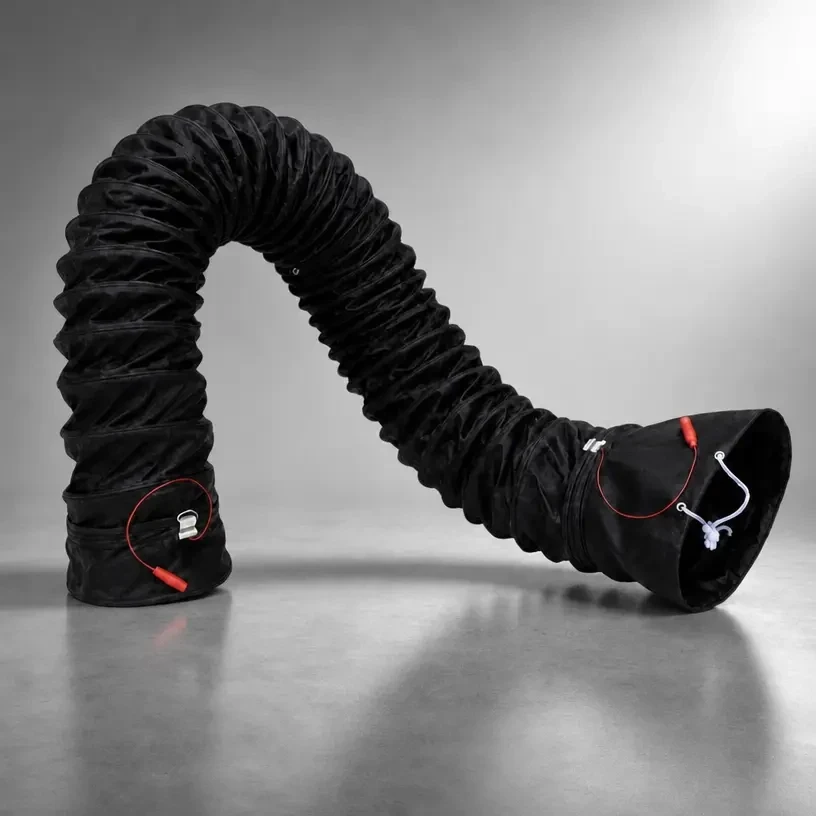
Explosion-Proof Anti-Static Flexible Ventilation Duct: PVC Ducting Guide for Flammable Areas
How anti-static PVC flexible ducting controls static charge in flammable and explosive areas: conductive wall around 2 x 10^5 ohm, spiral steel wire helix, 150-1000 mm diameters, 10 m lengths, -20 to +100 °C, plus grounding and installation checks.
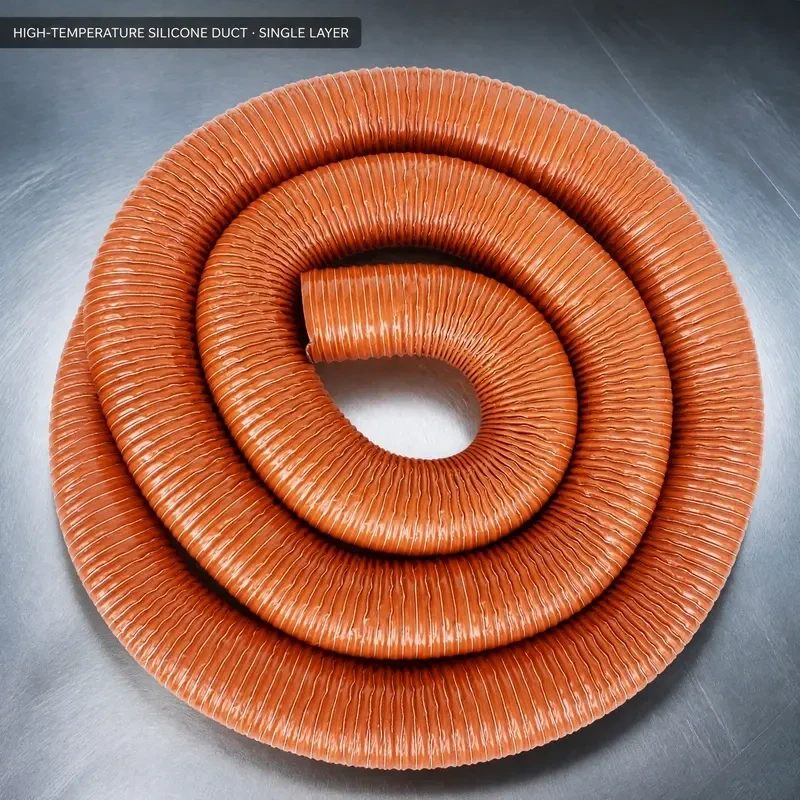
Single Layer Silicone Duct Hose: High-Temperature Flexible Ducting Guide
A practical guide to single layer silicone duct hoses: silicone coated glass fiber construction, -70 °C to 260 °C working range, 16-254 mm diameters, standard 4 m lengths or custom lengths with cuffs, installation checks and application notes.