
Platinum-Cured Peristaltic Pump Silicone Tubing: Food and Pharma Grade Selection Guide
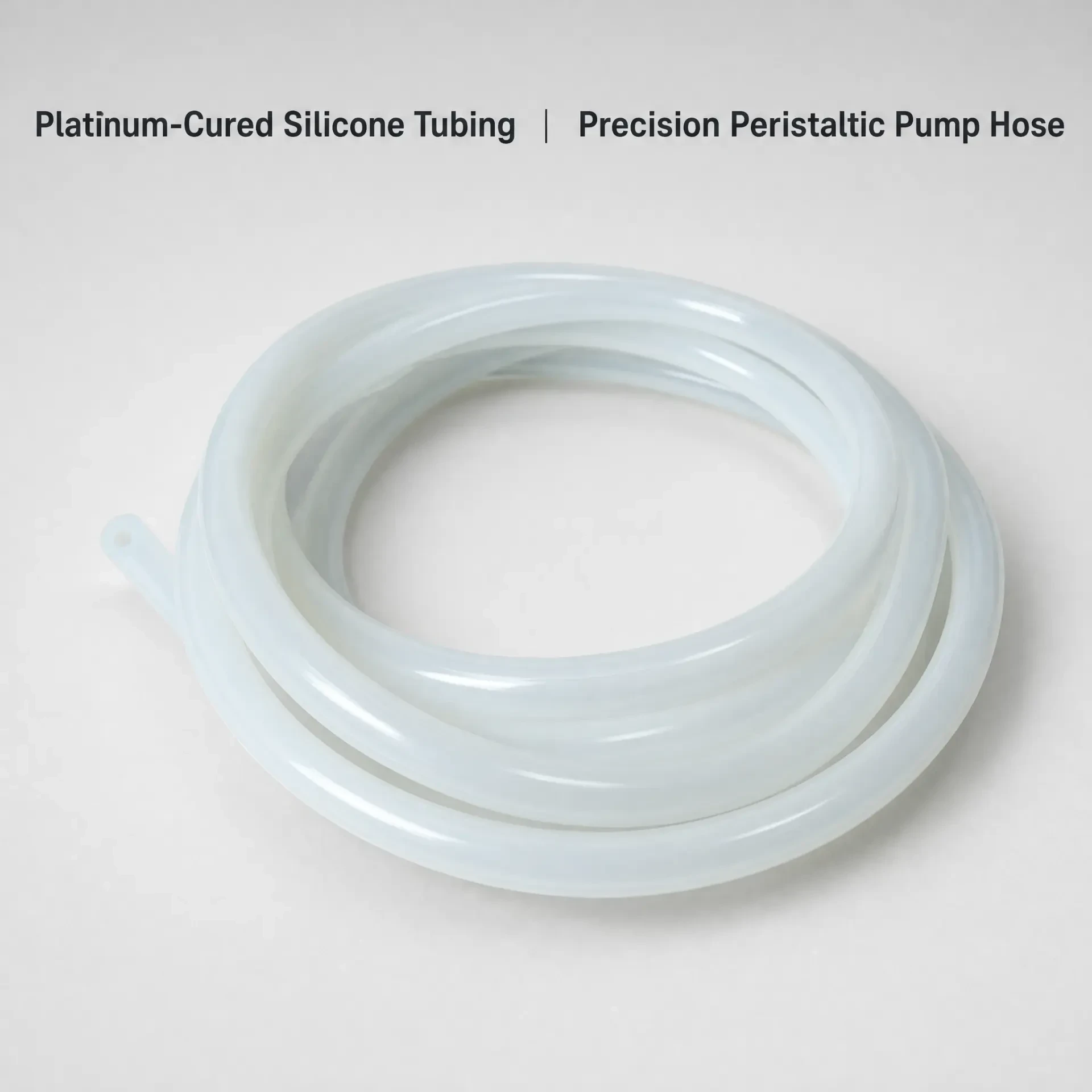
Selection guide for platinum-cured peristaltic pump silicone tubing: low extractables, smooth high-concentricity bore, -73 °C to +204 °C, steam, EtO and gamma sterilisation, 15 m rolls in sizes 16# to 82# for pharma filling, IVD and food dispensing.
Platinum-cured peristaltic pump silicone tubing is a high-purity, food and pharmaceutical grade tube built for repeated roller occlusion. The platinum cure leaves no peroxide curing residues, the bore is smooth and highly concentric, and the working range is -73 °C to +204 °C. It is supplied in 15 m rolls across the standard peristaltic sizes from 16# to 82#, and can be steam autoclaved, EtO or gamma sterilised.
This guide covers where the tube is used, why the cure system matters more than the colour of the tube, how to pick a size, and what to check before it goes onto a filling line.
What Peristaltic Tubing Has to Survive
A peristaltic pump has no valve, no seal and no wetted impeller: the tube is the pump. That makes the wall the single component that decides flow accuracy, sterility and downtime. Four failure modes account for most problems on real lines:
- Peroxide bloom and extractables. Peroxide-cured silicone can release curing residues onto the bore, which show up as haze, odour or extra peaks in extractable testing.
- Particulate spallation. Repeated compression fatigues the inner wall until small flakes detach into the fluid path.
- Wall thickness variation. An off-centre bore changes the occlusion volume from one roller pass to the next, so the dose drifts.
- Fatigue failure. The tube flattens, loses recovery and eventually cracks at the point where the roller leaves the shoe.
Why the Cure System Matters
Silicone rubber is crosslinked either with an organic peroxide or with a platinum catalyst. The difference is chemical, not cosmetic.
| Peroxide cure | Platinum cure | |
|---|---|---|
| Crosslinking agent | Organic peroxide, heat activated | Platinum catalyst, addition reaction |
| By-products | Volatile peroxide decomposition residues | No peroxide residues |
| Odour and taste | Can carry a cured rubber smell | Odourless, neutral taste |
| Clarity | Often translucent to hazy | High transparency |
| Extractables | Higher and more variable | Lower, easier to document |
| Colour stability | Tends to yellow with heat and age | Stable, does not yellow |
For pharma filling, vaccine dosing, IVD reagents and food contact, the platinum route is the usual starting point because the extractables profile is lower and more consistent batch to batch. The base polymer is sourced from established silicone suppliers and processed under cleanroom conditions, which is what keeps elastic recovery and dimensional consistency repeatable across production runs.
Elasticity, Wall Memory and Pump Life
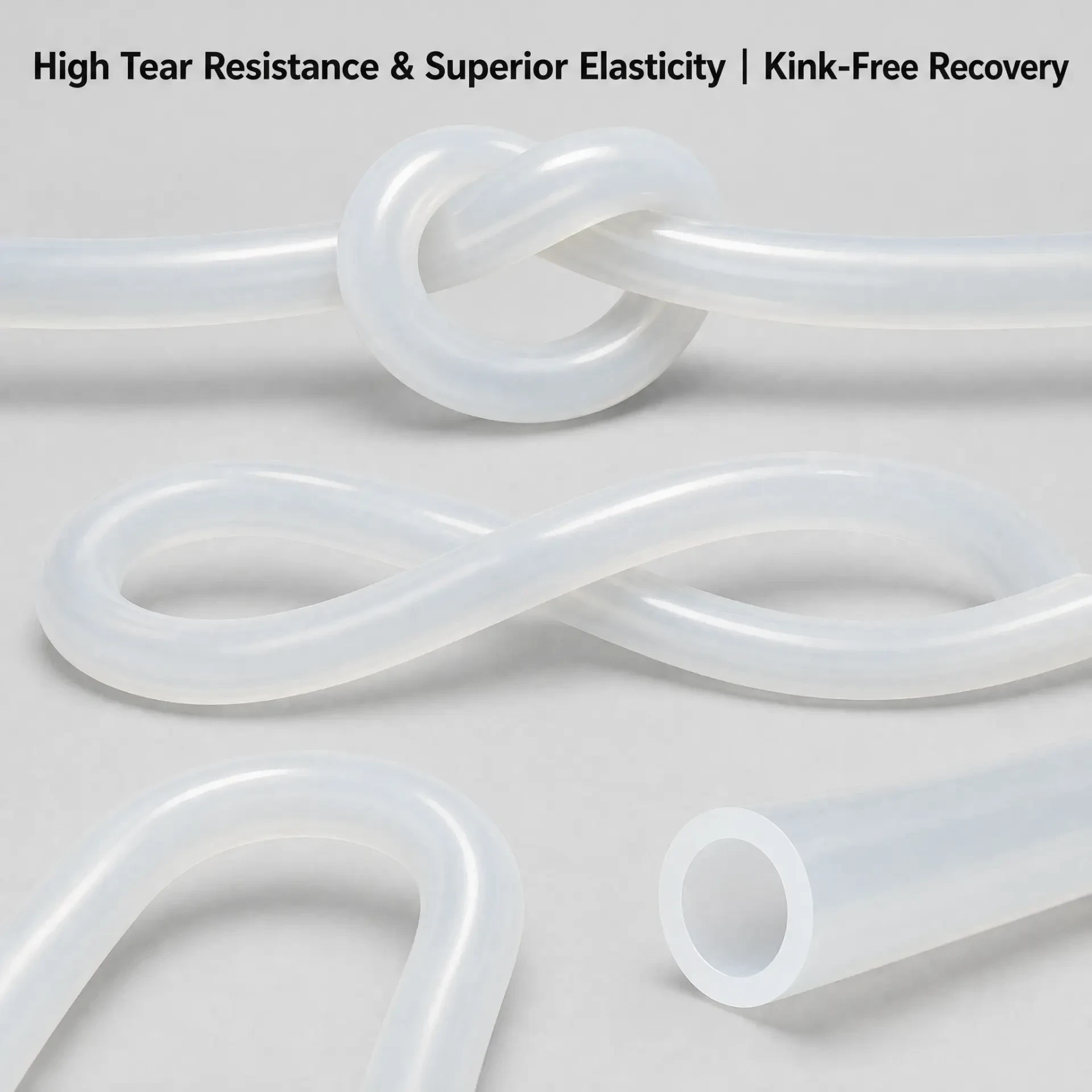
Every roller pass compresses the wall flat and then lets it spring back. If the wall does not recover fully, the occlusion volume shrinks and the flow rate falls away long before the tube visibly fails. High tear strength and good elastic recovery are therefore the real specification, not just a marketing line.
Under standard pump conditions we rate the tube for a typical flex life of 200+ hours of continuous roller fatigue. Treat that as a starting figure: actual life depends on pump speed, occlusion setting, back pressure, fluid chemistry and the number of rollers in the head. Running a tube beyond its recovery point is what produces the flat, cloudy section that stops sealing.
Choosing a Size: 16# to 82#
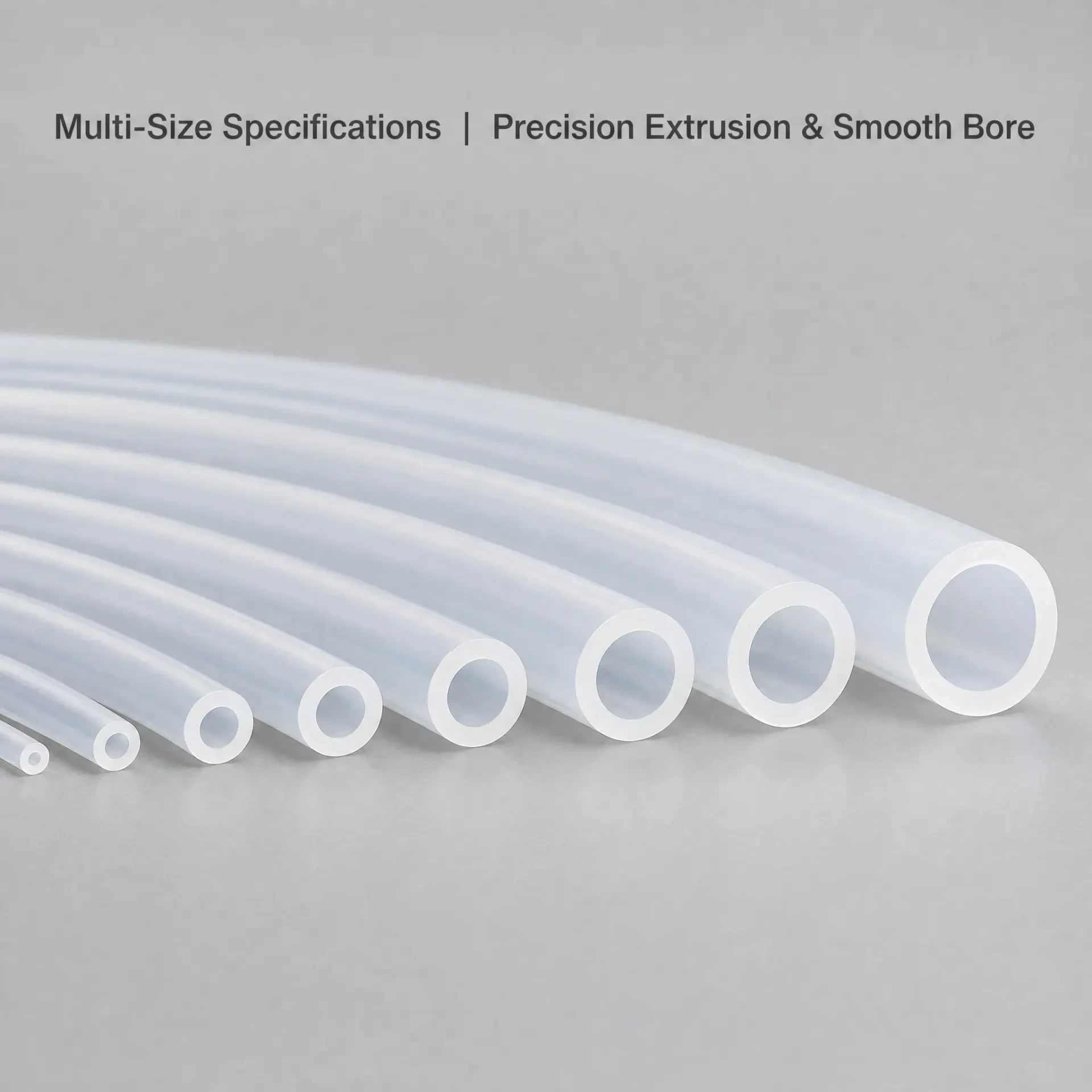
| Model | Standard length | Typical application fit |
|---|---|---|
| 16# | 15 m / roll | Micro-flow reagent dosing, laboratory sampling |
| 17# | 15 m / roll | Analytical instruments, precision dispensing |
| 18# | 15 m / roll | Small-volume liquid packaging, fermentation feed |
| 19# | 15 m / roll | Bioprocess transfer, lab automation |
| 24# | 15 m / roll | Pharmaceutical filling, chemical dosing |
| 25# | 15 m / roll | Medium-flow transfer, bioreactor feed |
| 35# | 15 m / roll | Food processing, liquid dispensing |
| 36# | 15 m / roll | High-flow industrial transfer, filtration |
| 73# | 15 m / roll | Heavy-duty large-volume liquid handling |
| 82# | 15 m / roll | High-volume transfer, paint and ink dispensing |
Custom inner diameters, wall thicknesses and cut lengths are available. Match the tube to the pump head rather than to the hose barb: the head determines the occlusion, the wall thickness sets the spring-back force, and the bore sets the volume per revolution.
Flow Accuracy in the Pump
Peristaltic dosing accuracy comes down to three geometric facts about the tube:
- Concentric bore. If the wall is thin on one side, the roller closes it earlier and the displaced volume changes each pass.
- Uniform wall thickness along the length. Variation between the ends of the same roll shows up as drift between the first and last vial of a batch.
- Smooth inner wall. A rough bore holds fluid, shelters particles and increases shear on sensitive proteins.
Precision extrusion holds the bore and wall to tight tolerance so the same model number behaves the same way on a second pump, which is what makes validation repeatable.
Temperature and Sterilisation
The tube operates from -73 °C to +204 °C (-99 °F to +399 °F). That covers chilled reagent handling, steam sterilisation and hot-fill dispensing without changing material grade.
| Method | Suitability | Note |
|---|---|---|
| Autoclave / steam | Suitable | Confirm cycle time and venting against your validation protocol |
| Ethylene oxide (EtO) | Suitable | Allow aeration time before use |
| Gamma irradiation | Suitable | Check dose against the wall thickness in use |
| Dry heat | Not recommended | Long exposure above the service range degrades the wall |
Compliance and Documentation
The material is produced to meet FDA 21 CFR 177.2600 for food-contact rubber articles, USP Class VI biological reactivity requirements and SGS food-contact testing, with RoHS compliance on restricted substances. Certificates and test reports can be supplied for your regulatory file.
Claims you can use depend on your market and on the device or line the tubing is fitted to. Confirm the specific declaration needed for your submission with us before filing rather than assuming a general statement covers a combination product or a class III application.
Where It Is Used
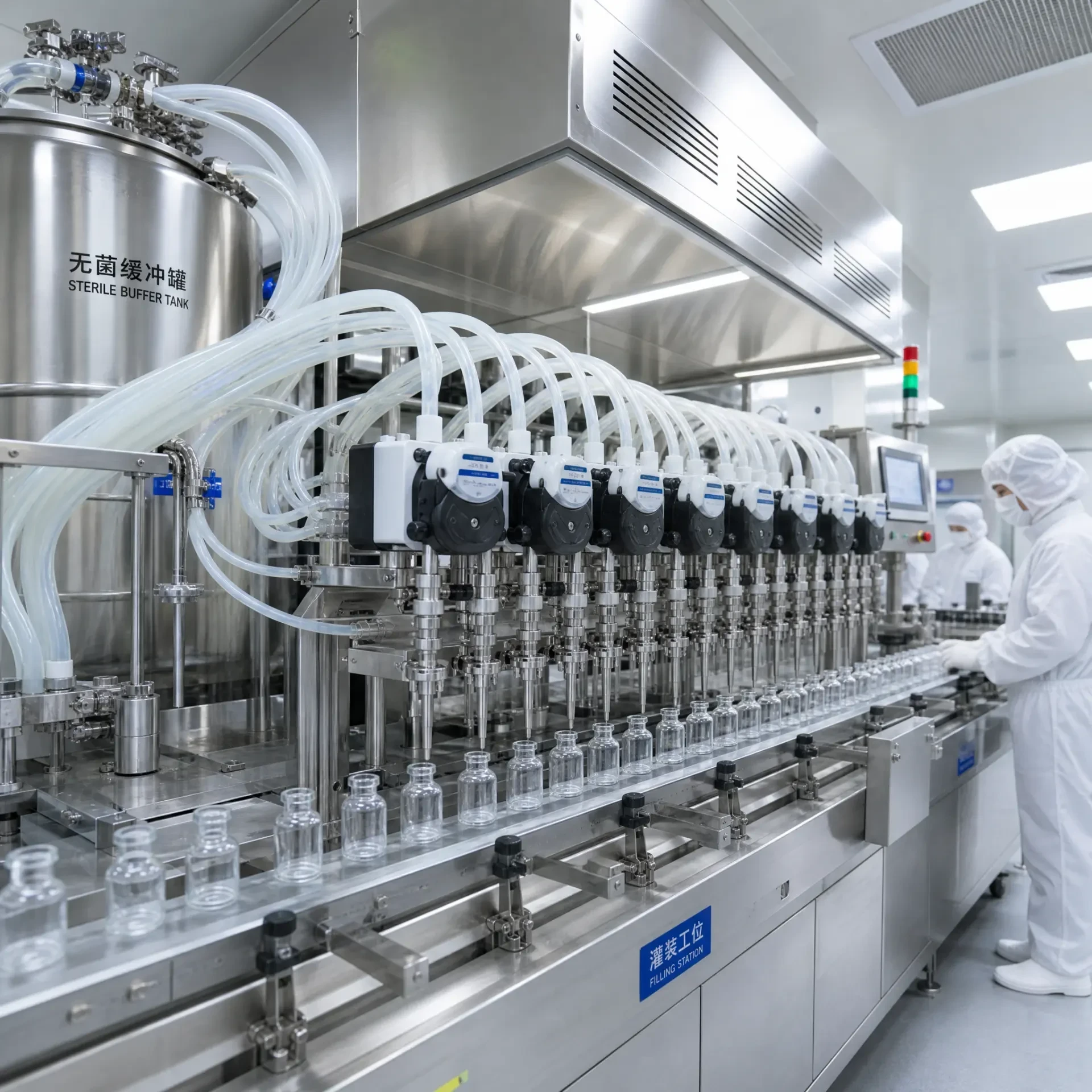
GMP pharmaceutical and biotechnology
Vaccine and vial filling, sterile media transfer, bioreactor sampling and API dosing, where extractables and particulate control decide whether a batch passes.
Medical and diagnostic devices
Dialysis equipment, infusion pumps, surgical suction units and IVD reagent lines, where the tube has to be replaced often and documented every time.
Food, beverage and dairy
Sterile milk dispensing, brewing, syrup metering, flavour dosing and packaging machinery.
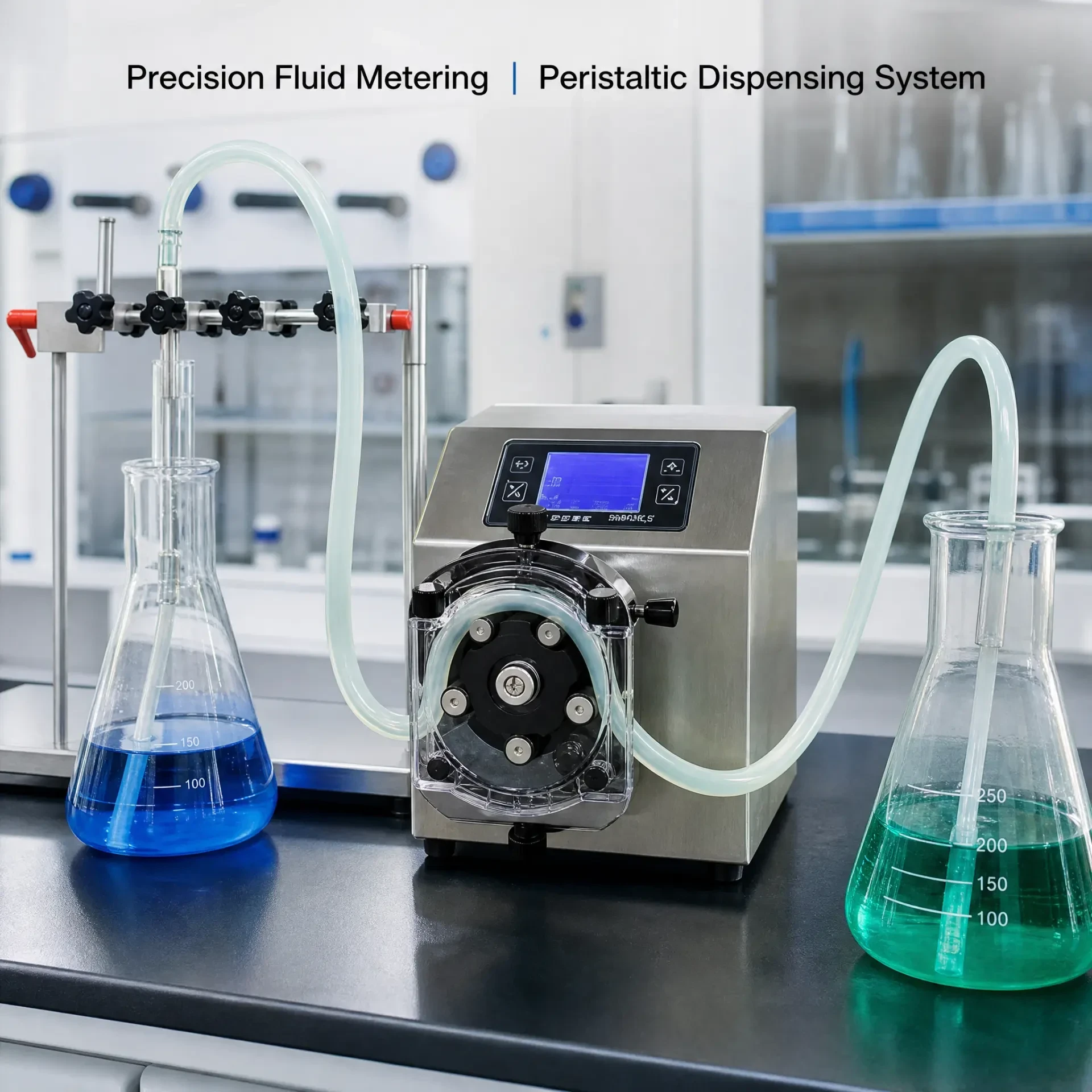
Laboratories and molecular biology
Chromatography feed, titration systems, automated pipetting stations and university research rigs.
Fine chemicals and precision printing
Mild acid and alkali dosing, ink jetting, specialty coating transfer and water treatment metering.
Packaging and Storage
Coils are supplied bagged and labelled with model, lot and length. Store them closed, out of direct sun and away from ozone sources and sharp edges. Under those conditions the natural aging life of the material is typically ten years or more; shelf life shortens with UV exposure and with storage next to solvent vapours.
Installation and Maintenance
- Fit the tube to the head, not to the barb. Stretching a smaller tube over a larger fitting thins the wall and changes the dose.
- Keep the occlusion setting at the pump maker specification. Over-occluding shortens flex life sharply and adds no accuracy.
- Cut square with a sharp blade so the ends seat flat in the head.
- Rotate the tube position on long runs so the compression point moves along the wall instead of concentrating in one spot.
- Replace on schedule — a cloudy, flattened section at the roller exit is the signal, not a leak.
- Flush and dry before sterilisation, and let EtO loads aerate fully before the next batch.
Frequently Asked Questions
How do tube size and concentricity affect pump performance?
Uniform wall thickness, high concentricity and an accurate inner diameter let the rollers occlude the tube the same way on every pass. That keeps the dose repeatable and avoids localised wear that ends in a wall rupture.
How do I confirm the size I need?
Read the model number printed on the existing tube, such as 16#, 17#, 24# or 36#, or measure the inner diameter and wall thickness with a caliper. Send the number or measurements to our technical team for an exact match.
Can it handle every chemical?
It is compatible with a wide range of aqueous solutions, biological buffers and mild chemicals in the pH 4 to 9 range. It is not recommended for concentrated acids, strong alkalis or non-polar solvents such as gasoline, benzene or toluene; check the chemical compatibility chart for anything outside that band.
Why is platinum cure better than peroxide cure for pump tubing?
Because the pump squeezes the wall thousands of times per shift, any curing residue in the material ends up in contact with the fluid. Platinum cure leaves no peroxide residues, gives a smoother bore, lower extractables, better clarity and a longer flex life, and it is the version that carries USP Class VI and FDA food-contact compliance.
Can the tube be autoclaved repeatedly?
Yes, within the service range. Repeated steam cycles slowly stiffen any silicone, so monitor recovery at the roller and replace when the wall stops springing back.
How long can it be stored?
Bagged, sealed and stored away from UV, ozone and solvent vapours, the material keeps its properties for years; the natural aging life is typically ten years or more.
Is it suitable for vaccine filling?
It is used on vaccine and sterile filling lines, and the documentation needed for that use can be supplied. The final decision sits with your validation and regulatory team for the specific product and filling system.
Do you supply custom diameters?
Yes. Custom inner and outer diameters, wall thicknesses, colours and cut lengths are available, with 15 m rolls as the standard pack.
Next Step
For the wider silicone range see silicone ducting, and for hygienic conveying of powders and granules the food-grade ether PU hose guide covers a complementary construction. If you already know your model number, send it with your fluid, flow rate and sterilisation method to the ECOOSI technical team and we will confirm the tube and the documentation package.
Related Articles
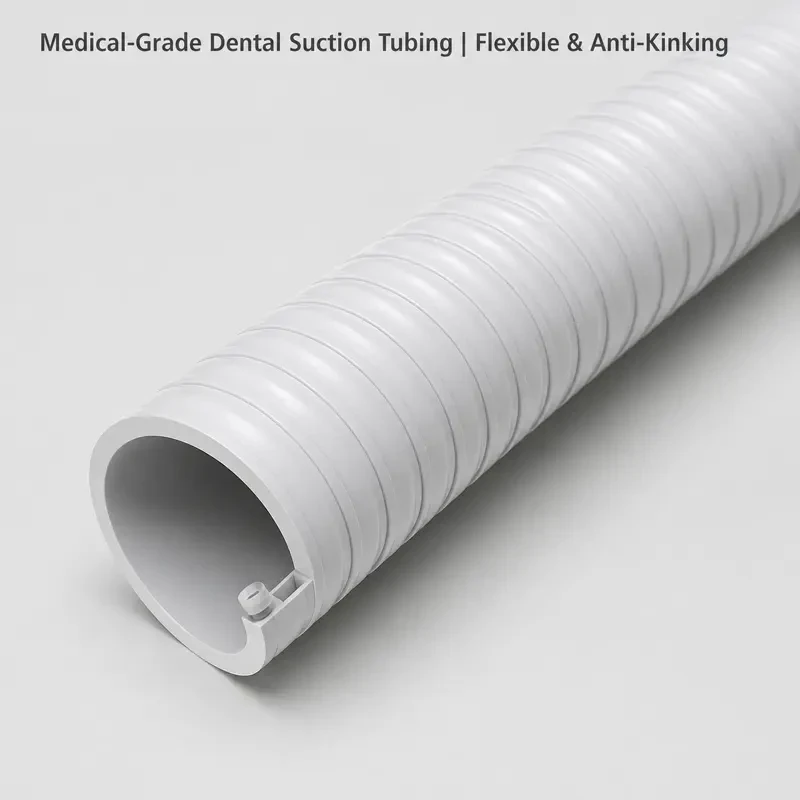
Dental Suction PU Tubing: Double-Layer Latex-Free Guide for HVE and Saliva Ejectors
Guide to the ECOOSI biological-grade double-layer PU dental suction tubing: latex-free and phthalate-free wall, smooth bore and cover, -40 to +90 °C, 10 m coils, for dental chair HVE and saliva ejector lines, oral surgery and medical aesthetic equipment.
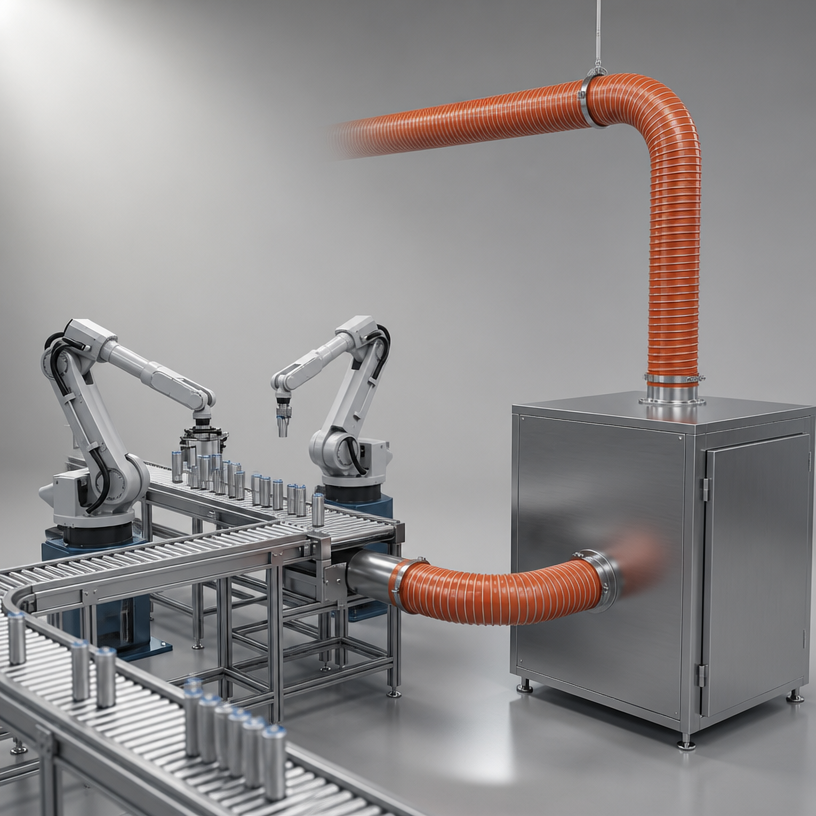
ECOOSI High-Temperature Silicone Hoses for Lithium Battery Factories: Withstanding Heat and Corrosion
Discover how ECOOSI high-temperature silicone duct hoses solve the dual challenges of extreme heat and chemical corrosion in lithium battery manufacturing. Learn about key features, applications, and cost benefits.

How to Select the Right Flexible Duct for HVAC Systems
A comprehensive guide to choosing the right flexible ductwork for HVAC systems, covering material selection, sizing, insulation, wire reinforcement, certifications, and installation best practices.