
800 °C High-Temperature Ducting Hose: 3-Layer High-Silica Fiberglass Guide for Furnace and Engine Test Exhaust
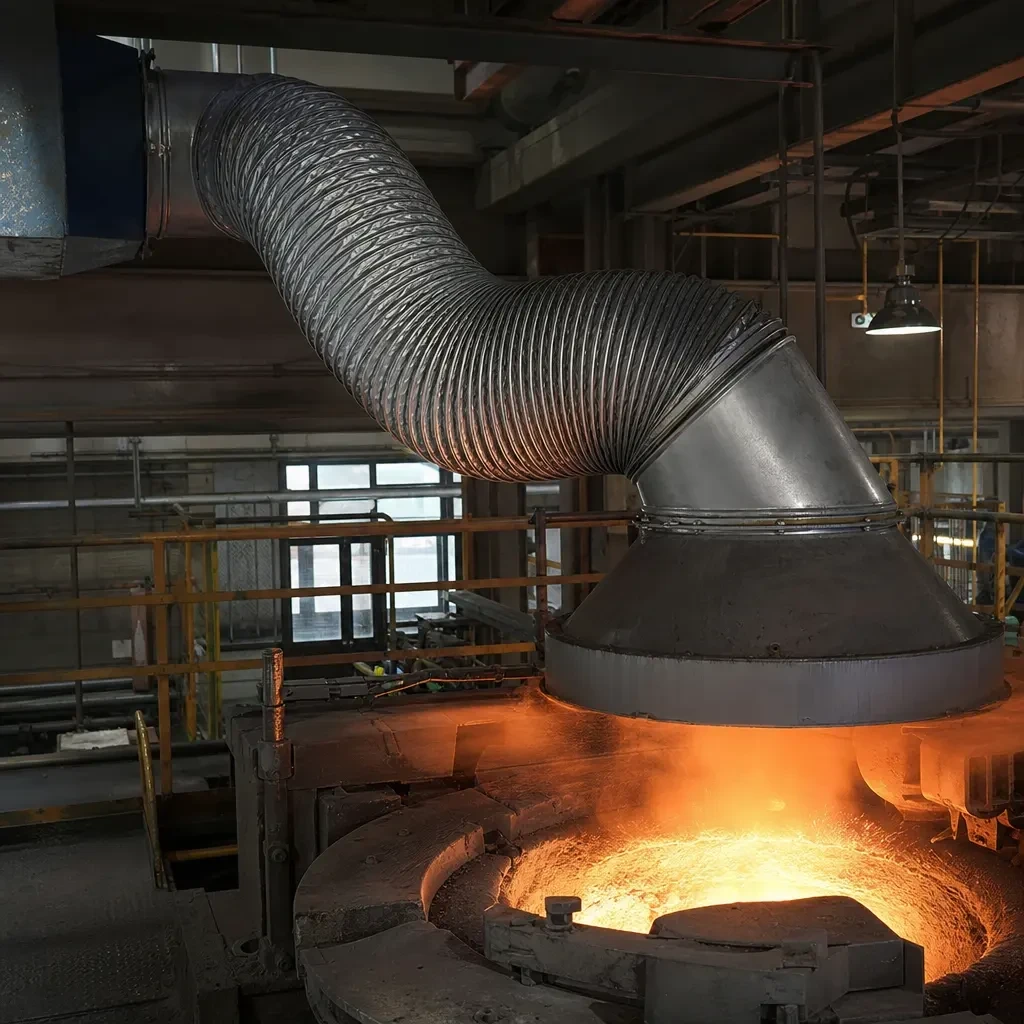
Guide to the ECOOSI 800 extreme high-temperature ducting hose: 3-layer coated fiberglass and high-silica composite, external galvanized clamp-profile helix, -60 to +800 °C, 50-1000 mm diameters, for furnace exhaust, engine test cells and hot dust extraction.
The ECOOSI 800 is a three-layer high-temperature ducting hose built from coated fiberglass and a high-silica fabric core, with a galvanized steel clamp-profile helix clamped around the outside of the wall. It handles continuous exhaust up to +800 °C and stays flexible down to -60 °C, and because the metal helix sits on the outside it takes the abrasion when the duct is dragged across a workshop floor. Standard diameters run from 50 mm to 1000 mm in 3 m, 5 m and 10 m lengths.
This guide covers the three-layer build, the temperature and fire data, why the external clamp profile matters, the applications it suits and the checks that matter at installation.
What Is an 800 °C High-Temperature Ducting Hose?
It is a fabric duct for exhaust that is far hotter than silicone or aluminum foil can survive. Three layers of heat-resistant fabric carry the thermal load, and a steel helix clamped to the outside of the wall holds the shape. That combination lets the duct do two jobs that usually need different products:
- Hot gas extraction — furnace and kiln exhaust, combustion fumes and process off-gas.
- Hot solid extraction — sparks, glowing dust, mineral fibres and abrasive particulate from cutting, welding and smelting.
Between them, they cover most of the exhaust work in a foundry, a test cell or a kiln building.
3-Layer Construction and the Clamp-Profile Helix
| Layer | Function |
|---|---|
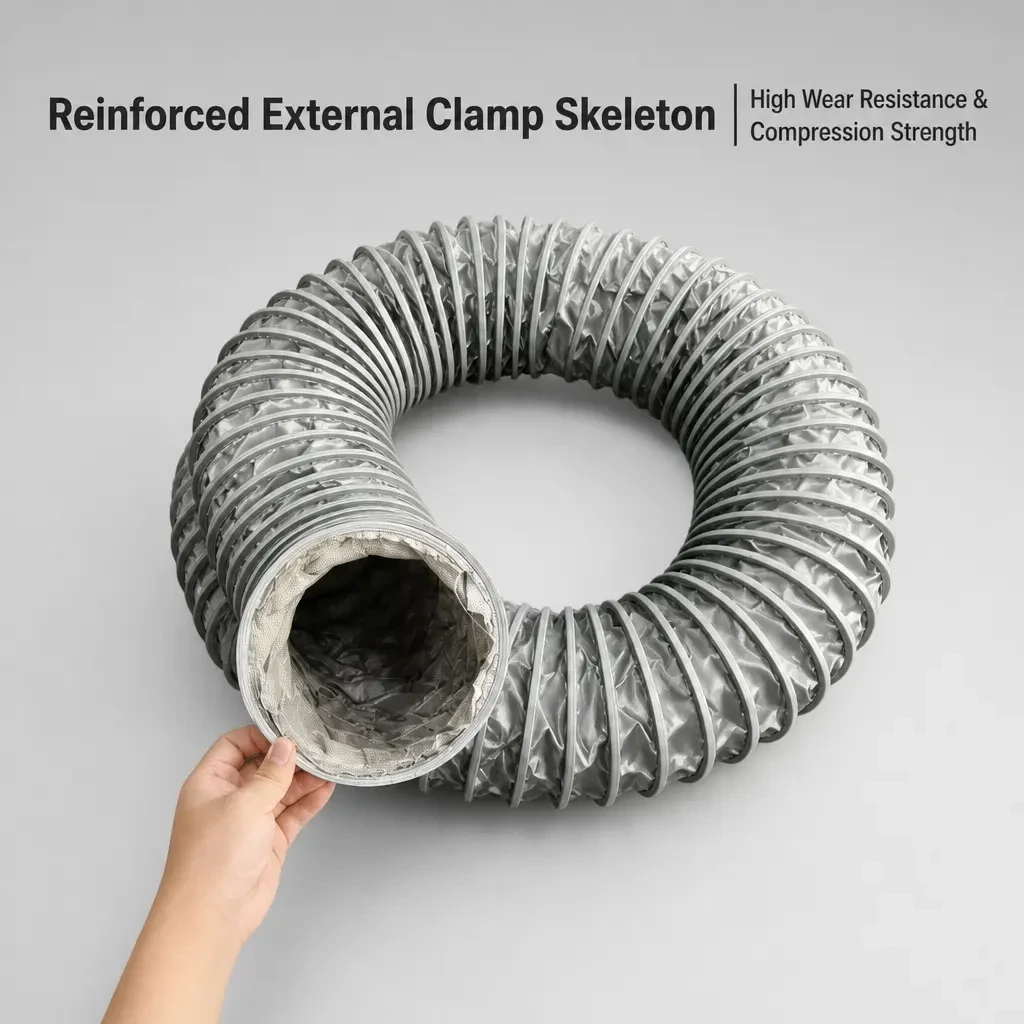
| Outer galvanized helix | Mechanically clamped steel strip and wire, acting as a wear strip and protecting the fabric from floor drag and impacts |
| Outer coated fiberglass | Flame barrier and mechanical reinforcement for the wall |
| Middle high-silica fabric | Thermal barrier that carries the high-temperature duty |
| Inner coated fiberglass | Smooth, low-friction bore resistant to chemicals and sparks |
The clamp profile is the detail that separates this duct from a standard fabric hose. Wire that sits inside the wall leaves the fabric exposed to the floor; wire clamped outside acts as a sacrificial wear strip, so a duct dragged along concrete wears on the steel rather than on the silica fabric. That is also why the duct holds its circular bore under heavy suction and compression.
Technical Specifications
| Parameter | Value |
|---|---|
| Series | ECOOSI 800 extreme high-temperature series |
| Operating temperature | About -60 °C to +800 °C (-76 °F to +1472 °F) |
| Wall construction | Three layers: coated fiberglass, high-silica fabric core, coated fiberglass |
| Reinforcement | Galvanized steel strip and wire helix, external clamp profile |
| Fire behaviour | A1 fire class, non-combustible composite as stated in the product data |
| Inner diameter | 50 mm to 1000 mm (2 in to 40 in) |
| Standard lengths | 3 m, 5 m and 10 m, compressible for shipping |
| Media | Hot exhaust gas, furnace fumes, sparks, abrasive dust, mineral fibres |
| Mechanical traits | Kink resistant, drag resistant, high tensile strength, small bending radius |
| Options | Custom diameters and colours, SS304 or SS316 helix, custom end cuffs |
Temperature Range and Fire Behaviour
The working range is about -60 °C to +800 °C. Two things matter more than the headline figure when specifying it:
- The temperature at the duct inlet, not the furnace set point. Ambient dilution and distance from the hood change the gas temperature a lot, and the inlet figure is what the fabric sees.
- Whether the heat is steady or cyclic. A kiln exhaust that runs at 600 °C for months is a different duty from a ladle hood that spikes to 800 °C for a few minutes per heat.
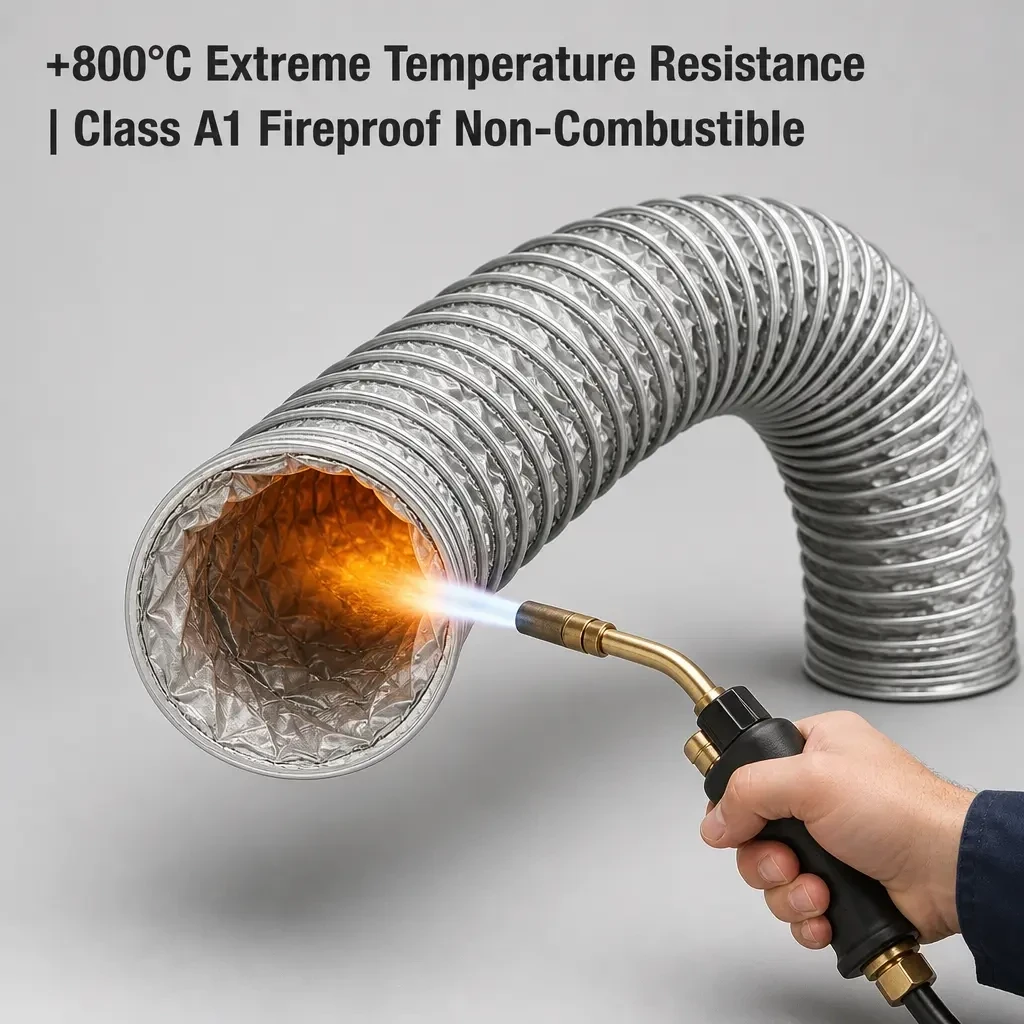
Fire behaviour is part of the specification, not a marketing line. Where the duct passes through a fire compartment or serves a public building, the requirement comes from the local code and the fire strategy for the building, so confirm the applicable class before ordering.
Flexibility, Drag Resistance and Handling
Despite the three-layer wall, the duct bends through tight machine spaces and turns without kinking, which is what makes it usable around a furnace hood, under a vehicle on a dynamometer or between a robot cell and an extraction header. It compresses for transport and pulls out to length on site.
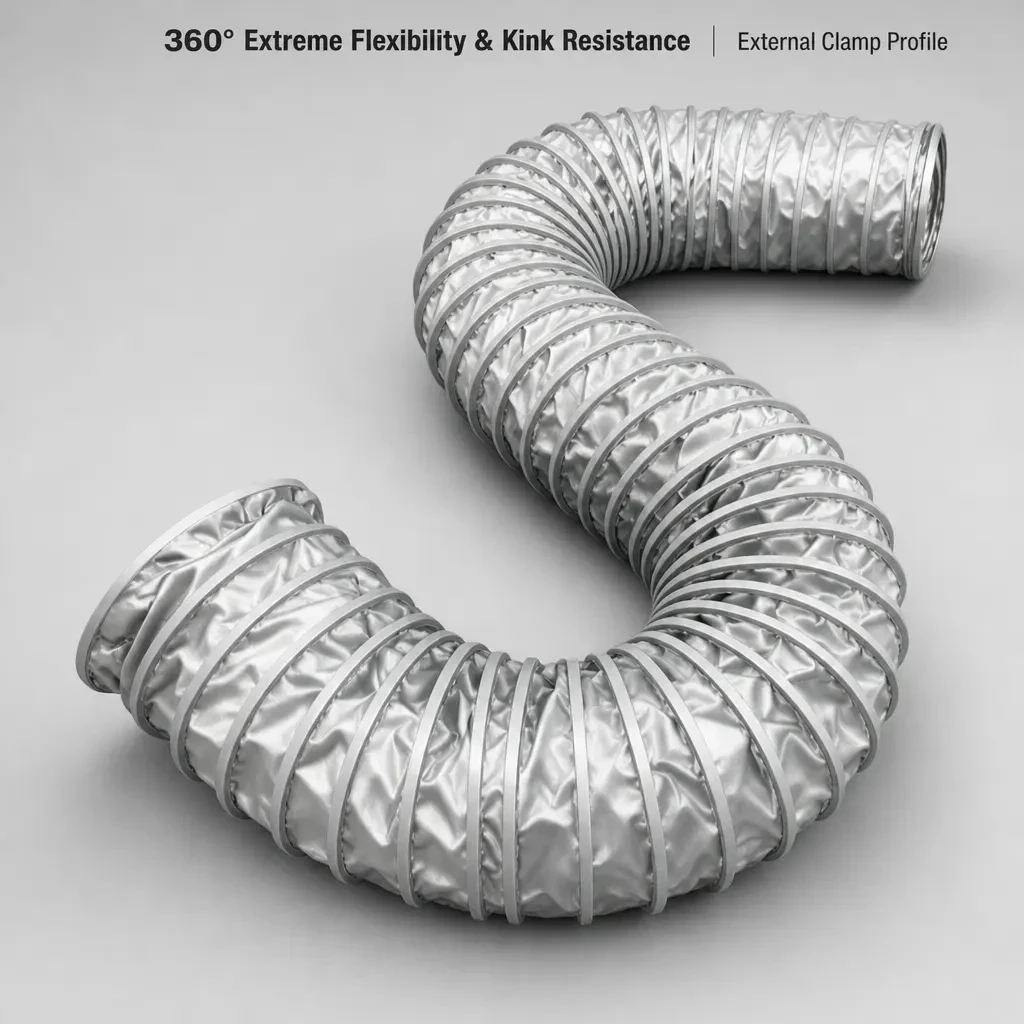
The practical consequence is handling. A duct that has to be moved between heats, dragged out of a pit or repositioned around a test cell needs an outer surface that survives contact with concrete and steel. The external helix is that surface.
Typical Applications
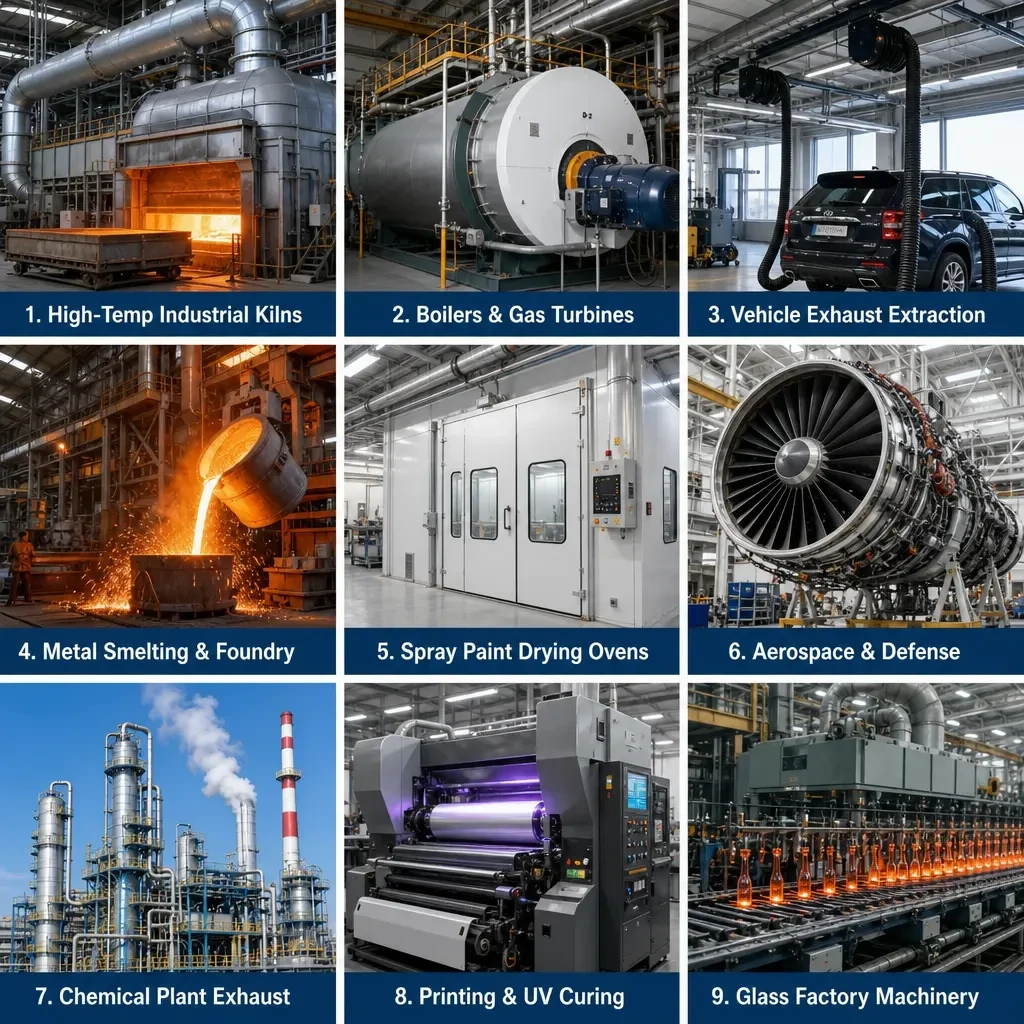
- Furnace and smelting exhaust — blast furnaces, metal smelting, ceramic kilns, glass furnaces and heat-treatment ovens.
- Engine and vehicle testing — dynamometer cells, military vehicle exhaust extraction and diesel exhaust systems.
- Heavy welding and cutting — robotic welding lines, plasma arc cutting and spark-heavy fume extraction.
- Aerospace and turbines — ground support ventilation, turbine exhaust extraction and test benches.
- Hot dust and fibre extraction — high-temperature dust filtration, mineral processing and incinerator flue gas.
Installation Notes
- Keep the run as short as the hood allows. Short runs keep the gas temperature up, which protects the extractor and the filter media downstream.
- Support the duct at the hood end. The duct is heavy at large diameters; a hanger or a bracket near the hood stops the wall carrying the whole weight.
- Leave a straight section before the first bend. A sharp turn straight off a hood throat narrows the effective bore and adds load.
- Clamp the ends properly. Use the end cuffs and clamps supplied for the diameter; a loose end leaks hot gas into the working area.
- Keep the wall clear of sharp steel. The helix resists dragging, but a cut edge can still catch and tear the fabric.
- Inspect the bore periodically. Look for discolouration, fraying and exposed fibre where the duct runs hottest, and replace sections before the fabric fails.
Customisation and OEM
Diameters, length, colour, helix material and end fittings can be specified. Stainless steel helices in SS304 or SS316 are available where the environment attacks galvanised steel, and custom end cuffs can be made to match an existing hood or fan flange. OEM orders can carry custom packaging and documentation.
Frequently Asked Questions
What temperature can this duct handle?
About -60 °C to +800 °C continuous, in the ECOOSI 800 series. The inlet temperature and the cycle pattern matter more than the furnace set point when you specify it.
Why is the steel helix on the outside?
The clamp profile turns the helix into a wear strip. When the duct is dragged across a floor, the steel takes the abrasion instead of the silica fabric, which is where a fabric duct normally fails first.
What are the three layers?
An outer coated fiberglass layer as flame barrier and reinforcement, a middle high-silica fabric as the thermal barrier, and an inner coated fiberglass layer as the smooth bore.
Which diameters and lengths are available?
50 mm to 1000 mm inner diameter, supplied in 3 m, 5 m and 10 m lengths. The duct compresses for shipping, and custom lengths can be made.
Can it handle sparks and hot dust as well as gas?
Yes. The inner coating resists sparks and the fabric handles abrasive particulate, which is why the duct is used for welding fume, plasma cutting and foundry dust as well as furnace exhaust.
When should I choose stainless steel helix instead of galvanised?
When the duct sits in a corrosive atmosphere or handles acidic combustion gas, SS304 or SS316 helix is the better choice because the galvanised coating will not survive there.
Is it suitable for vehicle exhaust extraction in a test cell?
Yes. Diesel and petrol exhaust extraction, dynamometer cells and military vehicle exhaust runs are standard duties for this series.
Choosing the Right Duct
Work down from the inlet temperature: below 150 °C a foil or PVC duct is enough, up to about 260 °C a silicone coated fiberglass duct works, and above that the three-layer high-silica build is the practical choice. The high temperature ducting range covers the rest of the series, the fabric ducting range covers lower-temperature textile duties, and the single layer silicone duct guide explains the silicone option. For diameters, helix material or samples, contact the ECOOSI technical team.
Related Articles
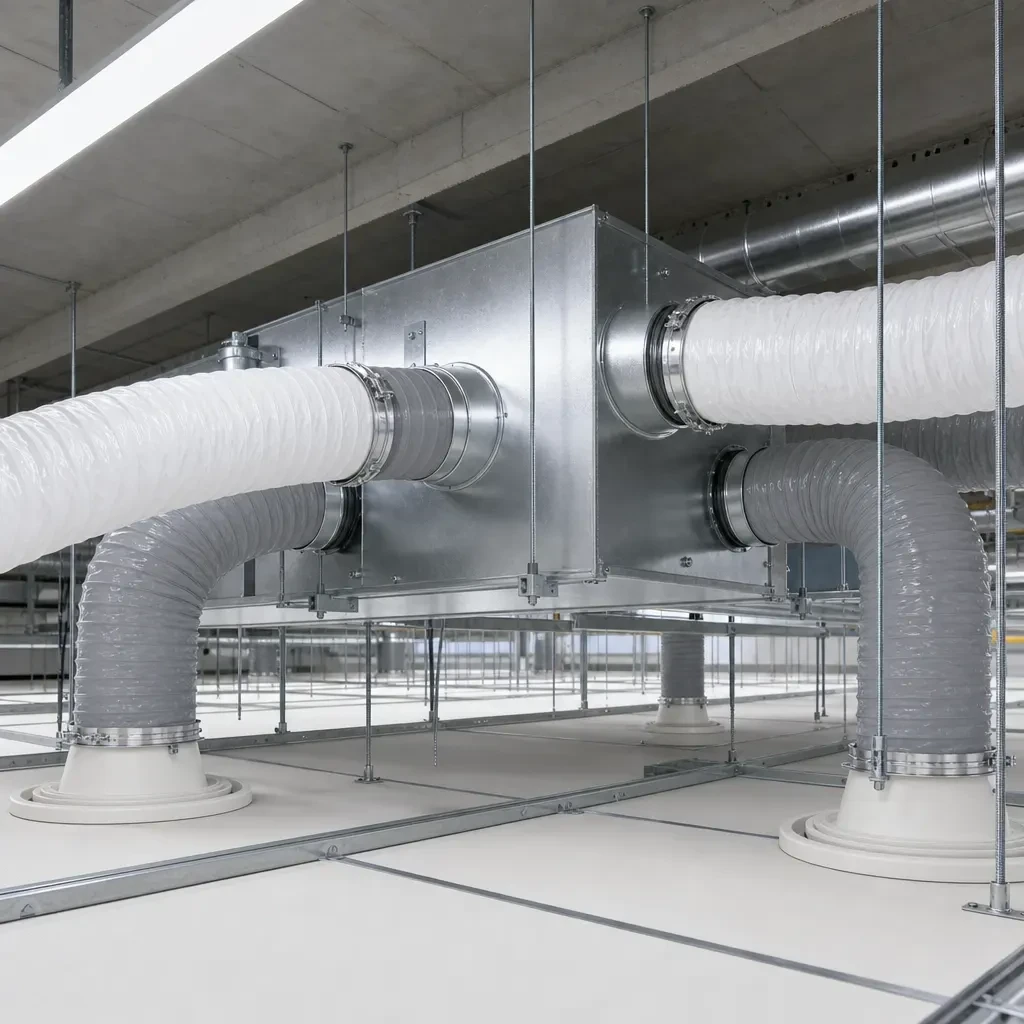
PVC Aluminum Duct Hose: Flexible HVAC Combi Duct Guide for Air, Chillers and Blowers
Guide to the PVC aluminum duct hose (PVC aluminum combi duct): PVC foil bonded to aluminum with a spring steel wire helix, -20 to +150 °C, 51-406 mm diameters, 10 m lengths, about 1:10 compression, plus HVAC, chiller and blower applications.
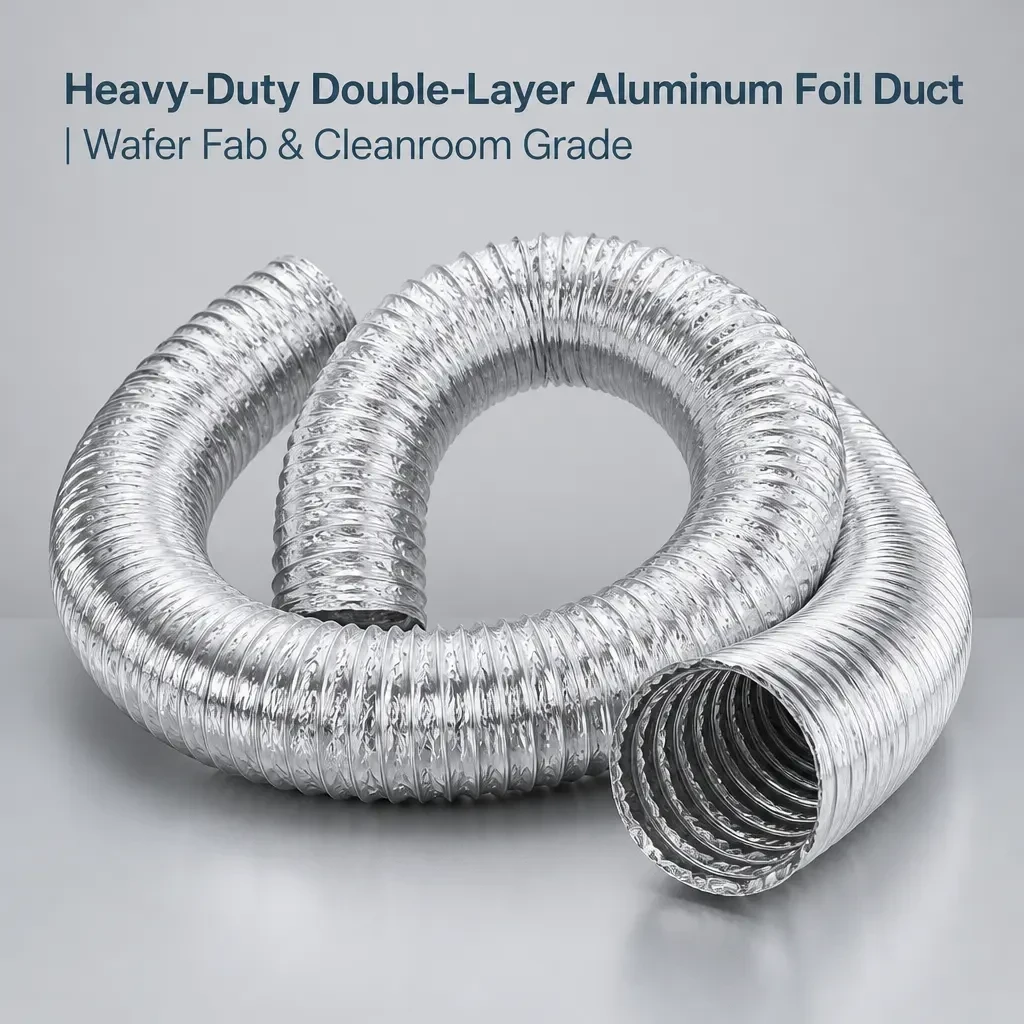
Double-Layer Aluminum Foil Flexible Duct with Galvanized Helix: High-Temperature Fume Extraction Guide
Technical guide to the double-layer aluminum foil flexible duct with galvanized steel helix: -30 to +200 °C, about 3000 Pa negative pressure, 50-300 mm diameters, 5 m lengths, and use in semiconductor, UV curing, laser and precision fume extraction.
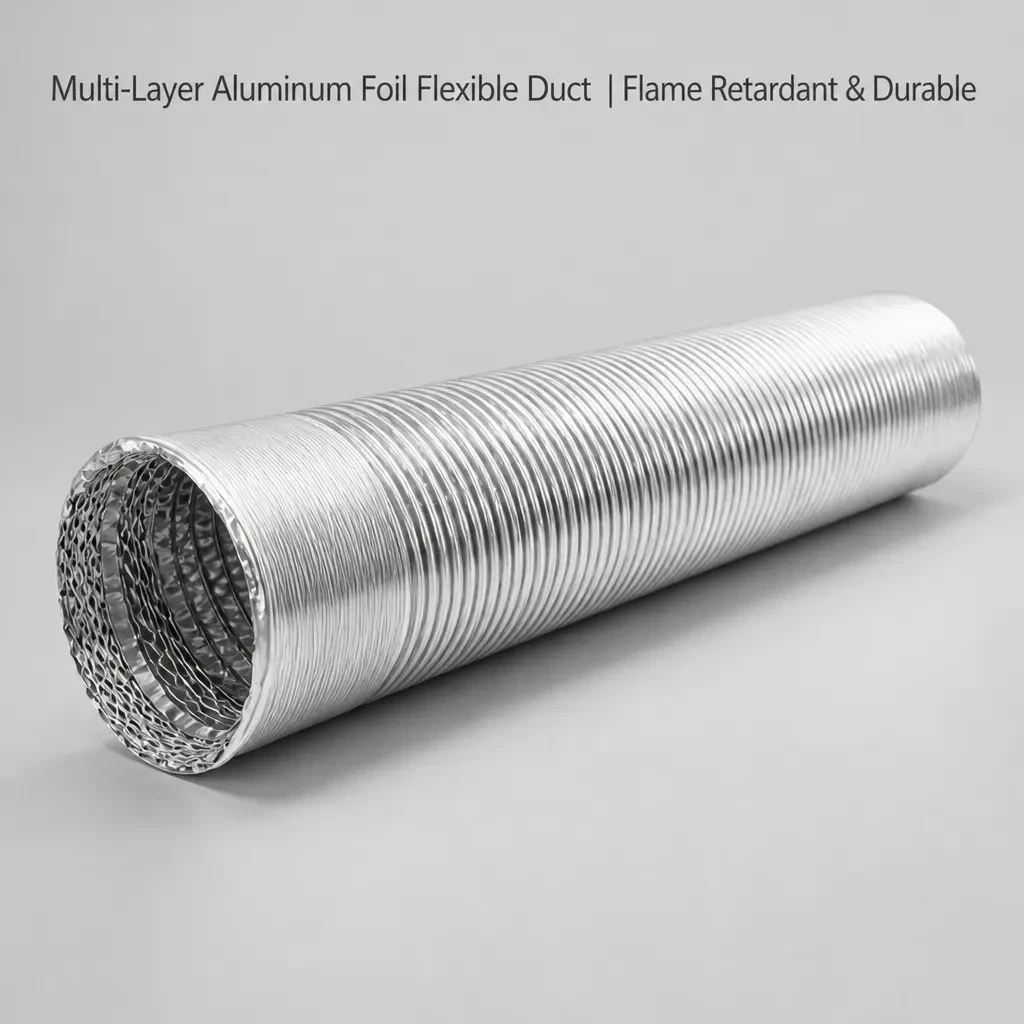
Four-Layer Aluminum Foil Flexible Duct Hose: Heavy-Duty HVAC and Industrial Exhaust Guide
Technical guide to the four-layer aluminum foil flexible duct hose: 4.5s laminated foil wall, 1.5 cm pitch steel helix, 2000 Pa negative pressure, B1 flame retardant, -30 to +150 °C, 50-600 mm diameters, plus HVAC, SMT and exhaust applications.