
Neoprene Air Intake Hose for New Energy Vehicles: Wire-Reinforced EV Duct Guide
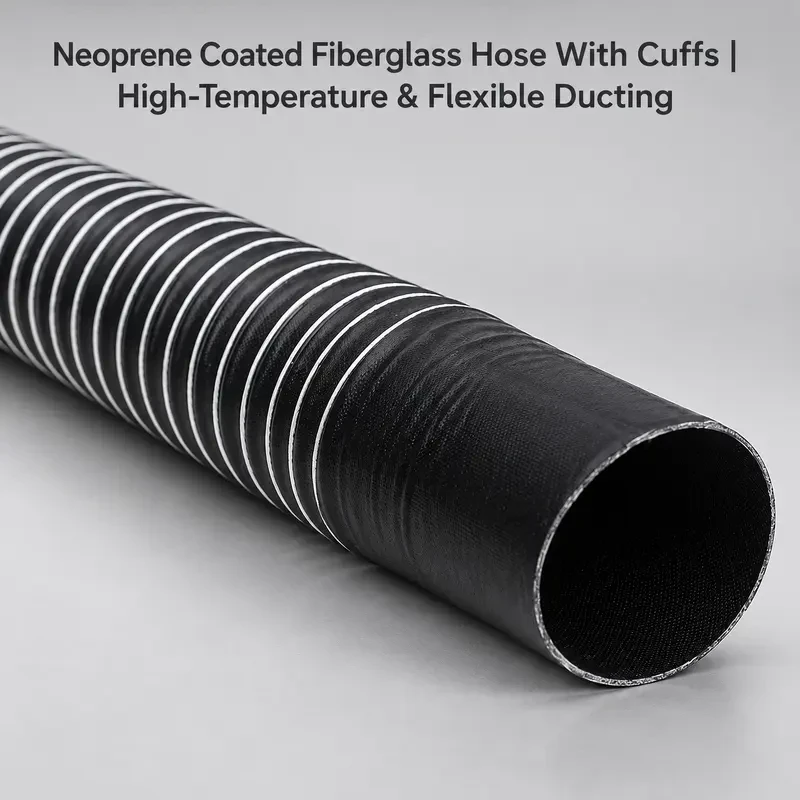
Guide to ECOOSI black neoprene air intake hose for NEV and EV platforms: spring steel wire helix, corrugated body for vibration isolation, -40 °C to +135 °C with +150 °C peaks, 38 to 203 mm bore for air cleaners, battery pack cooling and motor cooling ducts.
The ECOOSI NEV air intake hose is a black neoprene-coated fabric duct with an embedded spring steel wire helix and a corrugated body, rated from -40 °C to +135 °C with short-term peaks to +150 °C. It connects air cleaner housings, battery pack cooling paths and drive motor cooling on electric buses, trucks and passenger EVs, in bores from 38 mm to 203 mm.
On an electric vehicle there is no combustion air, so the hose has a different job from an engine intake: it feeds clean air to compressors, moves cooling air across battery and motor hardware, and has to survive a tight chassis with high vibration and no room for a wide bend.
What an Air Intake Hose Does on an EV
| Circuit | Duty | Why the hose matters |
|---|---|---|
| Air compressor intake | Clean air to the screw or piston compressor that charges the air brake system on buses and trucks | Dust ingress wears the compressor; a collapsing hose starves it |
| Battery pack cooling | Cooling air in, exhaust air out of the pack enclosure | Flow has to stay unrestricted, and the wall has to take road vibration |
| Motor and inverter cooling | Auxiliary cooling air to the drive motor, controller and DC-DC module | Small bore, tight routing, continuous vibration |
| Air cleaner connection | Link between the filter housing and the duct run | The hose isolates the filter from chassis movement |
Construction
| Layer | Material | Function |
|---|---|---|
| Outer wall | Neoprene-coated reinforced fabric | Oil, ozone, abrasion and weather resistance; flame-retardant barrier |
| Reinforcement | Embedded spiral high-tensile spring steel wire | Hoop strength against intake suction and crush |
| Fabric base | Woven glass fibre or polyester reinforcement | Tensile and tear strength |
| Body | Corrugated profile, plain cuffs at both ends | Multi-axis flex, clamp sealing without tools |
Neoprene is the reason this duct survives an engine bay or a battery compartment rather than a clean factory ceiling: it resists oil mist, ozone from electrical equipment, road splash and UV, and it stays flexible at -40 °C when a bus is parked outside overnight.
Why the Wire Helix Matters
Air cleaner and compressor intakes pull a real vacuum. A fabric duct without reinforcement flattens between the clamps, the flow area drops, and the compressor or fan runs against a restriction it cannot see.
The embedded steel helix holds the section open along the whole run, so the bore stays round even when the hose is pulled into a curve. The same wire resists crushing when a duct is pressed against a chassis rail or stepped on during assembly.
Corrugation, Vibration and Routing
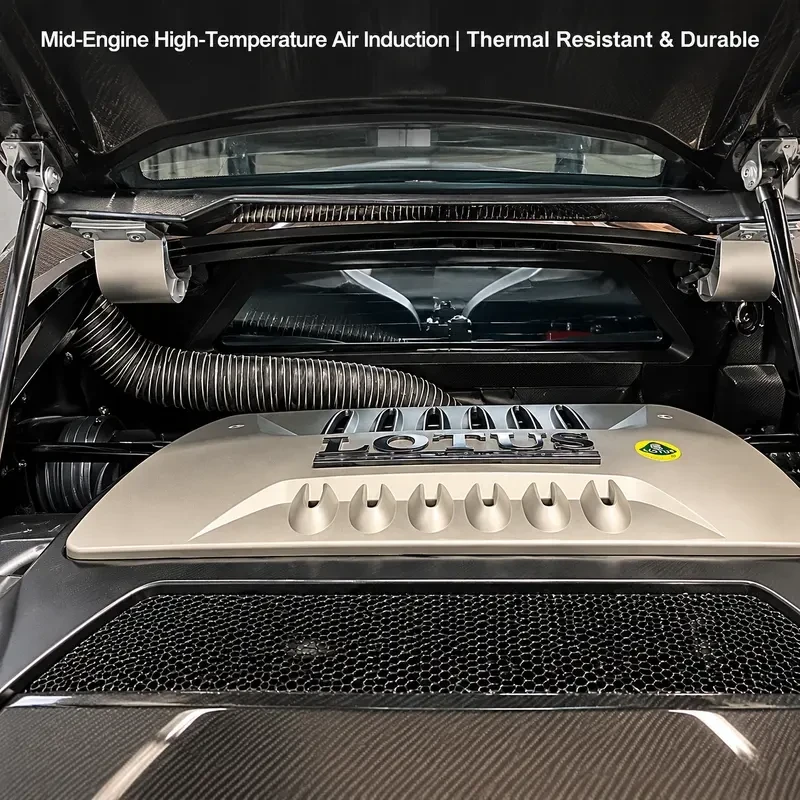
Road input, motor torque reaction and thermal expansion all move the two ends of a duct relative to each other. A rigid pipe transmits that movement into the housing and the clamp; a corrugated hose absorbs it in the ribs.
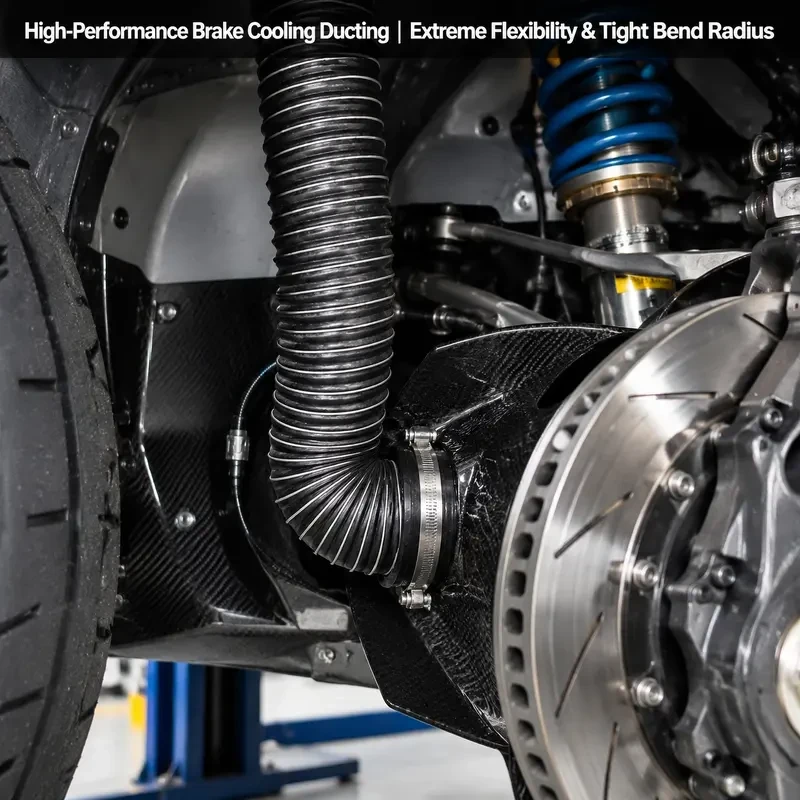
The tight bending radius is what makes packaging possible in a modern chassis. The hose can turn 90 degrees within a few diameters, which is why it appears in brake cooling paths and battery box inlets where there is no room for a formed pipe.
Temperature and Ageing
| Parameter | Rating |
|---|---|
| Continuous working temperature | -40 °C to +135 °C (-40 °F to +275 °F) |
| Short-term peak | +150 °C (+302 °F) |
| Cold behaviour | Stays flexible, no cracking at -40 °C |
| Ageing | Resists ozone, UV, oil mist and road splash |
Battery compartments and motor bays are warm but rarely exhaust-hot, which is why the neoprene duct covers this duty without the cost of a silicone construction. For a genuine hot-gas exhaust route, an EPDM or high-temperature duct is the correct choice instead.
Flame Retardancy
The wall is formulated as a self-extinguishing, flame-retardant compound for automotive air duct duty. Flame performance is a vehicle-level requirement: the rating has to match the location in the vehicle, the test standard your programme uses and the acceptance criteria of the OEM. Ask us for the current test report and confirm it against your specification rather than relying on a catalogue statement.
The neoprene wall also provides electrical insulation, which matters where a duct passes near high-voltage harnesses. It is not a substitute for the vehicle electrical safety design.
Sizes and End Cuffs
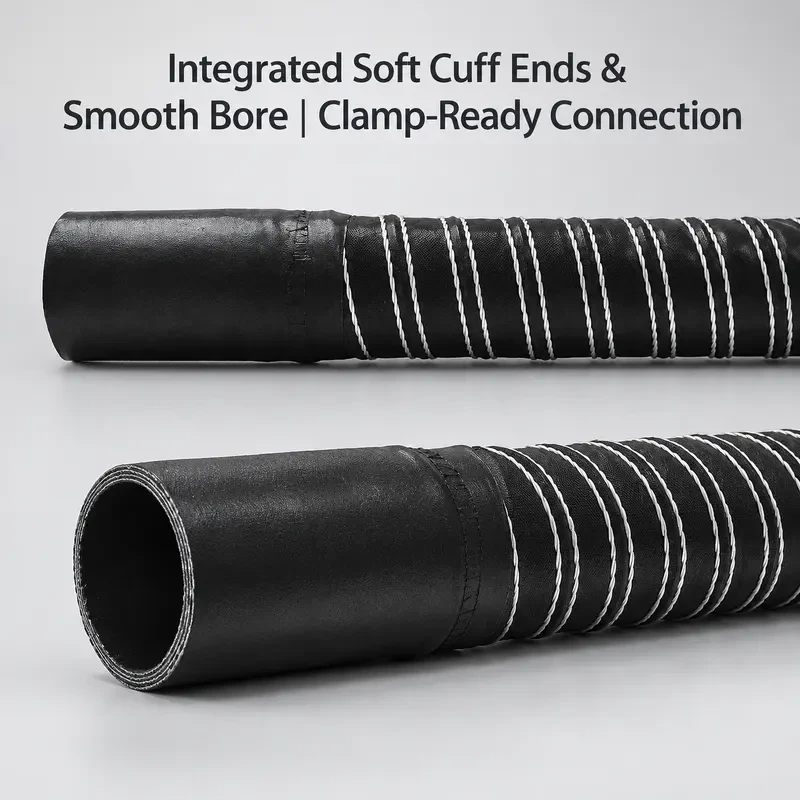
Standard bores run from 38 mm to 203 mm (1.5 to 8 inch) to suit common air cleaner necks and compressor inlets. The plain cuffs give the clamp a straight, sealed surface instead of clamping on a corrugation, which is where most intake leaks start.
Custom bore, length and cuff configuration are available for production programmes, along with a matte black finish that matches underbody and engine bay components.
Connecting to an Air Cleaner
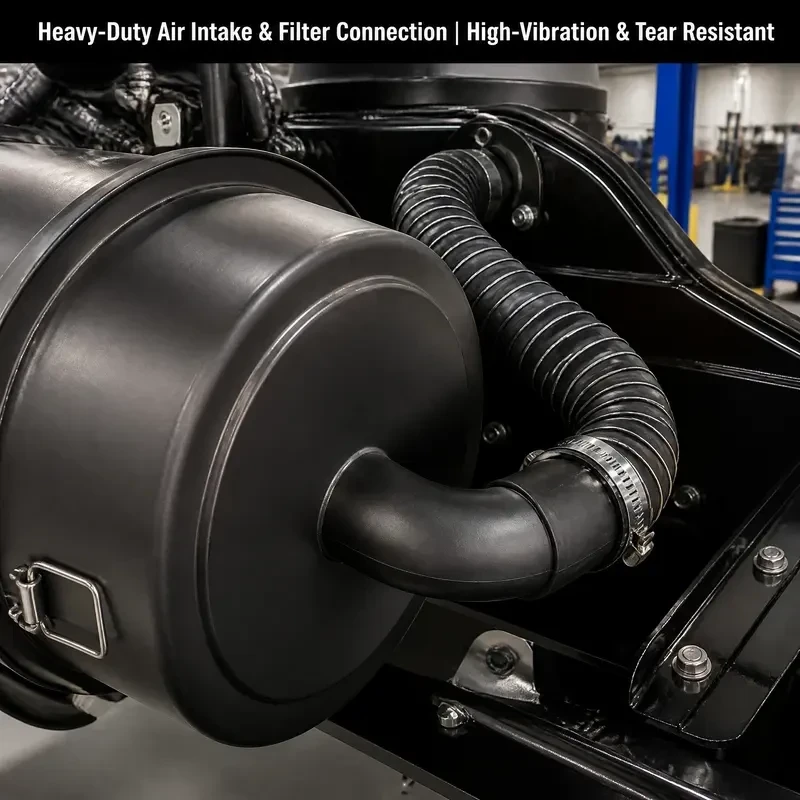
Two details decide whether the joint stays sealed. First, the cuff has to sit fully on the spigot, not half on. Second, the clamp goes on the smooth cuff, never across a rib, because a rib cannot compress evenly and the joint weeps dust.
Validation and Test Cells
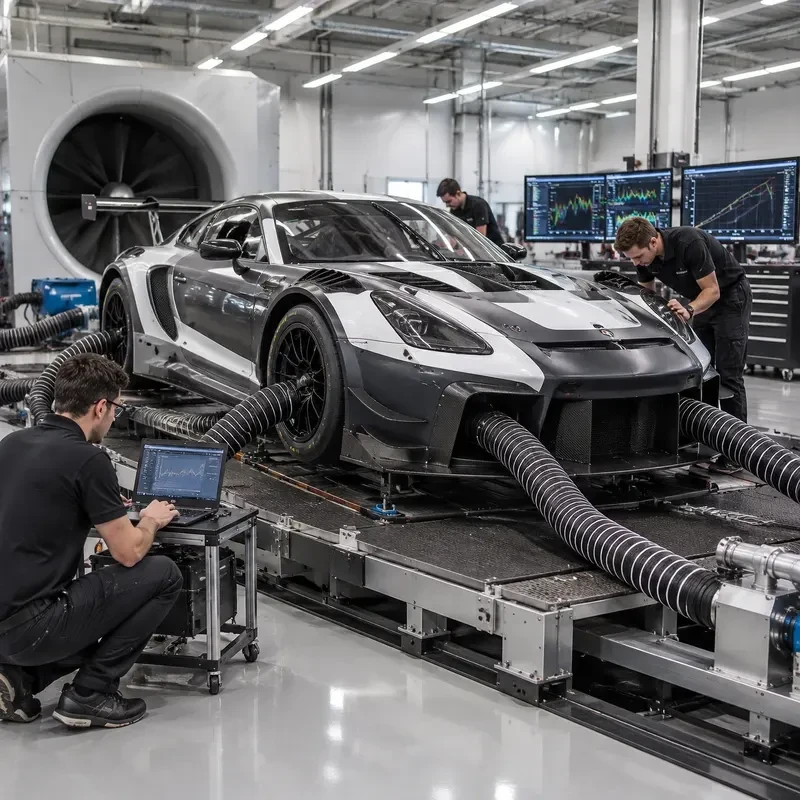
Ducts are usually validated as part of the vehicle, not on their own: airflow at the worst-case restriction, vibration endurance at the clamp, thermal cycling and a flame test on a sample. Supplying a consistent wall and wire pitch makes that validation repeatable from one build to the next.
Specifications
| Parameter | Specification |
|---|---|
| Category | Automotive and NEV air intake and ventilation ducting |
| Wall | Neoprene-coated reinforced fabric, high-density weave |
| Reinforcement | Embedded spiral high-tensile spring steel wire |
| Design | Corrugated body with plain end cuffs |
| Temperature | -40 °C to +135 °C, peaks to +150 °C |
| Flame | Self-extinguishing flame-retardant compound, test report on request |
| Bore | 38 mm to 203 mm (1.5 to 8 inch standard) |
| Colour | Matte black, high UV and ozone resistance |
| Media | Ambient air, hot and cold air, oil mist, engine bay vapour |
Applications
NEV air filtration systems
Air cleaner inlet and outlet conduits and compressor fresh air lines on electric buses and heavy trucks.
EV battery pack thermal management
Cooling air paths to lithium-ion pack enclosures and pack exhaust routes. Validate vent paths against the vehicle safety case; a duct does not replace the pack design.
Motor, inverter and DC-DC cooling
Auxiliary cooling air to the drive motor, controller and converter modules.
Commercial vehicle air brake systems
Clean air suction for electric screw compressors and pneumatic brake air tanks.
Construction and specialised machinery
High-vibration intake systems on electric excavators, mining trucks and agricultural tractors.
Installation and Care
- Clamp on the cuff, not on a rib, and tighten to the clamp maker torque.
- Leave slack at both ends so the duct is not in tension when the chassis flexes.
- Keep a minimum straight length at the air cleaner neck so inlet airflow is not disturbed.
- Route clear of hot exhaust components and of sharp brackets that can cut the fabric.
- Check the wire ends at each service; a cut wire can start a tear in the wall.
- Replace a crushed or oil-soaked section rather than taping it; both reduce airflow.
Frequently Asked Questions
Does an electric vehicle need an air intake hose?
Yes, but not for combustion. It feeds the air compressor for the brake system, supplies cooling air to the battery pack and motor, and connects air cleaner housings.
What temperature can the duct handle?
-40 °C to +135 °C continuous with short-term peaks to +150 °C.
Why is the corrugation important?
The ribs absorb chassis movement and motor vibration, and they allow a tight bend radius in a crowded bay.
Will the hose collapse under intake suction?
The embedded steel helix holds the bore open under normal air cleaner and compressor intake vacuum.
Is the hose flame retardant?
It is made from a self-extinguishing flame-retardant compound. The acceptance rating depends on the vehicle location and the test standard, so request the current report and confirm it for your programme.
Which bore size do I need?
Match the air cleaner neck or compressor inlet. Standard bores run from 38 mm to 203 mm, with custom sizes for production.
Can it be used for hot exhaust gas?
No. For exhaust routes use an EPDM or high-temperature duct rated for the gas temperature.
Do you supply production volumes with custom cuffs?
Yes. Custom bore, length, cuff and colour configurations are available for OEM programmes.
Next Step
For the wider family see the neoprene ducting range. For tailpipe extraction in service bays, the EPDM crush-proof exhaust hose guide covers hot-gas duty, and the high-temperature ducting guide covers the 800 °C class. Send your bore, airflow and routing envelope to the ECOOSI technical team for a duct recommendation.
Related Articles
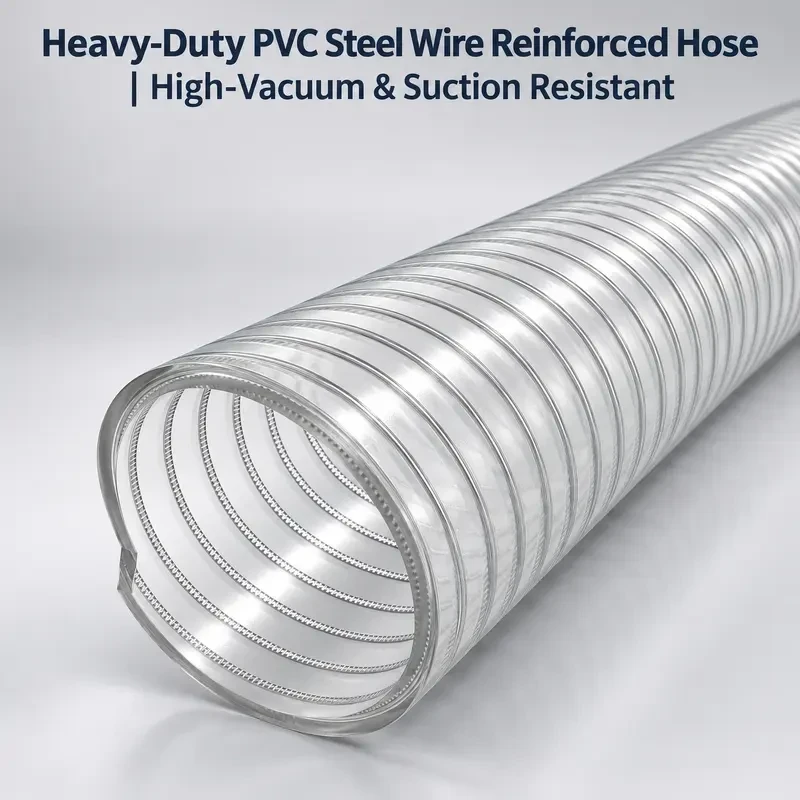
PVC Steel Wire Thunder Hose: High-Vacuum Suction and Delivery Hose Guide
Guide to ECOOSI PVC steel wire thunder hose: transparent wall with an embedded spring steel helix, dual rated for vacuum and pressure, -20 °C to +70 °C, 20 m rolls, for oil depots, agricultural pumps, mining dewatering and pneumatic conveying.
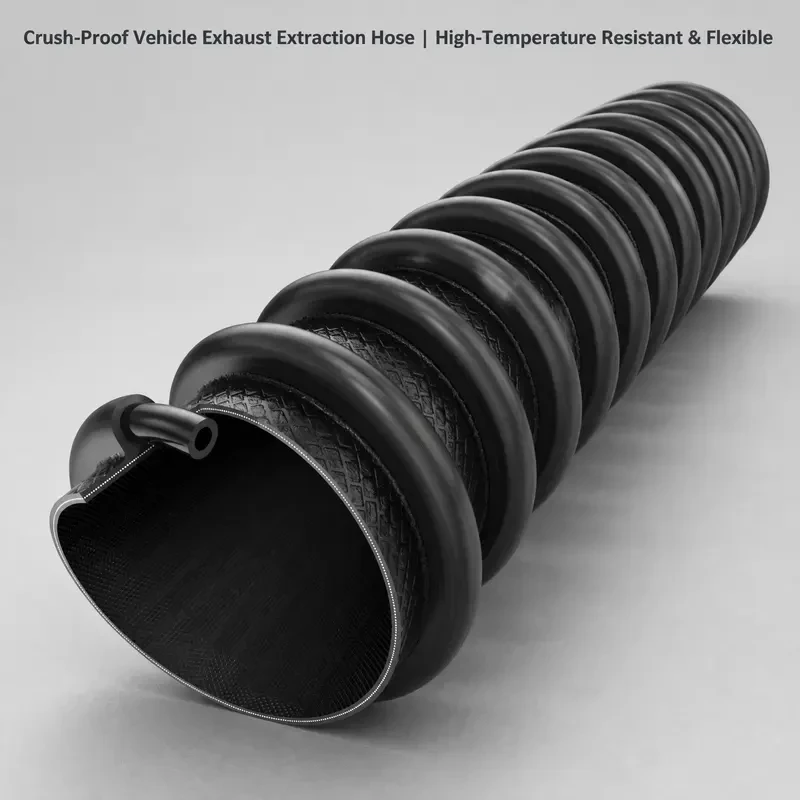
EPDM Rubber Exhaust Hose with Crush-Proof Plastic Helix: Garage Fume Extraction Guide
Guide to ECOOSI heavy-duty EPDM exhaust extraction hose: crush-resistant thermoplastic helix that recovers after drive-over, -40 °C to +150 °C with +180 °C peaks, 51 to 203 mm bore, 10 m rolls for hose reels, underfloor channels and dyno cells.
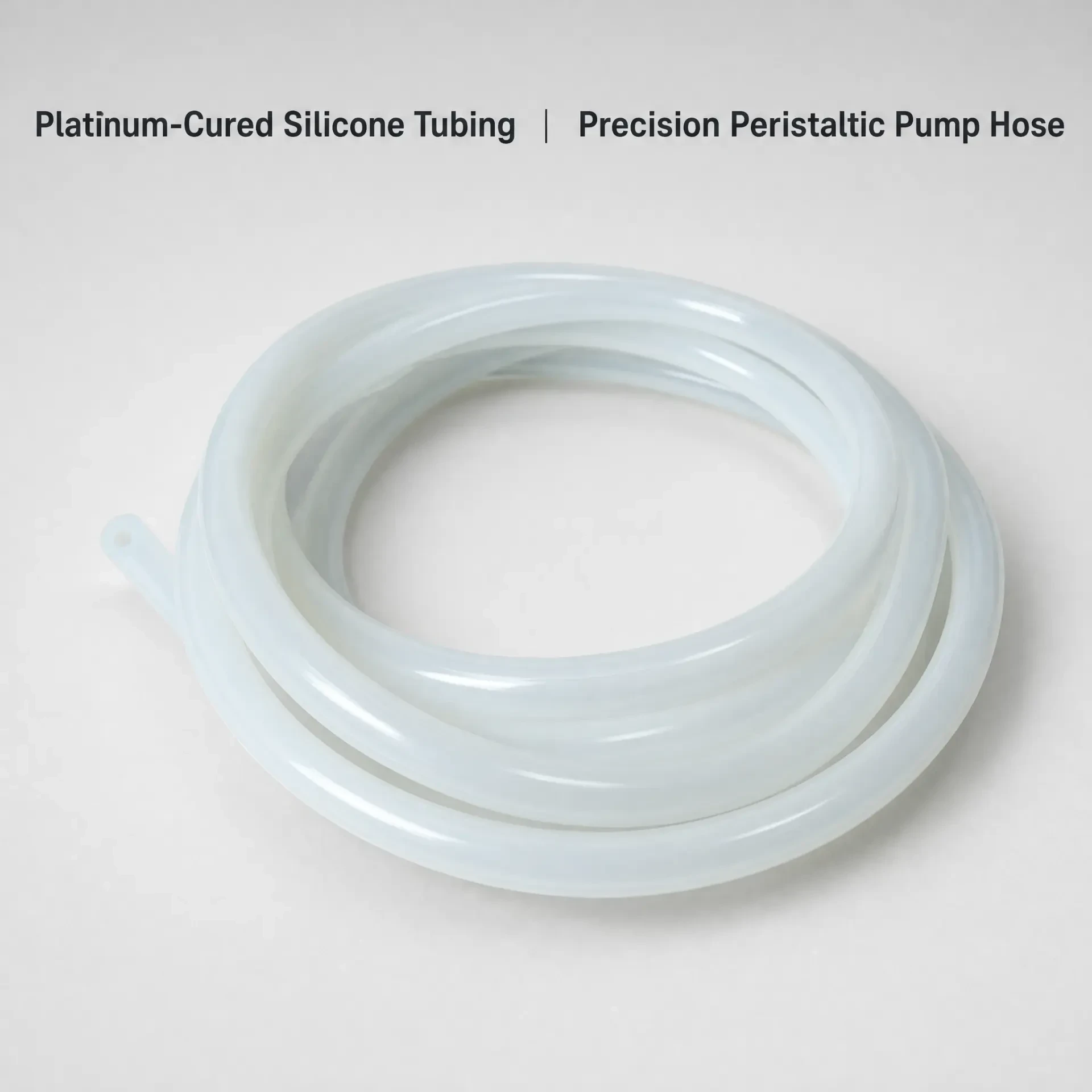
Platinum-Cured Peristaltic Pump Silicone Tubing: Food and Pharma Grade Selection Guide
Selection guide for platinum-cured peristaltic pump silicone tubing: low extractables, smooth high-concentricity bore, -73 °C to +204 °C, steam, EtO and gamma sterilisation, 15 m rolls in sizes 16# to 82# for pharma filling, IVD and food dispensing.