
PVC Steel Wire Thunder Hose: High-Vacuum Suction and Delivery Hose Guide
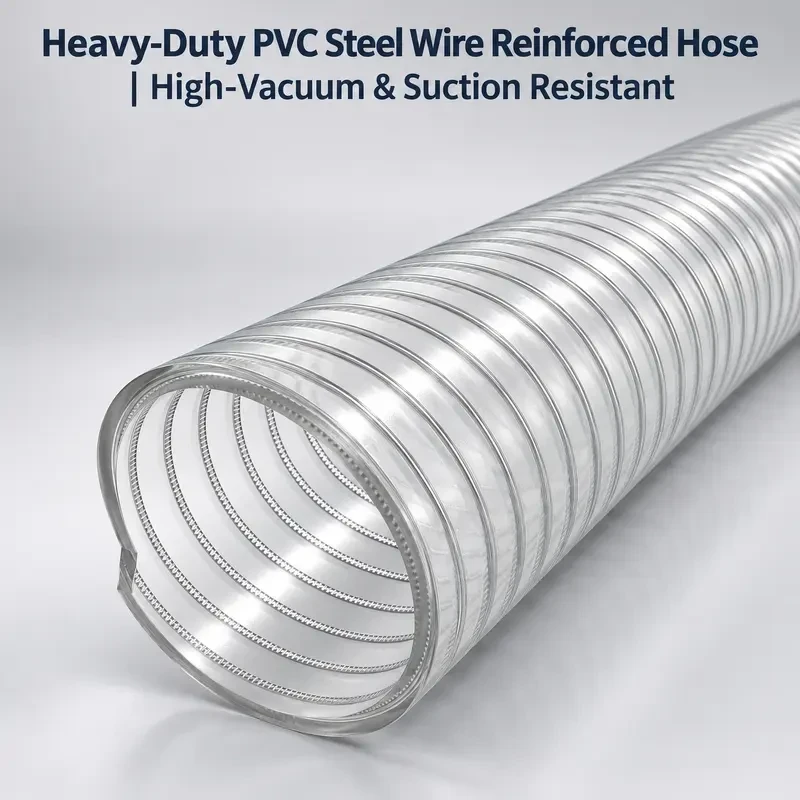
Guide to ECOOSI PVC steel wire thunder hose: transparent wall with an embedded spring steel helix, dual rated for vacuum and pressure, -20 °C to +70 °C, 20 m rolls, for oil depots, agricultural pumps, mining dewatering and pneumatic conveying.
The ECOOSI thunder hose is a transparent PVC hose with an embedded spring steel wire helix, rated for both suction and delivery from -20 °C to +70 °C with short-term peaks to +80 °C. The helix holds the bore open under full pump vacuum while the clear wall lets you watch the fluid move. It is supplied in 20 m rolls across small bore to large industrial sizes, and fits standard camlock couplings.
It is used where one hose has to do both jobs: pulling liquid out of a pit, tank or hopper, then pushing it along a discharge line without collapsing or ballooning.
Why Unreinforced Hose Fails
A plain PVC or rubber suction hose has no structure in the wall, so the pump does the damage:
- Collapse. Under vacuum the wall flattens, the flow stops and the pump runs dry.
- Burst at a spike. A valve closing or a pump starting against a closed line sends a pressure surge that splits an unreinforced wall.
- Blockage you cannot see. Opaque hose hides the slug of solids until the line is already plugged.
- Sediment hang-up. A rough bore holds grit, which slowly narrows the passage.
None of these are exotic failures; they are the normal end of a cheap suction hose on a working site.
Construction
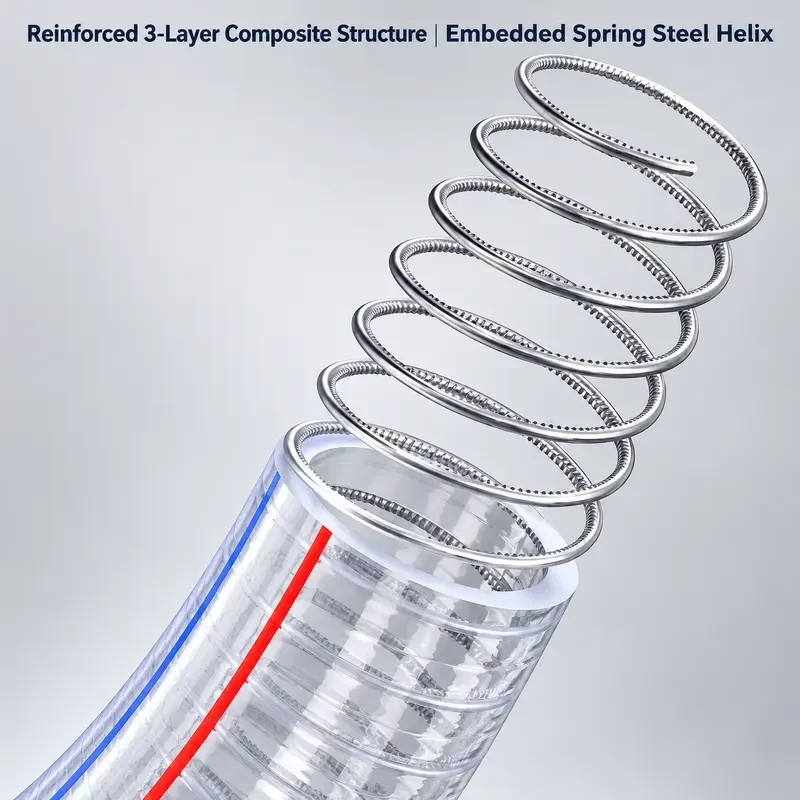
| Layer | Material | Function |
|---|---|---|
| Outer wall | Smooth clear PVC | Weather and abrasion resistance, easy wipe-down, clamp fit |
| Reinforcement | Spiral high-tensile spring steel wire, fully encapsulated | Radial stiffness against vacuum collapse and pressure surge |
| Bore | Mirror-smooth clear PVC | Low flow resistance, visible flow, less sediment retention |
| Marking | Twin tracer lines | Size identification and line routing on site |
Because the wire is inside the wall rather than exposed, the hose can be dragged across concrete without the helix catching and unwinding, and the outer surface stays smooth enough to wipe down.
Dual Rating: Vacuum and Pressure
The same helix that stops the wall collapsing also resists hoop stress when the pump pushes instead of pulls. That is what makes a single hose usable on both sides of a pump: suction line from the pit, discharge line to the field.
Two practical points decide whether the rating holds. First, the coupling must match the bore and be clamped square; a leaking end is a false collapse. Second, never close a valve at the discharge end with the pump running against it, because a dead-headed pump produces the highest surge the line will ever see.
Transparency and Flow Monitoring
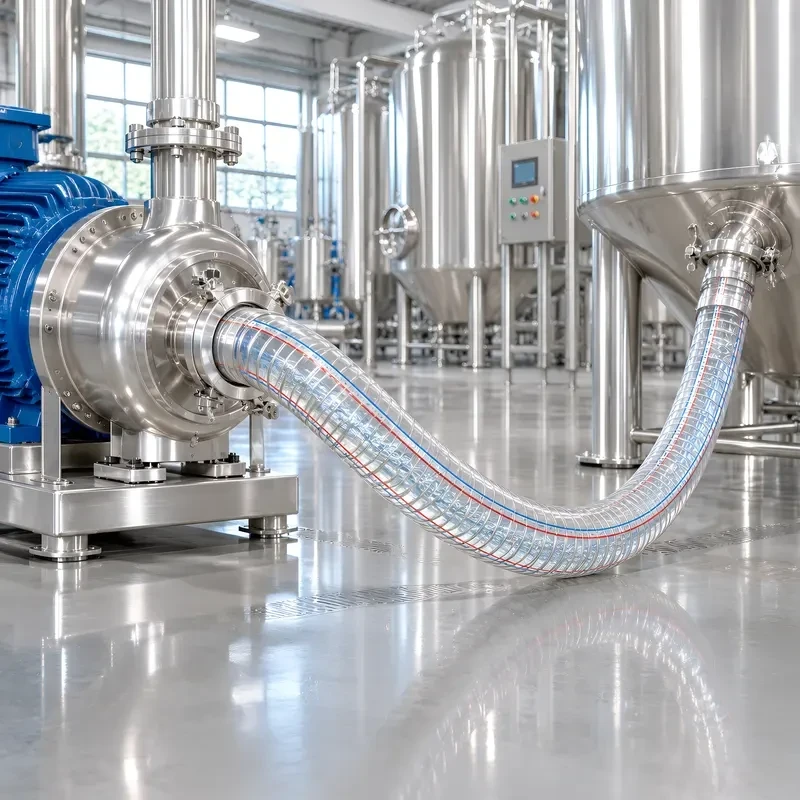
A transparent wall turns the hose into an inspection window. On a suction line you can see air entering through a loose clamp, which is the usual cause of lost prime. On a transfer line you can see slugs of solids, foam or a colour change at the moment they happen rather than after a batch is rejected.
This is also a maintenance argument: a hose that shows its contents gets replaced at the right time, and a line that shows grit building up gets flushed before it plugs.
Chemical Compatibility
| Media | Position |
|---|---|
| Water, slurry, sand and gravel | Good |
| Diesel, kerosene, lubricating oil, non-aromatic petroleum fluids | Good |
| Mild acids and alkalis, liquid fertiliser | Good at ambient temperature |
| Dry powders, grain, granules, cement | Good |
| Aromatic solvents (benzene, toluene, xylene), ketones, esters | Avoid: PVC swells and softens |
| Concentrated acids and strong oxidisers | Avoid |
Temperature changes the picture: a fluid that is fine at 20 °C can attack the wall faster at 60 °C. For anything outside the table, send the medium, concentration and temperature to our technical team before ordering.
Temperature and Flexibility
The service range is -20 °C to +70 °C (-4 °F to +158 °F) with short-term peaks to +80 °C (+176 °F). Within that band the wall stays flexible, so the hose keeps a small bending radius in a winter yard without cracking, and does not soften on warm oil.
Above the peak, PVC loses stiffness and the helix starts to carry the whole load, which shortens life quickly. If the media runs hotter than +80 °C, a different construction is the right answer rather than a shorter service interval.
Size Range and Identification
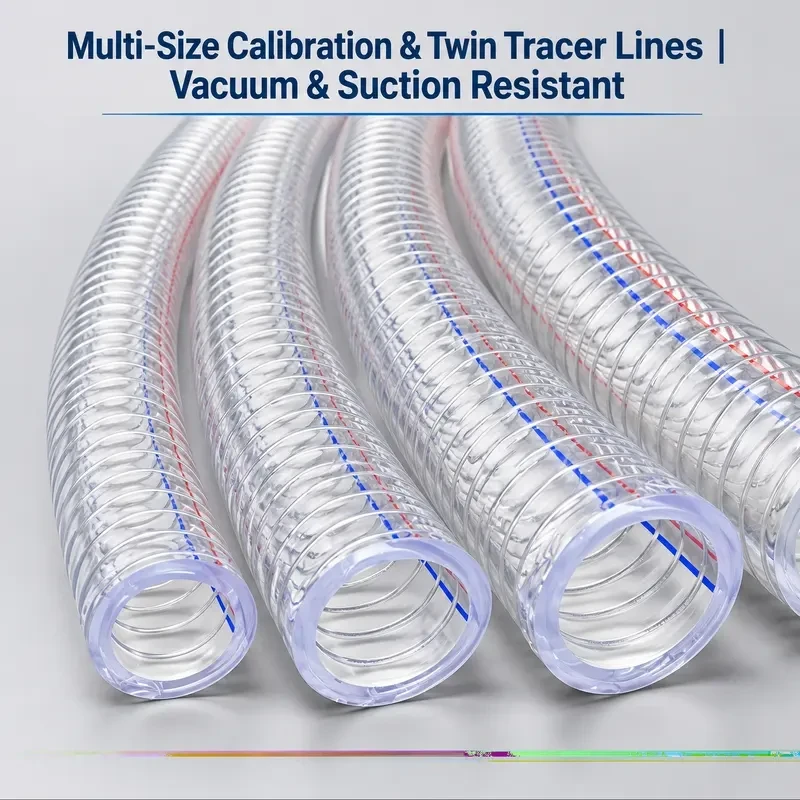
Sizes run from small bore to large industrial diameters to suit standard camlock and pump connections. The tracer lines are not decorative: on a rack of similar hoses they let a fitter pick the right bore without measuring it.
Match the bore to the pump port, not to the largest hose that will fit. Oversizing the suction line adds liquid volume that the pump has to prime, and it makes the assembly heavier to handle.
Applications
Oil depots and loading racks
Suction and discharge of diesel, lubricating oil and kerosene, where a clear wall shows the line is empty before decoupling.
Agricultural pumps and irrigation
Centrifugal pump intakes, tractor-driven irrigation and liquid fertiliser lines, including frosty morning starts.
Mining, quarrying and construction
Excavation pit dewatering, sand and slurry suction, cement powder transfer and heavy civil dewatering.

Industrial plants and machinery
Water cooling lines, hydraulic tank return lines, vacuum hoppers and factory chemical dosing systems.
Grain and dry food handling
Grain, flour and dry ingredient suction where the food-contact grade of the compound is specified.
Specifications
| Parameter | Specification |
|---|---|
| Series | PVC steel wire thunder hose, heavy-duty suction and delivery |
| Wall | High-clarity soft PVC, smooth inside and outside |
| Reinforcement | Embedded spiral high-tensile spring steel wire |
| Temperature | -20 °C to +70 °C, short-term peak +80 °C |
| Pressure | Dual rated for positive pressure and full vacuum |
| Standard roll | 20 m, custom continuous coils available |
| Bore | Small bore to large industrial sizes, camlock compatible |
| Media | Water, diesel, fuel oils, mild chemicals, dust, powders, granules |
Packaging and Supply

Coils are wrapped, labelled with size and lot, and stacked on wooden pallets for container loading. Store them out of direct sun; long UV exposure yellows clear PVC and makes it brittle.
Installation and Care
- Use the right camlock or clamp for the bore, and fit it square so the wire end is not exposed.
- Do not over-tighten a metal clamp on clear PVC; it deforms the bore and creates a leak path.
- Support long horizontal runs so the hose is not hanging from two couplings.
- Avoid sharp bends at the coupling; the wire kinks there first and the kink becomes a fatigue crack.
- Flush after abrasive or crystalline media before storing, so residue does not set in the corrugations.
- Coil loose, not tight, for storage, and keep it off hot surfaces and out of sunlight.
Frequently Asked Questions
Can the same hose be used for suction and discharge?
Yes. It is dual rated: the embedded steel helix resists vacuum collapse and positive pressure surge.
What temperature range does it cover?
-20 °C to +70 °C continuous, with short-term peaks to +80 °C.
Is it suitable for petrol and diesel?
Diesel, kerosene and lubricating oils are fine. Petrol and aromatic solvents need a different compound; check with us before use.
Why is clear PVC useful in a transfer line?
You can see air ingress, foam, solids and colour change immediately, which catches a priming fault or a product mix-up before it costs a batch.
Can the steel wire be used for static earthing?
The helix can provide a discharge path when it is properly bonded to the end fitting and the fitting is earthed. Confirm the assembly with us for flammable service; do not assume the wire alone is an earthing system.
What is the standard roll length?
20 m per roll, with custom continuous coils available for fixed installations.
Can it handle grain and powders?
Yes, in the food-contact grade of the compound. Tell us the application so the correct grade is supplied.
Does it resist crushing?
The encapsulated helix keeps the section round under normal site handling and foot traffic, but it is not a drive-over hose.
Choosing the Right Hose
For a braided PVC line at higher pressure see the PVC braided suction and discharge hose guide, for open discharge the PVC layflat irrigation guide, and for the wider range the PVC ducting range. Send your medium, bore, flow rate and pump type to the ECOOSI technical team and we will confirm the size and coupling.
Related Articles
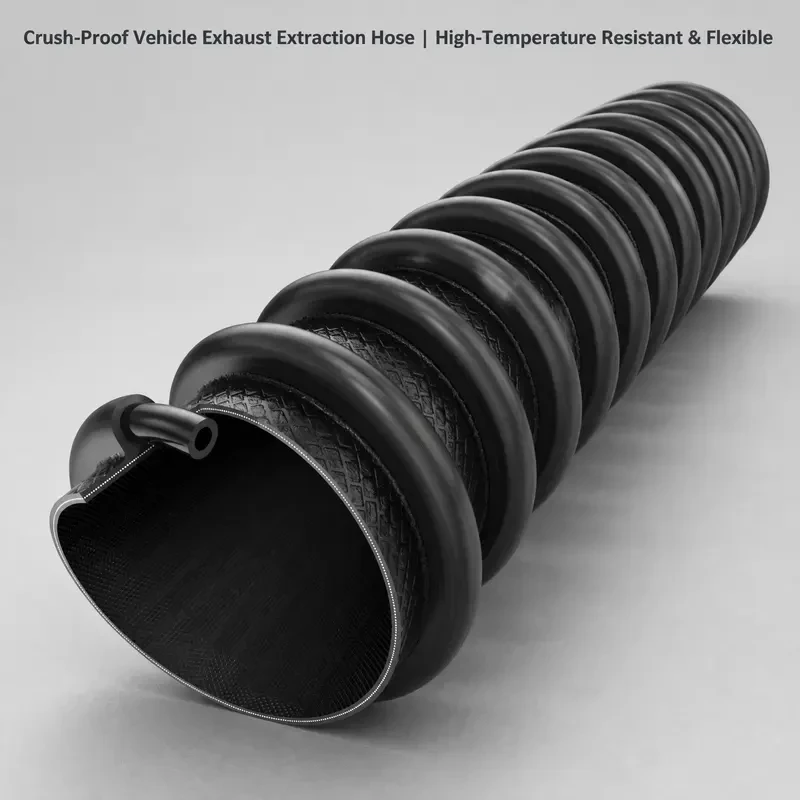
EPDM Rubber Exhaust Hose with Crush-Proof Plastic Helix: Garage Fume Extraction Guide
Guide to ECOOSI heavy-duty EPDM exhaust extraction hose: crush-resistant thermoplastic helix that recovers after drive-over, -40 °C to +150 °C with +180 °C peaks, 51 to 203 mm bore, 10 m rolls for hose reels, underfloor channels and dyno cells.
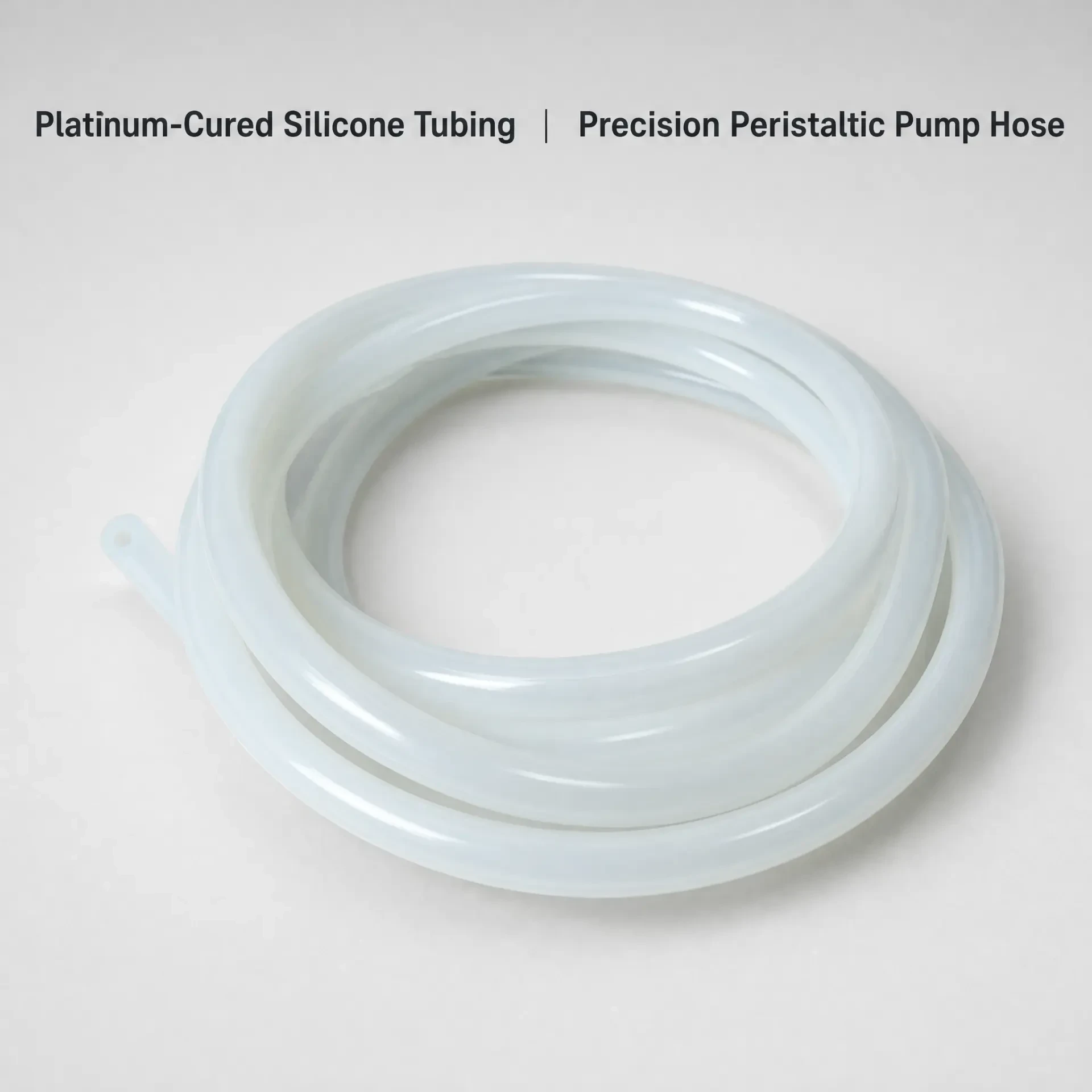
Platinum-Cured Peristaltic Pump Silicone Tubing: Food and Pharma Grade Selection Guide
Selection guide for platinum-cured peristaltic pump silicone tubing: low extractables, smooth high-concentricity bore, -73 °C to +204 °C, steam, EtO and gamma sterilisation, 15 m rolls in sizes 16# to 82# for pharma filling, IVD and food dispensing.
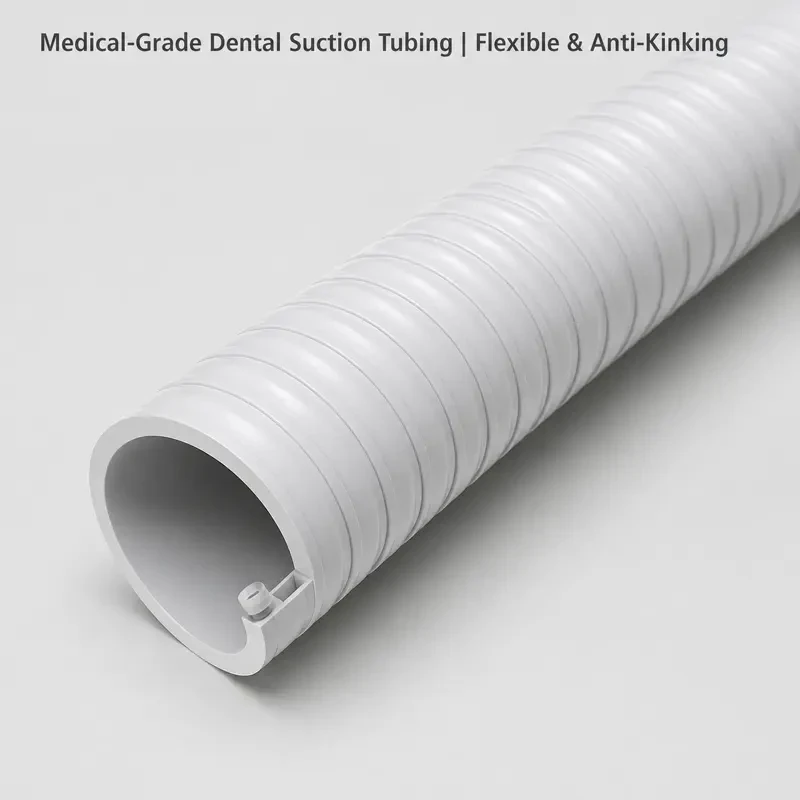
Dental Suction PU Tubing: Double-Layer Latex-Free Guide for HVE and Saliva Ejectors
Guide to the ECOOSI biological-grade double-layer PU dental suction tubing: latex-free and phthalate-free wall, smooth bore and cover, -40 to +90 °C, 10 m coils, for dental chair HVE and saliva ejector lines, oral surgery and medical aesthetic equipment.